10 Best Custom Vacuum Carburizing Process Factories
Choosing among the 10 Best Custom Vacuum Carburizing Process Factories requires more than comparing equipment photographs. Reliable evaluation begins with measurable evidence. Important details include case-depth consistency, carbon-potential control, quenching performance, distortion management, and complete batch traceability. A capable Custom Vacuum Carburizing Process Factory should explain these results clearly, using production data rather than broad promises.
Dr. George E. Totten, a widely recognized heat-treatment specialist, has stated, “Heat treatment is both a science and an art.” That observation remains relevant to vacuum carburizing. Furnace temperature may appear stable, yet steel chemistry, loading density, transfer time, and quench agitation can change the final result. Experienced factories understand these variables. They validate them through hardness profiles, metallographic inspection, dimensional checks, and repeat production trials.
This overview examines factories that combine technical control with practical manufacturing experience. It considers aerospace, automotive, tooling, and heavy-equipment applications without assuming that one process suits every component. A strong supplier should discuss material grades, target case depth, core hardness, cycle development, and acceptable distortion before quoting production work. It should also provide calibrated inspection records and realistic process limitations.
No ranking is perfect. A polished website can hide weak process discipline. Conversely, a smaller plant may deliver excellent results with less marketing. That possibility deserves attention. The best choice depends on verified capability, transparent communication, and consistent parts from batch to batch. These standards create a more dependable path toward selecting a Custom Vacuum Carburizing Process Factory for demanding applications.
What Custom Vacuum Carburizing Means
Custom vacuum carburizing means designing a low-pressure carbon-enrichment cycle for a specific steel part, not applying one standard recipe to every order. A factory adjusts temperature, gas pulses, diffusion time, and quenching conditions. These choices depend on the steel grade, tooth geometry, required case depth, and distortion limits.
Picture a small transmission gear with thin teeth and a heavy hub. It may need a harder surface for wear resistance, while its core must remain tough. Engineers may use alternating hydrocarbon pulses and diffusion periods to control carbon penetration. High-pressure gas quenching can reduce oil residue and improve workplace cleanliness. Fixtures also matter. Poor support can leave a part slightly warped, even when the furnace cycle looks correct.
Reliable factories verify results through hardness profiles, metallographic checks, dimensional inspection, and recorded furnace data. A typical report should show surface hardness, effective case depth, core hardness, and quench details. Experience helps, but it does not replace measurement. Some assumptions fail. A recipe that works for one batch may produce uneven results after a steel supplier changes chemistry. That possibility deserves attention. Careful producers run test loads, review distortion patterns, and revise parameters before full production. The process is highly controllable, but never perfectly automatic.
10 Best Custom Vacuum Carburizing Process Factories – What Custom Vacuum Carburizing Means
Custom vacuum carburizing is a low-pressure carburizing process in which temperature, carburizing pulses, diffusion time, case depth, and quenching conditions are adjusted for the steel grade, component geometry, and required performance.
Representative industrial cycle: The chart shows commonly used process settings for alloy-steel components. Actual values depend on material chemistry, target effective case depth, distortion limits, loading density, and the selected gas or oil quench system.
How the Vacuum Carburizing Process Works
When evaluating the 10 best custom vacuum carburizing process factories, understand the process before comparing suppliers. Vacuum carburizing heats low-alloy steel inside a sealed chamber, usually between 900°C and 1,050°C. A controlled hydrocarbon gas enters the chamber in pulses. Carbon atoms then diffuse into the heated surface.
The ASM Handbook, Volume 4A, describes carburizing temperatures near 900°C to 950°C for many engineering steels. Typical case depths range from about 0.2 to 2.0 millimeters, depending on time, temperature, and material chemistry. After carburizing, the factory usually applies high-pressure gas quenching. This can reduce oxidation, although distortion still depends on geometry and fixture design. The European Commission’s Best Available Techniques guidance also emphasizes monitoring furnace energy, atmosphere control, and cooling performance. Data matters here. A glossy furnace specification does not guarantee stable hardness.
Tips: Ask for a documented process chart, furnace uniformity data, carbon-potential records, and actual hardness results. Confirm whether the factory measures surface hardness, core hardness, case depth, and retained austenite. Small details matter. A 0.1-millimeter error may affect gear life. In my experience, complex parts need trial runs before volume production. The recipe is rarely perfect at the first attempt, and engineers should review failures instead of hiding them. ISO 15787 guidance on heat-treatment documentation can help buyers request clearer records and traceability.
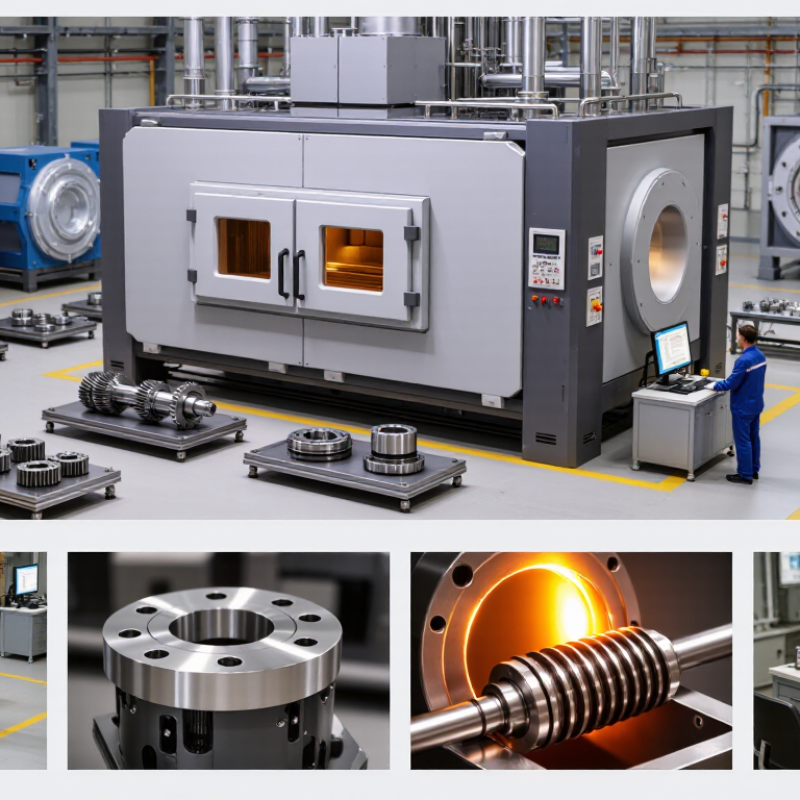
Key Equipment Used by Leading Factories
Key Equipment Used by Leading Custom Vacuum Carburizing Factories
Leading custom vacuum carburizing factories depend on tightly matched equipment, not a single furnace. A sealed vacuum chamber removes oxygen before low-pressure carburizing begins. Heated fixtures then expose steel parts to controlled hydrocarbon pulses. ASM International’s Heat Treating technical references describe temperature uniformity and carbon-potential control as major quality factors. In practice, a difference of only a few degrees can change case depth. That detail matters.
A modern line usually includes diffusion pumps, mechanical pumps, gas-mixing units, load thermocouples, and programmable controls. High-speed oil or gas quenching systems complete the cycle. Quench pressure, agitation, and part spacing directly affect distortion. The U.S. Department of Energy’s process-heating sourcebook identifies heat treatment as a significant industrial energy user, often near 60% of manufacturing process energy. Efficient pump sizing and shorter heating cycles therefore influence both emissions and operating cost. The numbers vary by plant.
Quality equipment extends beyond the furnace. Optical emission spectrometers verify incoming alloy chemistry. Microhardness testers measure the hardened layer at several depths. Metallographic microscopes reveal retained austenite, carbide networks, and surface damage. ISO 9001-based production systems also require traceable calibration records and batch histories. A barcode linked to each recipe helps operators investigate unusual results.
However, automation does not remove judgment. A sensor can drift. A fixture can shadow a gear tooth. Even a well-designed recipe may fail on a new steel grade. Leading factories should review hardness maps, distortion data, and maintenance trends after every qualification run. That discipline is less impressive than shiny equipment, but it is usually more reliable.