
Your Source for Trays!

2026 Best Carton Forming Machine for Global Buyers

Choosing the 2026 best Carton Forming machine requires more than comparing speed figures. Global buyers need dependable performance, flexible formats, and clear technical evidence.

A capable machine should form cartons accurately across planned sizes, board grades, and production volumes. Servo-driven movements can improve positioning, while quick-change tooling reduces downtime between orders. However, advertised output may depend on carton design, material quality, operator skill, and inspection standards. Real factory trials matter.

This guide examines forming accuracy, changeover time, energy use, safety features, maintenance access, and total ownership cost. It also considers documentation, spare-parts availability, training, and regional compliance requirements. Buyers should request sample cartons, production records, and a detailed warranty before making a decision. Small details count. A poorly placed sensor can interrupt an otherwise modern line.

Our evaluation reflects practical manufacturing concerns, not only brochure specifications. We recognize that no single machine fits every market or carton style. Some models offer impressive speed but limited format flexibility. Others provide stable operation but require more floor space. That trade-off deserves attention.

Reliable suppliers should explain limitations openly and support claims with test results, customer references, and measurable service commitments. For global projects, installation conditions, voltage, humidity, logistics, and local technical support can influence long-term results. This review aims to help buyers compare machines carefully, avoid unrealistic promises, and select a Carton Forming solution suited to their actual production environment.
2026 Best Carton Forming Machine for Global Buyers

What Is a Carton Forming Machine?

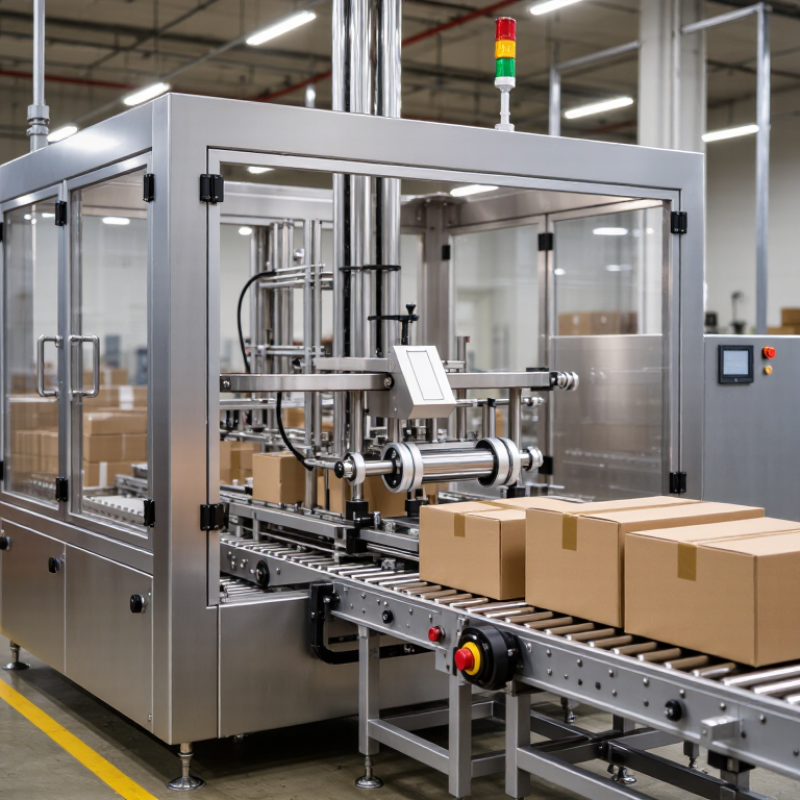
A carton forming machine is industrial equipment that turns flat cardboard blanks into usable cartons. It folds scored panels, applies adhesive when required, and creates a stable box shape. Many models also square the carton and deliver it to a filling line. The machine reduces repetitive labor and keeps carton dimensions more consistent. On a production floor, operators usually monitor blank feeding, folding accuracy, glue placement, and machine speed. Small changes in board thickness can affect performance.

Modern carton forming machines may use mechanical guides, vacuum systems, sensors, and programmable controls. Their design depends on carton size, board material, production volume, and sealing method. A compact machine may suit varied packaging orders, while a high-speed system fits continuous production. In practice, speed alone can be misleading. A fast machine with frequent jams may produce less usable output. Maintenance access, changeover time, and operator training also deserve careful attention. I have found that trial runs reveal problems specifications often hide.

Tips: Test your actual carton blanks before purchasing. Check whether the machine handles warped edges, weak creases, and different board weights. Ask for measurable data on forming accuracy, waste rate, noise, and energy use. Keep spare wear parts available. Even reliable equipment needs cleaning and adjustment. A rushed setup can damage cartons and reduce output.

2026 Best Carton Forming Machine for Global Buyers

What Is a Carton Forming Machine?

A carton forming machine automatically opens flat carton blanks, folds the panels, and seals or prepares the carton for filling. The chart shows representative output capacities commonly associated with different automation levels. Actual performance depends on carton size, board material, folding design, adhesive method, and operator settings.

Capacity is measured in cartons per minute. Figures are indicative industry ranges and should be verified against the supplier’s technical specification for the target carton format.

How Carton Forming Machines Work Step by Step

A carton forming machine turns flat blanks into stable, usable cartons through a controlled sequence. Smithers’ The Future of Corrugated Packaging to 2029 estimates global corrugated packaging demand will continue growing through 2029. That pressure makes forming accuracy increasingly important for global buyers.

The process starts when a feeder separates stacked blanks. Vacuum cups or friction belts move each blank into position. Sensors check alignment before forming begins. A folding section then scores and bends the panels along their crease lines. The carton opens into shape. Glue nozzles apply adhesive to selected flaps, while locking systems may close cartons without glue. Compression belts hold the folded carton briefly, allowing the joint to set. Too much pressure can crush edges. Too little pressure can leave weak seams.

A discharge conveyor transfers finished cartons to packing or inspection. Vision sensors can detect open flaps, skewed panels, and missing glue. PMMI’s 2024 Packaging Automation reports identify labor efficiency and quality control as major automation priorities. Yet automation does not remove every problem. Poor board moisture, inconsistent blank cutting, and incorrect score depth still reduce performance. The operator must adjust speed, vacuum, glue temperature, and compression time for each carton size. Small errors matter. A reliable machine should provide repeatable settings, accessible changeover points, and clear safety controls. In practice, the best result comes from matching machine design with real materials, not only advertised output.

Key Machine Types and Their Suitable Applications

2026 Best Carton Forming Machine for Global Buyers

Key Machine Types and Their Suitable Applications

Carton forming equipment should match the box style, material, speed, and operator skill available at the site. Automatic carton erectors open flat corrugated blanks, fold panels, and seal the bottom with tape or adhesive. They suit warehouses shipping household goods, spare parts, and subscription parcels. A stable machine can produce clean cartons without repeated manual squaring.

Folder-gluer machines handle printed folding cartons for food, cosmetics, electronics, and general retail packaging. Straight-line models fit simple designs and steady production runs. Four-corner and six-corner systems serve premium packages requiring accurate folding and stronger presentation. Lock-bottom machines reduce adhesive use and work well for heavier contents. Their setup can be demanding.

Wrap-around formers create cartons around products, often in beverage, canned-food, and multipack operations. They are useful when products arrive in consistent groups and need tight packing. Intermittent-motion machines offer careful positioning for varied carton sizes. Continuous-motion models provide higher output but usually require more precise feeding and maintenance.

In real production, speed ratings can mislead. Actual output falls when blanks vary, glue warms unevenly, or operators change sizes frequently. Buyers should test their own carton samples and measure changeover time, noise, waste, and compressed-air demand. I have found that a slightly slower machine may deliver better results when quality checks are frequent.

2026 Best Carton Forming Machine for Global Buyers - Key Machine Types and Their Suitable Applications
Machine Type Carton Style Typical Output Suitable Board and Material Best-Fit Applications Main Advantages Key Buying Considerations
Semi-Automatic RSC Case Erector Regular Slotted Container (RSC) shipping cases sealed with tape or hot-melt adhesive Approximately 8–15 cases per minute Corrugated board commonly from 3-ply to 5-ply; approximately 3–7 mm thickness depending on flute and design Small and medium production runs, contract packing, seasonal products, and facilities with frequent carton-size changes Lower investment, simple operation, flexible format changes, and reduced manual folding labor Check operator loading requirements, carton-size range, sealing method, and availability of local service support
Automatic RSC Case Erector RSC cases formed from flat knocked-down blanks and sealed at the bottom Approximately 15–40 cases per minute Regular corrugated board, typically 3-ply or 5-ply; board strength must match the packed product and transport conditions Food, beverage, household goods, e-commerce fulfillment, and general secondary packaging Continuous forming, consistent squareness, lower labor demand, and easy integration with conveyors Confirm carton blank quality, maximum blank weight, case dimensions, line speed, and tape or hot-melt compatibility
High-Speed RSC Case Erector High-volume RSC shipping cases with automated bottom sealing Approximately 30–60 cases per minute under stable conditions Uniform corrugated blanks with controlled moisture, score depth, slot accuracy, and compression strength Large distribution centers, beverage multipacks, fast-moving consumer goods, and high-throughput production lines High productivity, stable case presentation, and efficient connection to robotic loading or automatic case packing Requires consistent blanks, sufficient floor space, dependable compressed air, and coordinated upstream and downstream equipment
Wrap-Around Case Former and Packer Wrap-around corrugated cases formed around the product and sealed after loading Approximately 10–30 cases per minute, depending on pack pattern and product handling Corrugated wrap-around blanks, often using E-flute, B-flute, or comparable grades selected for product protection Bottles, cans, cartons, trays, multipacks, and products that can be grouped before case forming Compact package design, strong product retention, fewer empty spaces, and efficient combined packing and case forming Evaluate product grouping accuracy, blank stiffness, glue application, changeover time, and product orientation requirements
Tray Former Open-top trays, display trays, and retail-ready corrugated trays Approximately 10–35 trays per minute Corrugated board or solid fiberboard; commonly designed with crease lines and glued or lock-bottom corners Fresh produce, dairy, beverages, bakery products, promotional displays, and shelf-ready retail packaging Improves shelf presentation, supports automated product loading, and can reduce repacking at retail locations Confirm tray wall height, corner construction, stacking strength, product weight, and whether hot-melt or mechanical locking is preferred
4-Corner and 6-Corner Carton Former Pre-glued folding cartons with four-corner or six-corner crash-lock and folding structures Approximately 15–50 cartons per minute, depending on carton size and folding geometry Paperboard and lightweight corrugated materials, commonly about 0.4–1.5 mm thick depending on the package structure Premium food packaging, cosmetics, gift boxes, bakery products, and retail cartons requiring a formed base Fast setup after tooling preparation, attractive shelf appearance, and strong automatic bottom construction Check carton design compatibility, crease quality, glue pattern, tooling requirements, and acceptable tolerance for blank warping
Vertical Carton Erector Paperboard cartons erected vertically before filling or product insertion Approximately 20–60 cartons per minute Folding carton board, often around 0.3–0.8 mm thick; exact limits depend on coating, grain direction, and carton geometry Powders, granules, sachets, bottles, pouches, and products loaded from the top Good access for top loading, compact footprint, and straightforward connection to filling or weighing equipment Verify carton opening performance, product loading height, dust control, suction requirements, and carton magazine capacity
Horizontal Cartoning Machine with Carton Forming Pre-glued folding cartons erected horizontally, filled, and closed in one continuous process Approximately 30–150 cartons per minute, depending on product type and carton style Paperboard folding cartons, generally about 0.3–0.8 mm thick; coated and embossed boards require machine trials Pharmaceutical products, personal care items, small food products, household goods, and individually boxed consumer products Combines carton erecting, product insertion, and closing; supports coding, leaflet insertion, and inspection modules Assess product infeed stability, leaflet and code requirements, serialization or inspection needs, format-change time, and validation documentation
Case Sealer with Integrated Forming Section RSC cases erected, filled, and sealed in a synchronized packaging line Approximately 12–35 cases per minute Corrugated shipping cases with consistent flap length, board thickness, and blank dimensions End-of-line packaging where case forming, product loading, flap folding, and sealing must operate as one system Compact line layout, synchronized case handling, and reduced manual transfer between forming and sealing stages Check product loading method, case compression requirements, sealing-head adjustment, line accumulation, and emergency-stop integration
Robotic Case Erecting and Forming Cell RSC cases, trays, or customized corrugated cases handled by robotic picking and forming equipment Approximately 10–40 cases per minute, depending on robot configuration and carton complexity Corrugated blanks with defined pickup areas, consistent dimensions, and suitable stiffness for vacuum or mechanical handling Mixed-SKU operations, flexible manufacturing, irregular product lines, and facilities requiring automated format changes High flexibility, programmable recipes, reduced manual handling, and potential integration with vision inspection Evaluate robot payload, end-of-arm tooling, vision accuracy, safety guarding, programming support, and changeover strategy

Note: Output figures are indicative engineering ranges for comparison only. Actual performance depends on carton dimensions, board grade, blank quality, adhesive, product handling, changeover frequency, operator skill, and line integration. Buyers should confirm final specifications through machine trials using production cartons and materials.

Essential Buying Criteria for Global Buyers in 2026

For global buyers, the best carton forming machine is not simply the fastest model. It must match board thickness, carton dimensions, adhesive requirements, and local operating conditions. PMMI’s 2024 State of the Industry report valued North American packaging machinery shipments at about 10.2 billion dollars in 2023. This growth reflects demand for flexible, reliable automation rather than speed alone.

Check the machine’s useful output under real production conditions. Ask for tested cartons, including warped blanks and recycled board. A quoted rate of 300 cartons per minute may fall sharply during changeovers. That detail matters. Tool-free adjustment, recipe storage, and automatic format change can reduce setup losses. Energy consumption also deserves measurement. The International Energy Agency reports that industry remains a major global energy user, so efficient motors and compressed-air systems can lower operating costs over time.

Global support is equally important. Confirm remote diagnostics, spare-part availability, operator training, and response times across your target regions. Safety functions should meet applicable international standards, with documented risk assessments and guarding. Sustainability claims need evidence, not attractive wording. Request power data, adhesive usage, maintenance records, and acceptance-test results. I have seen buyers focus heavily on initial price and underestimate downtime, which is an expensive mistake. Still, every factory has different constraints, so a higher-priced machine is not automatically the better choice. Test the complete carton range before signing.

How to Compare Performance, Cost, and Supplier Support

For global buyers, carton forming machine performance should be measured beyond rated speed. A machine claiming 120 cartons per minute may run slower with recycled board or irregular blanks. Request production records from similar carton sizes. Track actual output, reject rate, changeover time, and compressed-air consumption.

PMMI’s 2024 State of the Industry report identifies labor shortages and automation as major packaging investment drivers. That makes repeatable operation more valuable than impressive peak speed.

Cost comparison needs a wider lens.

Include tooling, installation, operator training, energy, maintenance, spare parts, and downtime. Smithers’ The Future of Global Packaging to 2028 estimates the worldwide packaging market at about US$1.2 trillion in 2023. Even small efficiency losses can become expensive at this scale.

Calculate total cost per acceptable carton, not purchase price alone. A lower-priced machine may require frequent manual adjustment. That is not always cheaper.

Supplier support deserves practical testing. Ask how quickly technical staff respond across time zones. Request a spare-parts list, fault-history examples, and a clear escalation process.

Remote diagnostics can shorten troubleshooting, but they cannot replace local training. Visit an operating installation if possible. Watch an operator change formats with a stopwatch.

Then question the result. Factory demonstrations often use ideal materials and experienced technicians, so real production trials remain essential.