
585.204.6770
sale@sanblueplastics.com
Your Source for Trays!
Choosing the 2026 best HVAC Filter Drier requires more than comparing prices or catalog photos. Global buyers must examine refrigerant compatibility, connection size, pressure rating, desiccant capacity, and documented performance. A small component can protect an expensive compressor from moisture, acid, wax, and damaging particles. It can also become a restriction when selected carelessly.
Rajan Rajendran, a recognized Emerson refrigeration specialist, explains the practical role clearly: “A filter drier is not just a moisture trap; it is part of system protection.” This principle matters in supermarkets, cold rooms, transport refrigeration, and residential heat pumps. The right product should match the system’s refrigerant, oil type, operating temperature, and expected service conditions. Look for reliable laboratory data, traceable manufacturing, and clear installation guidance. Certifications and regional availability also deserve attention, especially for buyers managing different markets.
Real-world selection is rarely perfect. A drier that performs well in a mild warehouse may struggle in a humid coastal installation. Oversizing is not always safer. Neither is choosing the cheapest option. Field technicians should confirm flow direction, brazing practices, pressure testing, and replacement timing. These details are easy to overlook.
This guide compares leading HVAC Filter Drier options for global buyers in 2026. It considers technical protection, service experience, supply consistency, and total ownership value. Some conclusions may change as refrigerants and regulations evolve. That uncertainty matters. A dependable decision leaves room for verification, not assumptions.
What an HVAC Filter Drier Does in a Refrigeration System
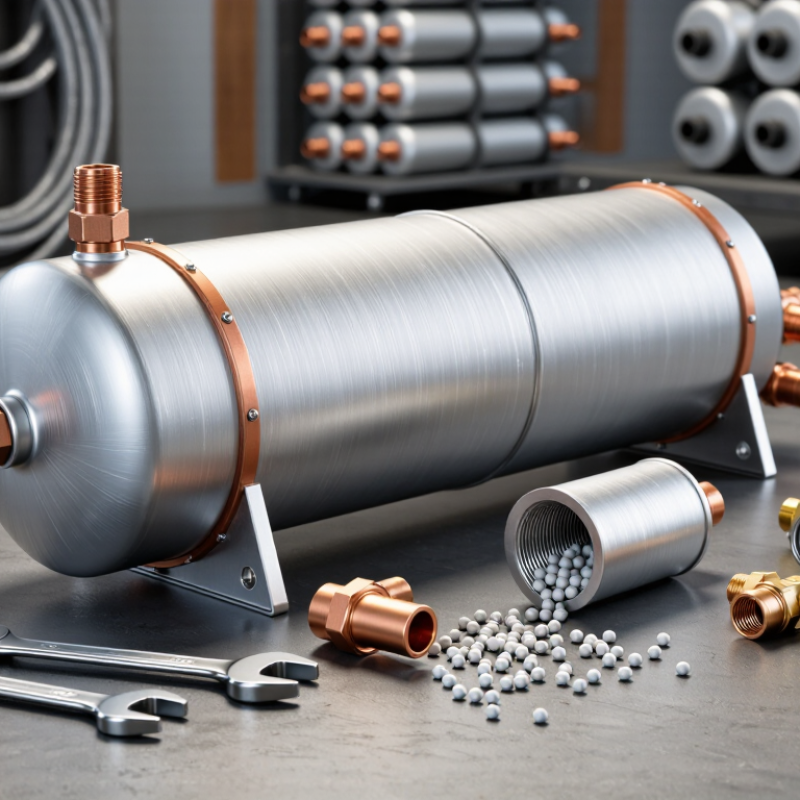
An HVAC filter drier is a small component with a critical job. It sits in the liquid line, where refrigerant flows toward the expansion device. Its desiccant captures moisture inside the sealed system. It also traps acids, metal particles, and installation debris. Moisture can freeze near the expansion device, restricting refrigerant flow. Acids may damage compressor windings over time. In field service, a clean filter drier often supports stable cooling and longer equipment life. Still, it cannot fix poor evacuation or contaminated refrigerant.
The drier also protects the compressor from harmful particles. When its internal filter becomes blocked, pressure drop can increase. Technicians may notice reduced cooling, abnormal temperature differences, or unusual system behavior. Replacement should follow the equipment maker’s service requirements and the refrigerant’s pressure conditions. Global buyers should verify refrigerant compatibility, connection size, flow direction, pressure rating, and operating temperature. A larger shell is not automatically better. Selecting by pipe size alone can create problems. I have seen small installation details cause expensive callbacks.
Tips: Install the arrow in the correct refrigerant-flow direction. Keep caps on until connection. Braze with controlled heat and protect nearby parts. Evacuate the system properly before charging. Check for leaks afterward. Do not treat the drier as a cure-all. Its performance depends on clean installation, correct sizing, and timely replacement.
A filter drier removes moisture, acids, and solid particles from a refrigeration circuit while protecting the compressor, expansion device, and other components. The chart shows the normalized pressure-drop trend of a clean filter drier as refrigerant flow increases. The values follow the engineering relationship ΔP ∝ Q², meaning that pressure drop rises approximately with the square of flow rate. Actual performance depends on refrigerant type, connection size, filter-drier construction, and rated capacity.
Check the rating table carefully. AHRI Standard 710 evaluates liquid-line filter driers through capacity, pressure-drop, and moisture-removal performance. The ASHRAE Handbook also warns that excessive pressure drop can reduce liquid quality and encourage flash gas near the expansion device. A small pressure drop matters. So does a blocked core.
Global buyers should compare the drier’s rated capacity with the system’s maximum load, not its average load. A practical allowance of 10–20% can support seasonal peaks, but adding too much capacity may slow moisture absorption and complicate oil return. That assumption deserves review. Many selection errors come from copying a familiar “tonnage” chart without checking refrigerant conditions.
The IEA’s The Future of Cooling report projects cooling energy demand could more than triple by 2050 under current trends. Refrigerant transitions make correct selection even more important. Verify compatibility with the refrigerant, oil, connection size, operating temperature, and installation direction. Keep the pressure-drop record. It is often more useful than a larger nominal size.
Material selection affects service life, pressure stability, and moisture control in every HVAC system. Copper or copper-plated steel shells resist common refrigerant environments when manufacturing quality is consistent. The core matters more than appearance. Molecular sieve captures water, while activated alumina helps reduce acid and contaminant levels. A balanced desiccant blend can support systems exposed to repeated temperature changes. Check compatibility with the specified refrigerant and lubricating oil before ordering.
Useful features should match the installation, not merely increase the specification list. Look for a clearly marked flow direction, suitable pressure ratings, and dependable brazing or flare connections. A replaceable core may reduce waste in larger systems. A moisture indicator can support field inspections, but it should not replace pressure and evacuation tests. Buyers in humid regions may need greater water capacity. Cold-climate projects should examine low-temperature flow performance.
I have seen installations fail because packaging allowed moisture to enter before commissioning. Sealed caps and traceable batch records are practical safeguards. Ask for test data, material declarations, and clear dimensions in metric and imperial units. Local service teams may prefer familiar connection sizes. That preference deserves attention. Transport vibration, long storage, and uneven warehouse conditions also influence reliability. No filter drier is perfect; selecting the largest model is not always the safest choice. A careful match between system charge, flow rate, refrigerant, and maintenance plan usually matters more.
Choosing the best HVAC filter drier in 2026 requires more than matching a catalog number. Connection type is the first practical check. Compare sweat, flare, threaded, and bi-directional designs against the system’s pipe size and installation method. A mismatched connection can create leaks, vibration, or unnecessary brazing work. Confirm maximum working pressure and refrigerant compatibility, not only nominal capacity. Small details matter.
Standards should fit the destination market. UL 207 addresses refrigerant-containing components, while EN 378 and ISO 5149 cover refrigeration system safety and installation principles. ASHRAE 34 helps classify refrigerant safety, toxicity, and flammability. These references do not automatically prove filter-drier performance. Ask for test conditions, moisture-removal capacity, pressure-drop data, and batch traceability. The IEA projects that space-cooling energy demand could more than triple by 2050, increasing the cost of weak component choices. (IEA, The Future of Cooling)
Supplier quality needs evidence. Request production inspection records, lot numbers, sealing checks, and clear storage instructions. ISO 9001 certification is useful, but it is not the whole answer. Verify whether samples match mass-production units. Check packaging after transport, especially when copper connections arrive exposed or crushed. UNEP’s 2022 technical assessment emphasizes rising demands for efficient, lower-impact cooling equipment. A filter drier cannot solve every efficiency problem, but poor filtration can damage compressors and restrict flow. No checklist is perfect. Buyers should revisit assumptions after field failures, because the cheapest connection may become the most expensive repair.
| Comparison Dimension | Brazed ODF Connection | SAE Flare Connection | Bi-Directional Heat-Pump Design | Buyer Verification Point |
|---|---|---|---|---|
| Typical application | Commercial refrigeration, split systems, condensing units, and factory-built piping | Service replacement, small packaged equipment, and installations where brazing is restricted | Reversible heat pumps and systems in which refrigerant flow changes direction | Confirm whether the system is cooling-only or reversible before selecting the flow direction |
| Common connection sizes | 1/4, 3/8, 1/2, 5/8, 7/8, 1 1/8, and 1 3/8 in ODF copper connections are common market sizes | 1/4, 3/8, 1/2, and 5/8 in SAE flare connections are common in smaller systems | Usually offered in solder or brazed connections; some designs use matched inlet and outlet sizes | Match the connection type and outside diameter exactly; do not substitute nominal pipe size without checking dimensions |
| Connection advantage | Compact, low-leakage joint when correctly brazed; suitable for vibration-controlled permanent installations | Fast field installation and easier replacement without hot work | Supports refrigerant flow in both directions when internally designed and rated for that purpose | Request installation instructions, allowable torque, brazing limits, and flow-direction requirements |
| Desiccant technology | Molecular sieve, activated alumina, or blended desiccant cores are widely used | Commonly uses compact molded or bonded desiccant elements | Requires a mechanically secure core or element that remains stable during flow reversal | Ask for desiccant composition, water-capacity test method, and compatibility with the selected refrigerant and oil |
| Moisture-control function | Removes residual moisture after assembly, evacuation, or accidental moisture ingress | Useful for service work, but capacity is normally limited by the compact housing size | Must maintain moisture adsorption performance in both flow directions | Compare rated water capacity at a stated temperature and refrigerant condition, not only the desiccant mass |
| Acid and contaminant control | Suitable versions can capture acids, sludge, metallic particles, and decomposition products after compressor failure | Usually selected for light contamination control and routine service protection | Should include bidirectional filtration without excessive pressure drop or core movement | For a burnout, choose a clean-up drier with documented acid-removal performance and plan follow-up replacement |
| Filtration level | Fine particulate filtration is commonly integrated at the outlet side | Filtration is generally intended for small-system protection rather than heavy debris loading | Filtration must work consistently in both directions and resist bypass during flow reversal | Request particle-retention data, bypass design details, and clean pressure-drop curves |
| Refrigerant compatibility | Often available for HFC, HFO, R-32, R-290, R-600a, CO₂, and other refrigerants, but approval is model-specific | Usually intended for common residential and light-commercial refrigerants; verify flammable-refrigerant approval | Requires specific approval for the refrigerant, oil, pressure level, and reversing duty | Never infer compatibility from connection size; obtain a written refrigerant and oil compatibility list |
| Pressure requirement | Select a maximum allowable working pressure above the system design pressure for both operating and standby conditions | Verify flare-body, nut, and tube pressure ratings as a complete assembly | Pressure rating must apply to both flow directions and the complete heat-pump operating envelope | Compare PS or maximum working pressure on the product documentation with the equipment design pressure |
| Temperature requirement | Must tolerate the liquid-line temperature range and brazing exposure according to the installation instructions | Must remain leak-tight across the equipment operating temperature range and service cycles | Must tolerate repeated temperature cycling associated with heating and cooling modes | Check minimum and maximum operating temperature, storage temperature, and allowable heating time |
| Pressure-drop comparison | Generally offers lower pressure drop when correctly sized for the mass flow rate | Small passages may create higher pressure drop at high flow rates | Pressure drop must be checked in both directions, including the less favorable direction | Use published pressure-drop data at the actual refrigerant, evaporating or condensing condition, and mass flow |
| Applicable technical framework | Product pressure safety and refrigerating-system requirements may involve EN 378, ISO 5149, ASME B31.5, or regional rules | The same system-level rules apply; local requirements for flare connections and service work may also apply | System and component documentation should address reversing operation and applicable pressure-equipment rules | Confirm the required market route, such as PED 2014/68/EU in the EU, UK pressure-equipment rules, or local certification |
| Material and corrosion checks | Copper or copper-alloy tubes with steel or coated housings are common; material selection must suit refrigerant and environment | Flare components require controlled surface finish and thread quality to prevent leakage | Housing and internal supports must resist vibration, thermal cycling, and corrosion in both modes | Request material declarations, salt-spray or corrosion data where relevant, and coating specifications |
| Supplier quality evidence | Lot traceability, helium or pressure leak testing, dimensional inspection, and controlled brazing processes are valuable indicators | Thread gauges, flare-seat inspection, torque guidance, and leak-test records are especially important | Bidirectional flow testing, vibration testing, pressure cycling, and core-retention testing should be documented | Prefer suppliers able to provide batch certificates, inspection plans, test reports, and a corrective-action process |
| Quality-management expectation | An audited ISO 9001 quality-management system can support repeatability, but it does not replace product testing | Quality controls should cover thread accuracy, flare geometry, cleanliness, and final leak testing | Quality controls should specifically address flow reversal, fatigue, vibration, and internal-part retention | Check certificate validity, audit scope, production location, and whether the certificate covers the relevant product process |
| Recommended selection priority | Best general choice for permanent installations when brazing equipment and trained technicians are available | Best for service convenience and small systems when the flare joint is permitted and correctly torqued | Best for reversible systems only when bidirectional performance is explicitly documented | Rank pressure safety, refrigerant compatibility, flow capacity, moisture capacity, and documented quality before price |
Selecting the best HVAC filter drier in 2026 starts with the refrigeration system, not the product label. Match the drier with the refrigerant, oil type, system capacity, and expected operating temperature. A drier designed for a small heat pump may restrict flow in a commercial chiller. Check the rated flow capacity and allowable pressure drop carefully. Small details matter.
I have seen technicians replace a saturated drier without checking the cause of contamination. That mistake can repeat the failure. Choose a model with suitable moisture and acid-removal performance, especially after compressor burnout or a major component replacement. Confirm connection size, installation direction, and maximum working pressure against the equipment documentation. The arrow must follow refrigerant flow.
Look beyond marketing language. Review technical data, independent test information, and recognized safety requirements. A reliable selection should support stable operation without creating unnecessary restriction. Use temperature readings and pressure measurements after installation. If the liquid line shows an unusual temperature drop, investigate before blaming the drier. It may indicate undersizing, blockage, or poor charging practice.
I still find field conditions less predictable than catalog examples. Dust, moisture, and hurried brazing can change results. Keep the drier sealed until installation, purge with dry nitrogen during brazing, and replace it whenever the system has been opened for too long. A qualified technician should verify the final condition.