
Your Source for Trays!

2026 Best Water Oxygen Meter for Global Buyers?

Choosing the 2026 best Water Oxygen Meter requires more than comparing prices, probes, and digital displays. Global buyers need dependable dissolved oxygen readings in changing environments, from aquaculture tanks and wastewater channels to laboratories and open-water surveys. A useful meter should measure oxygen accurately while compensating for temperature, salinity, and atmospheric pressure. These details can change a reading within minutes.

Field experience matters here. A bright screen is helpful beside a pond at sunrise. A sealed probe matters when spray, mud, or rain reaches the equipment. Reliable models should offer stable calibration, replaceable sensor components, clear data records, and practical battery life. Certification, warranty support, and local service also deserve careful attention, especially when buyers import equipment across regions. Specifications can look impressive. Real support may be harder to find.

No meter is perfect. Membrane probes may require more maintenance, while optical sensors often cost more upfront. Some low-cost units perform well in clean water but become inconsistent after repeated exposure to biological growth. That weakness is easy to miss. Buyers should check testing methods, operating ranges, calibration procedures, and published accuracy claims before making a decision. This guide compares the most important features for international users and explains where each design performs best. It also recognizes an uncomfortable truth: the cheapest instrument may become expensive after replacement parts, shipping delays, and unreliable results. Careful selection protects both measurements and daily operations.
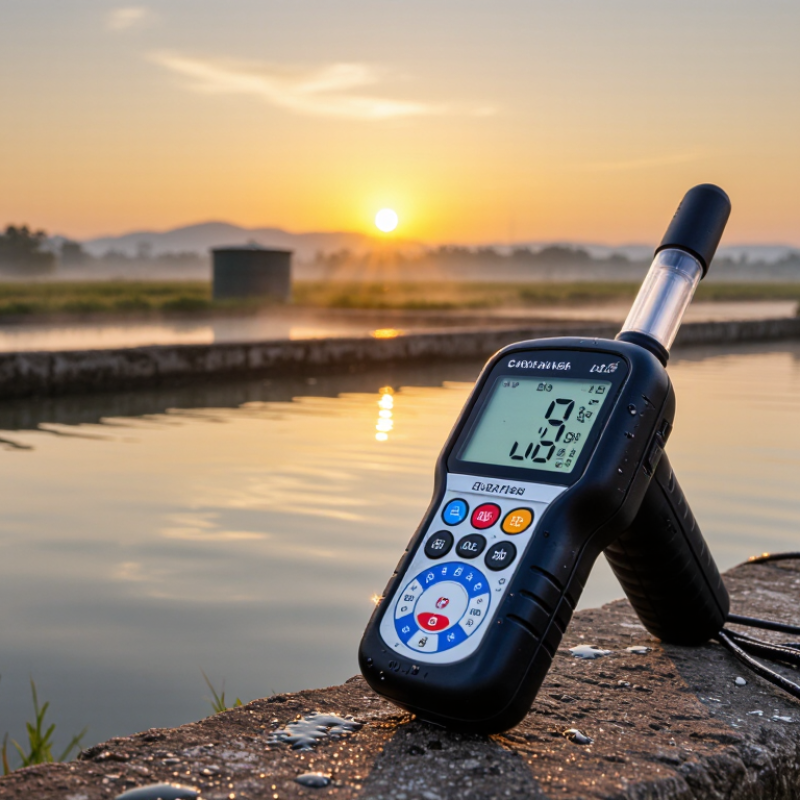
2026 Best Water Oxygen Meter for Global Buyers?

What Is a Water Oxygen Meter and Why Does It Matter?

What Is a Water Oxygen Meter and Why Does It Matter?

A water oxygen meter measures dissolved oxygen, usually shown in milligrams per liter or percentage saturation. It uses a probe placed directly into the water. Some models also record temperature, salinity, and pressure. These readings help explain whether aquatic conditions support fish, plants, or microorganisms. Oxygen levels can change quickly after rain, algae growth, mixing, or organic waste decomposition. A clear-looking pond may still contain dangerously little oxygen.

For global buyers, measurement reliability matters more than a crowded feature list. Look for automatic temperature compensation, replaceable sensors, strong waterproof protection, and simple calibration steps. A field technician may need readings beside a pond, inside a treatment tank, or on a moving boat. The instrument should respond steadily without requiring delicate handling. Calibration solutions must be fresh, and the probe needs cleaning after muddy or biological samples. Small maintenance errors can distort an important decision.

No meter is perfect. Readings may drift when the membrane is damaged or the sensor is poorly stored. I have found that repeated measurements often reveal more than one impressive number. Test at different depths and times, especially before sunrise in algae-rich water. Record the temperature, weather, and sampling location. This habit creates useful evidence, although it takes extra minutes. In difficult conditions, even experienced users should question unusual results before changing water management practices.

How Water Oxygen Meters Measure Dissolved Oxygen

2026 Best Water Oxygen Meter for Global Buyers?

How Water Oxygen Meters Measure Dissolved Oxygen

A water oxygen meter measures dissolved oxygen, or DO, in milligrams per litre and percentage saturation. Most instruments use either an electrochemical probe or an optical sensor. Electrochemical probes create a small electrical current when oxygen reaches the cathode. Optical probes measure changes in luminescence after light excites a sensing layer. ISO 5814 describes electrochemical measurement, while ISO 17289 covers optical methods.

Temperature, salinity, and atmospheric pressure strongly affect the reading. At 20°C, freshwater holds about 9.1 mg/L at full air saturation. At 25°C, the value falls to roughly 8.3 mg/L, according to standard water-quality calculations used in USGS field methods. The US EPA notes that healthy aquatic conditions often require approximately 5 mg/L or more, although local criteria vary by species and season. A precise display does not guarantee a reliable sample.

Tips: Calibrate near the testing temperature. Check the membrane, sensor cap, and cable before use. Rinse with clean water, not untreated tap water. Record time, depth, temperature, salinity, and location with every result. Optical probes need less routine maintenance, but they are not maintenance-free. Field technicians sometimes trust automatic compensation too much. That is a weak habit. ISO methods still depend on careful sampling, stable sensors, and documented quality control.

2026 Best Water Oxygen Meter for Global Buyers? - How Water Oxygen Meters Measure Dissolved Oxygen

A practical comparison of dissolved oxygen meter technologies, specifications, and selection criteria for freshwater, seawater, wastewater, aquaculture, environmental monitoring, and laboratory use.

Dissolved Oxygen Meter Selection Guide for Global Buyers
Measurement Technology How It Measures Dissolved Oxygen Typical DO Range Typical Accuracy Response Time Maintenance Requirements Important Compensation Factors Best-Fit Applications Global Buyer Considerations
Optical Luminescent A fluorescent or phosphorescent sensing layer is excited by light. Dissolved oxygen changes the emitted light intensity and phase, which the meter converts into an oxygen concentration. 0–20 mg/L; up to approximately 200% air saturation, depending on the sensor and water conditions. Typically ±0.1 mg/L or ±1% of the reading, subject to the instrument specification and calibration quality. Usually 10–60 seconds to reach a stable reading. Generally low. The sensing cap should be kept clean and replaced according to service life; no electrolyte filling is normally required. Temperature, barometric pressure, salinity, and sensor condition. Routine field monitoring, aquaculture, environmental surveys, wastewater treatment, and long-term logging. Low-maintenance choice
Check replacement-cap availability, data logging, IP rating, and local service support.
Polarographic An applied voltage drives oxygen reduction at a cathode. The resulting electrical current is proportional to the amount of dissolved oxygen reaching the electrode. 0–20 mg/L; commonly 0–200% air saturation. Typically ±0.2 mg/L or approximately ±2% of the reading, depending on calibration and membrane condition. Often 30–120 seconds; the probe may require a warm-up period before use. Regular membrane inspection, electrolyte replacement, polishing or cleaning of electrodes, and protection from air bubbles. Temperature, salinity, barometric pressure, membrane condition, and stirring or water flow. Laboratory testing, wastewater process control, education, and general-purpose water analysis. Proven electrochemical method
Confirm membrane kits, electrolyte availability, warm-up requirements, and user training needs.
Galvanic Oxygen is reduced at a cathode while a galvanic reaction generates current without an external polarization voltage. 0–20 mg/L; commonly 0–200% air saturation. Typically around ±0.2–0.5 mg/L, depending on sensor design and operating conditions. Usually 30–120 seconds, with a gradual response influenced by membrane and flow conditions. Membrane and electrolyte replacement, electrode cleaning, calibration, and prevention of leaks or air bubbles. Temperature, salinity, pressure, membrane condition, and water movement across the membrane. Portable testing, aquaculture, field sampling, and applications requiring a simple electrochemical probe. Simple field operation
Evaluate ongoing consumable costs and the availability of compatible membranes and electrolyte.
Rugged Portable Meter Usually combines an optical, polarographic, or galvanic probe with a handheld display, internal calibration functions, and battery operation. Commonly 0–20 mg/L and 0–200% saturation. Often ±0.1–0.5 mg/L, depending on the selected probe technology. Approximately 10–120 seconds, depending on sensor type and sample movement. Probe-specific maintenance; routine cleaning, calibration checks, and battery care are essential. Temperature, salinity, barometric pressure, altitude or water pressure, and sample flow. Field inspections, aquaculture ponds, rivers, lakes, treatment plants, and inspection services. Best for mobile work
Look for IP65–IP68 protection, glove-friendly controls, replaceable batteries or USB charging, and a clear warranty.
Laboratory Benchtop Meter Uses a connected DO probe and a stable measurement interface for controlled samples, repeatability, calibration records, and optional data export. Commonly 0–20 mg/L; some systems display saturation and partial pressure. Often ±0.05–0.2 mg/L when used under controlled temperature and calibration conditions. Approximately 10–120 seconds, depending on the probe. Lower exposure to field contamination, but the probe still requires cleaning, calibration, and periodic replacement of sensing components. Temperature, salinity, barometric pressure, sample mixing, and calibration method. Quality control laboratories, research, food and beverage testing, universities, and process laboratories. Best for repeatability
Prioritize traceable calibration workflows, GLP records, export formats, and compatibility with laboratory accessories.
In-Line Process DO Sensor A permanently installed optical or electrochemical probe measures oxygen continuously in a pipe, tank, aeration basin, or process vessel. Often 0–20 mg/L; ranges vary with probe design, pressure, and process requirements. Typically ±0.1–0.3 mg/L or ±1–2% of the reading, subject to installation and process conditions. Approximately 10 seconds to several minutes, depending on process response and sensor configuration. Scheduled cleaning, verification, sensor replacement, cable inspection, and periodic calibration or validation. Temperature, pressure, salinity, flow, fouling, bubbles, and installation position. Activated-sludge wastewater treatment, fermentation, aquaculture systems, and industrial process control. Best for continuous control
Check output protocols, mounting options, chemical compatibility, pressure rating, and preventive-maintenance requirements.

Selection note: Dissolved oxygen is commonly reported in mg/L, parts per million, percent air saturation, or partial pressure. For comparable results, the meter should compensate for temperature, barometric pressure or altitude, and salinity when measuring saline or brackish water. The stated ranges and accuracies are typical industry values; buyers should verify the final instrument specification, calibration procedure, operating temperature, pressure rating, and applicable local standards before purchase.

Key Features to Compare Before Buying a 2026 Model

For global buyers, a 2026 water oxygen meter should be judged beyond its screen size. Dissolved oxygen accuracy matters in aquaculture, wastewater checks, and field research. The US EPA commonly identifies 5–8 mg/L as a healthy dissolved oxygen range for many surface waters. However, temperature, salinity, altitude, and biological activity can change the reading quickly. Compare automatic temperature compensation, salinity correction, altitude adjustment, and calibration records. ISO 5814 provides a recognized framework for electrochemical dissolved oxygen measurement. Optical sensors may reduce maintenance, while electrochemical probes can offer lower replacement costs. Neither option is perfect.

Look for a stated accuracy near ±0.1 mg/L, a clear resolution of 0.01 mg/L, and stable readings after immersion. An IP67 or IP68 enclosure helps during wet fieldwork. Data logging, USB export, GPS tagging, and a replaceable sensor cap are useful for audits. Battery life should cover a full sampling day, not only laboratory testing. The WHO and UNICEF Joint Monitoring Programme reported that 2.2 billion people lacked safely managed drinking water in 2022. That figure underlines the need for dependable field data, although an oxygen meter alone cannot confirm drinking-water safety.

Tips: Test the meter with fresh calibration solutions before each survey. Rinse the probe between sites. Record water temperature and sampling depth. A perfect specification sheet can still mislead; sensor fouling and poor calibration may create confident, wrong results. Check local service support before ordering internationally. Personally, I would choose traceable calibration and easy probe replacement over extra software features.

2026 Best Water Oxygen Meter for Global Buyers

Key reference: dissolved oxygen concentration in freshwater at sea level and 100% air saturation across common water temperatures.

How to compare a 2026 water oxygen meter: Choose a model with automatic temperature compensation, adjustable salinity and altitude correction, a measurement range covering approximately 0–20 mg/L, suitable accuracy for your application, and a stable calibration workflow. Dissolved oxygen naturally decreases as water temperature rises, so temperature compensation is essential for reliable field readings.

Reference values are rounded freshwater oxygen-saturation concentrations at standard atmospheric pressure. Actual readings vary with altitude, salinity, pressure, water movement, and biological activity.

Best Water Oxygen Meter Types for Global Applications

For global applications, the best water oxygen meter depends on the water, workflow, and maintenance capacity. Dissolved oxygen affects aquaculture health, wastewater treatment, and river assessment. The FAO State of World Fisheries and Aquaculture 2024 reported 94.4 million tonnes of aquatic animals from aquaculture in 2022. That scale makes reliable oxygen control more than a laboratory preference.

Optical dissolved oxygen meters suit field teams and hatcheries. They need no electrolyte replacement and perform well during repeated sampling. Their luminescent caps reduce flow sensitivity, but damaged caps can create false confidence. Electrochemical meters remain practical for wastewater plants and routine testing. They usually cost less, yet membranes, electrolyte, and stirring require attention. Inline optical sensors support continuous process control, especially where oxygen changes quickly. Choose them only when cleaning access and calibration records are realistic.

A useful field routine includes air calibration, temperature checks, and removing trapped bubbles from the probe. The APHA Standard Methods 4500-O G method recognizes membrane-electrode measurement, while ISO 5814 describes electrochemical oxygen determination in water. These references support method consistency across laboratories and sites. WHO and UNICEF’s 2024 JMP report estimated that 2.2 billion people lacked safely managed drinking water in 2022, reminding buyers that instruments may operate far beyond modern laboratories. Portable meters should therefore survive transport, humidity, and imperfect training. The “best” type is sometimes the one technicians can verify correctly.

How to Choose, Use, and Maintain the Right Meter

2026 Best Water Oxygen Meter for Global Buyers?

How to Choose, Use, and Maintain the Right Meter

Choosing a dissolved oxygen meter starts with the water, not the screen. FAO AQUASTAT reports that agriculture uses about 70% of global freshwater withdrawals. Irrigation channels, ponds, aquaculture tanks, and wastewater sites need different measurement ranges. Select an optical sensor for low-maintenance field work. Choose an electrochemical sensor when replacement parts and lower purchase cost matter. Check temperature compensation, salinity correction, altitude settings, battery life, and IP protection before buying. ISO 5814:2012 and ISO 17289:2014 provide recognized guidance for electrochemical and optical oxygen measurement.

Use the meter in flowing water when possible. Rinse the probe first. Remove visible bubbles from the sensing surface. Bubbles can create falsely high readings. Wait until temperature and oxygen values stabilize. Record water temperature, salinity, location, time, and weather. The U.S. EPA emphasizes documented field procedures because inconsistent sampling can weaken otherwise accurate results. A reading of 6 mg/L means little without its temperature and site context.

Maintenance is simple, but often neglected. Calibrate according to the manual, usually before demanding surveys. Inspect the membrane, cap, cable, and optical coating. Store the probe as specified; dry storage can damage some sensors. Carry a spare battery and a clean cloth. I have seen good meters fail because users wiped sensors aggressively. That mistake is easy to repeat. Data should be reviewed, not worshipped. Compare unusual readings with a second method when oxygen changes suddenly. Corrosion, fouling, and poor calibration remain ordinary problems.