
Your Source for Trays!

2026 Best Beverage Can End Types for Global Buyers

Choosing a Beverage Can End is not a minor packaging decision. It affects opening, product protection, filling-line performance, and customer perception. A familiar-looking end may still differ in diameter, score design, tab geometry, or internal coating. Small details matter. They can influence opening effort, sealing consistency, and compatibility with the can body.

Standard stay-on-tab ends are common for carbonated soft drinks, beer, and many ready-to-drink products. Their retained tabs help keep loose metal out of the waste stream. Full-aperture ends create a wider opening for drinks served directly from the can, where the product and drinking experience suit that format. Peelable ends can offer broad access, but their suitability depends on product needs, handling, and packaging equipment. No format wins every time. The practical choice depends on the beverage, target market, and production setup.

For global buyers, comparing specifications matters more than choosing by appearance or price alone. Confirm end diameter, material, lining, pressure requirements, and compatibility with the intended can and seaming equipment. Ask suppliers for technical data and samples, then verify performance with the canmaker and filling-line team. A sample can reveal issues a specification sheet may not. Even so, one test run may not reflect every production condition. This guide compares key end types and the trade-offs buyers should consider, so sourcing decisions can be based on real requirements rather than assumptions.
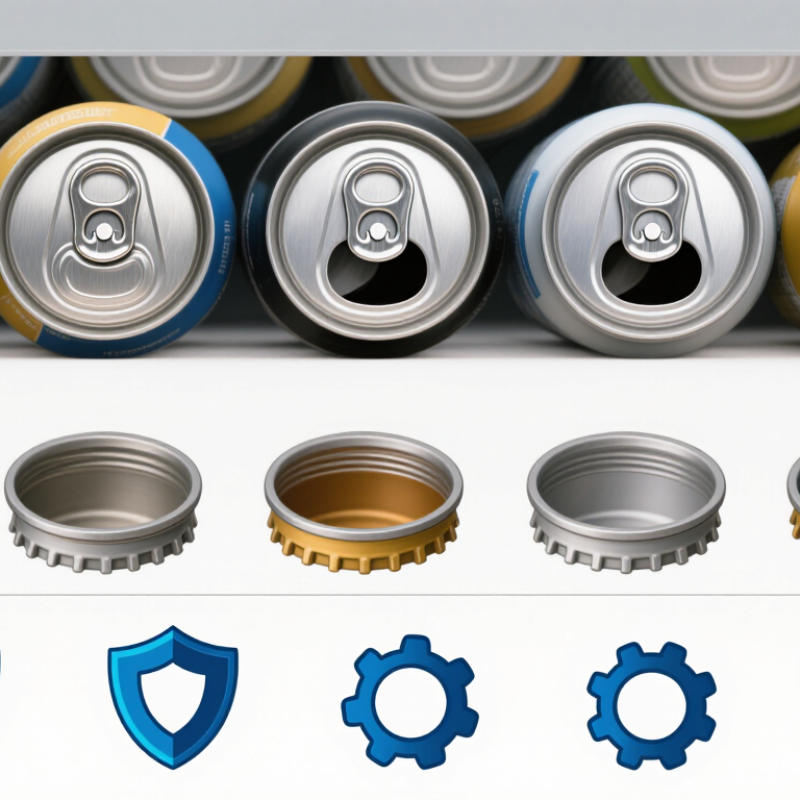
2026 Best Beverage Can End Types for Global Buyers

Beverage Can End Codes Explained: The 202 End Measures 2⅛ in (53.98 mm)

The 202 end code describes a nominal diameter of 2⅛ inches, or 53.98 mm. The number comes from a traditional inch-based sizing system: “2” indicates two inches, and “02” adds two sixteenths. The metric figure is rounded from 53.975 mm.

That measurement refers to the end size, not the can’s fill volume or body diameter. It sounds simple. It isn’t. Buyers comparing suppliers should confirm what the drawing measures, since the curl, countersink, and seam profile affect fit. A caliper reading across the curl can help with a quick incoming check, but it cannot confirm seam performance by itself.

For a global order, request a current technical drawing and confirm the seaming specifications with the can maker. Check the 202 designation alongside material, coating, and opening details. Two ends can carry the same code yet differ in features that matter on a production line. That detail is easy to overlook, especially when product sheets list only the nominal diameter.

Standard SOT, CDL, and B64 Ends: Compare Opening Design and Line Compatibility

For global buyers, compare SOT, CDL, and B64 ends by opening behavior and equipment fit, not by name alone. Standard SOT ends use a riveted tab that stays attached after opening. They are familiar to operators and consumers. CDL designs alter the end profile and material distribution, so they require matching can-body and seaming specifications. B64 can describe a particular end format; confirm its exact dimensions and drawing with the supplier.

Opening feel matters. A tab should lift cleanly, score predictably, and leave no sharp, irregular edge. On a filling line, check end diameter, curl, countersink depth, chuck fit, and double-seam settings. A small mismatch can cause leaks or downtime. Fit matters. Run trial seams at production speed, then inspect teardown measurements and opening force. I would not approve a format from a sample alone.

The Can Manufacturers Institute and Aluminum Association reported a 43% U.S. aluminum beverage-can recycling rate for 2023. This is a U.S. benchmark, not a global figure, but it underscores the value of consistent packaging specifications. Ask suppliers for current technical drawings, seam limits, and line-trial data for each end type. A label can be useful. It is not a compatibility guarantee.

2026 Best Beverage Can End Types for Global Buyers — Standard SOT, CDL, and B64 Ends: Compare Opening Design and Line Compatibility

End Type What the Designation Describes Opening Design Material and Construction Considerations Line Compatibility Buyer Checks
Standard SOT
(Stay-On-Tab)
A stay-on-tab opening system. “SOT” describes the opening style, not a universal end diameter or full dimensional specification. A scored panel is opened by lifting a riveted tab. The tab remains attached to the end after opening. End stock, score geometry, rivet, tab shape, and end profile depend on the specified design and application. Can run on a compatible filling and seaming line when the end matches the can-body diameter, end profile, seaming specifications, and seamer setup. SOT alone does not guarantee fit. Confirm end diameter, curl and countersink dimensions, tab and score specifications, seam requirements, and the approved end drawing.
CDL
(Can Design Lightweight)
A lightweight end design approach intended to reduce end-material use while meeting the required performance specification. Commonly uses a scored, stay-on-tab opening. Exact score layout and tab details depend on the particular CDL specification. Reduced material use makes design control and verification important. Performance must be assessed against the required pressure, handling, and application conditions. Compatibility depends on the specific CDL end dimensions and seaming profile. Confirm the seamer setup and tooling against the end supplier’s drawings; do not assume a conventional end setting will transfer unchanged. Request the dimensional drawing, material and performance specifications, seaming recommendations, and validation requirements for the intended can body and product.
B64 A designation used for a particular end format or profile. The label alone is not a complete dimensional or performance specification. Opening configuration can depend on the specified B64 design; verify whether the supplied version uses a stay-on-tab opening and review its score and tab details. Do not infer material gauge, end diameter, or pressure capability from the designation alone. These are defined by the product specification and drawing. Requires confirmation that the end profile, dimensions, and seam specifications match the can body and seaming equipment. Compatibility cannot be established from “B64” alone. Obtain the full end drawing and identify the matching can-body specification, seamer tooling, operating limits, and any line-trial requirements.

Purchasing note: SOT describes an opening mechanism, while CDL and B64 refer to design or format designations whose details may vary by specification. Before ordering, compare the approved end drawing with the can-body and seamer specifications, and validate the combination on the intended line.

Wide-Opening Ends: Match Aperture Size to Beverage Type and Pouring Needs

A wide-opening can end can make a beverage easier to drink or pour, but the best aperture depends on how the product is used. A smooth, still drink may suit a generous opening for quick sipping. Thick juice or a beverage with small fruit pieces may need more clearance to reduce awkward flow. For sparkling drinks, a broad opening can deliver a faster pour, which some users prefer and others may find too forceful. Small details matter.

Think about the serving moment. Will customers drink directly from the can, pour into a glass, or add ice? A wider aperture can help with glass pouring and reduce splashing when the can is tilted slowly. Yet opening size is only one part of the decision. The tab’s lift, the cut edge, and the end’s structural performance also affect comfort and handling. Test it cold. Chilled cans can feel different in the hand, and condensation may make a small tab harder to grip.

Before choosing an end, test filled samples with the actual beverage and intended serving method. Check flow at several tilt angles, not just during a quick tasting. Buyers should also confirm that the end matches their can body, filling equipment, and transport needs. Requirements vary between production lines and markets, so supplier specifications deserve careful review. A larger aperture is not automatically better; sometimes a first impression at the tasting table misses how the can performs in everyday use.

How to read this: Bar values show the theoretical area of a circular opening, calculated from its diameter. Larger openings can support faster flow and easier pouring; choose an aperture to suit the beverage and pour experience. These are illustrative sizes, not standardized can-end specifications. Actual end openings may be non-circular and vary by design, so confirm dimensions and performance with the supplier.

Recyclability by Region: IAI Reports a 71% Global Can Recycling Rate

The International Aluminium Institute (IAI) reported a 71% global recycling rate for aluminium beverage cans in its 2024 assessment. That means roughly seven in ten cans were recycled, but the global average conceals regional differences. Collection systems, deposit-return coverage, sorting capacity, and consumer access all influence recovery. The figure is an industry estimate, not a guarantee for every market. That gap matters.

For global buyers, choose an end compatible with the can body, seaming equipment, and local recycling stream. Specify an aluminium end and stay-on tab, and avoid unnecessary attached components that may complicate sorting. These choices cannot fix weak collection, but they can reduce avoidable design friction. IAI reports that recycling aluminium uses about 5% of the energy required to produce primary metal. Still, recycling rates depend on reporting boundaries and the quality of national data. Compare regional collection information before treating one end format as universally optimal.

How Global Buyers Compare 2026 Ends: Check Specifications, Seaming, and Supply Availability

Global buyers should compare beverage can ends by more than opening style. Confirm the end diameter, profile, material gauge, coating, and tab design against the can body and filling line. Small differences matter. A seemingly minor profile mismatch can affect seaming or production speed.

Standard stay-on-tab ends suit many beverage formats, while wider openings can improve pouring and drinking access. The better choice depends on the product, consumer use, and line setup. Ask suppliers for technical drawings, tolerances, and seam requirements. Then test samples with the intended can body. Check seam thickness, overlap, and visual quality during a trial run. Specifications are useful, but they do not replace production checks.

Supply availability deserves equal attention. Ask whether the end size is stocked, made to order, or dependent on specific materials and tooling. Confirm realistic lead times, minimum order quantities, and options if demand changes. Request samples from a production batch when possible. This process can feel tedious, and one measurement may still be overlooked. A quick quotation is not proof of reliable supply or a sound seam. Compare documented specifications with actual trial results before committing to volume.

Article Source: