
Your Source for Trays!

2026 Top Double Glass Door Suppliers for Global Buyers

For global buyers, a Double Glass Door is more than a glazed opening. It affects daylight, comfort, security, and a building’s energy performance. The International Energy Agency’s 2023 Global Status Report for Buildings and Construction estimates that buildings and construction accounted for 34% of global energy demand in 2022. That figure makes glazing specifications worth careful review, even when a door looks simple in a product photo.

Architect Louis Kahn is often credited with saying, “The sun never knew how great it was until it struck the side of a building.” His observation speaks to the value of daylight, but light alone is not enough. Buyers comparing suppliers should check glass build-up, insulating-edge details, hardware, tested performance, and the availability of replacement parts. Ask for product data tied to the exact configuration—not just a general catalogue claim. Small details matter.

A strong supplier should explain how its doors perform in the buyer’s climate and intended setting. Confirm dimensions, finish options, packing methods, lead times, and quality-control procedures before placing an order. Request clear documentation, and compare like with like. No shortcut works. A low quotation may leave important questions unanswered, while an impressive specification still needs practical verification. This 2026 guide introduces suppliers for global buyers and offers a grounded starting point for assessing product fit, service, and consistency. Some choices remain trade-offs; that is worth acknowledging.
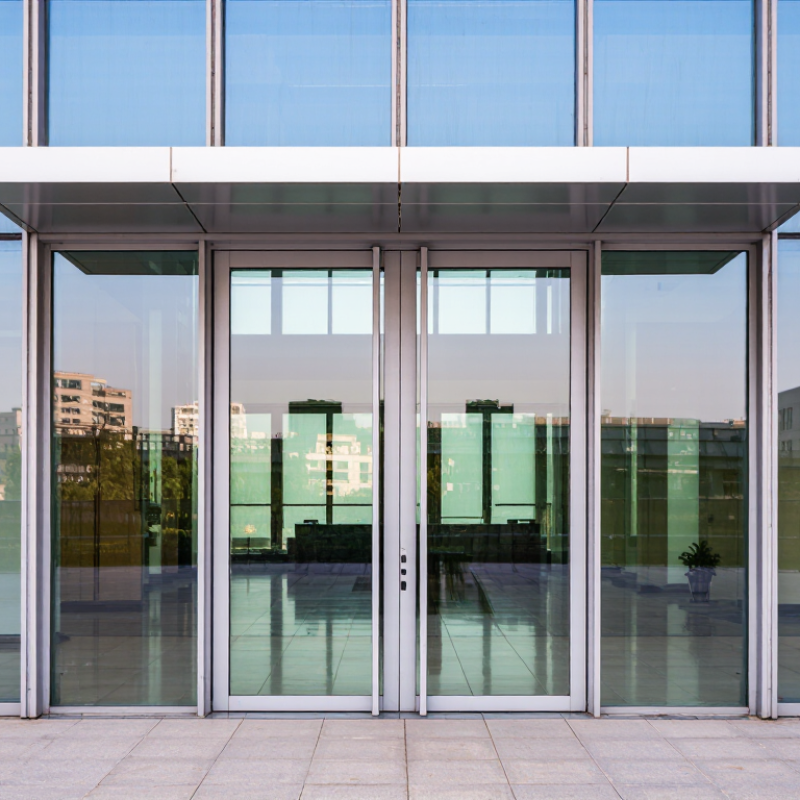
2026 Top Double Glass Door Suppliers for Global Buyers

Double-Glazed Door Types: 2-Pane IGUs, Frame Materials, and Opening Systems

Double-glazed doors use two glass panes separated by a spacer and sealed cavity, forming a two-pane insulating glass unit (IGU). The cavity may contain air or insulating gas. Low-emissivity coatings can also improve thermal performance. Ask suppliers for documented performance data, not just claims of energy efficiency. Condensation between panes may indicate a failed seal. Details matter.

Tips: Match the opening system to the room. Swing doors need clearance; sliding doors save floor space but need clean tracks. Folding doors create wider openings, though alignment and hardware deserve close inspection. Request frame drawings, glass specifications, test reports, and warranty terms.

Frame materials affect comfort and upkeep. Thermally broken aluminum can limit heat transfer through the frame, while uPVC needs little routine painting. Timber offers a warm appearance but may need more maintenance in exposed locations. Fiberglass is another option, though availability varies. No frame suits every building. Check how the frame, IGU, and seals work together, and ask how the complete door performs in conditions similar to the installation site.

Compare Thermal Ratings: NFRC U-Factor, SHGC, and Visible Transmittance

2026 Top Double Glass Door Suppliers for Global Buyers

Compare Thermal Ratings: NFRC U-Factor, SHGC, and Visible Transmittance

For double-glass doors, compare certified whole-product ratings—not just glass specifications. NFRC U-factor measures heat flow; lower values generally indicate better insulation. SHGC measures the fraction of solar heat entering through the product. Visible transmittance (VT) indicates how much daylight passes through. NFRC labels make these figures easier to compare across products. Check that supplier quotes identify the tested door configuration, including frame and glazing.

Small differences matter. The U.S. Department of Energy’s Energy Saver guidance estimates that heat gain and loss through windows account for 25–30% of residential heating and cooling energy use. A glazed door can contribute to that load, though actual impact depends on installation, size, and exposure. In cold, sunny locations, buyers may balance a low U-factor with useful solar gain. In hot or strongly sunlit settings, a lower SHGC can help limit heat entering the room. Higher VT can brighten interiors, but may increase glare. One caveat: ratings alone cannot predict comfort. Ask for certified values, then consider orientation, shading, and the intended room.

Verify Air Leakage: ≤0.3 cfm/ft² at 1.57 psf (NFRC 400)

For buyers comparing double glass doors, air leakage deserves close attention. A rating of ≤0.3 cfm/ft² at 1.57 psf under NFRC 400 gives a measurable point of comparison. It indicates how much air passed through the tested assembly under specified pressure. That matters. Ask suppliers for the actual test report, not only a catalog figure.

Check the details. Confirm that the tested door matches the model you plan to buy, including its size, glazing, frame, seals, and locking hardware. Changes to any of these can affect performance. A report should identify the test conditions and measured leakage clearly. If the value is close to the limit, request clarification about rounding and the tested specimen.

The number is useful, but it does not describe every installation. A door can test well and still leak if the opening is out of square, the sill is poorly sealed, or the frame is adjusted badly on site. Not a guarantee. For a fair supplier comparison, review the test evidence alongside installation instructions, warranty terms, and support for replacement seals. I would also ask how the supplier handles quality checks between production batches; this detail is easy to overlook.

Check Supplier Standards: EN 14351-1, ISO 9001, and Product Testing

For 2026 sourcing, treat EN 14351-1 as a product-performance reference, not a blanket quality guarantee. For EU-bound windows and external pedestrian doorsets, request the applicable Declaration of Performance and supporting conformity documents. Check that the tested model matches the quote: frame material, glass build-up, dimensions, seals, and hardware can change results. Ask for reports covering thermal transmittance, air permeability, water tightness, and wind resistance. Paper is not performance.

ISO 9001 indicates a certified quality-management system; it does not certify each door’s performance. Verify the certificate’s validity, production-site coverage, and scope, then compare it with batch inspection and traceability records. UNEP and the Global Alliance for Buildings and Construction reported that buildings and construction accounted for 32% of global energy demand and 34% of energy-related CO₂ emissions in 2023, in their 2024 Global Status Report. That context makes credible thermal data worth checking, though one number cannot predict a door’s real-world performance. Ask for raw reports from a competent testing laboratory, including specimen size and test date. Still, documents can look cleaner than a factory floor; request recent production photos or arrange an audit when practical.

Compare Global Suppliers by Lead Time, Warranty, Customization, and Cost

Compare suppliers against one written specification, not separate sales descriptions. State door dimensions, glass thickness, frame finish, opening direction, hardware, and required safety features. Ask each supplier to confirm when its lead-time clock begins. Production may start only after drawings, payment, or sample approval. Get separate estimates for sampling, production, packing, and shipping. A low unit price can hide costly crating or delivery charges.

Check warranty terms line by line. Ask whether seals, rollers, handles, and glass are covered, and how claims are handled across borders. Details matter. A long warranty is less useful if labor, freight, or replacement parts are excluded. For customization, request a marked-up drawing and a physical finish sample; screen colors rarely match metal exactly. Compare total landed cost, payment stages, spare-part availability, and packaging suited to your route. Keep all specifications and promises in writing. A spreadsheet can still mislead when suppliers define “standard” differently, so leave room to question your own assumptions.