
585.204.6770
sale@sanblueplastics.com
Your Source for Trays!
Best Galvanized Steel Wire Manufacturer in China
Choosing the right Galvanized Steel Wire Manufacturer is about more than comparing prices. Buyers need consistent zinc coverage, predictable tensile strength, and coils that unwind cleanly on site. A pale patch, rough coating, or tangled coil can slow production and create costly rework. Small details matter.
The World Steel Association reported 1,882.6 million tonnes of global crude steel production in 2024. This figure describes steel overall, not galvanized wire specifically, but it shows the scale of the supply chain behind wire products. For buyers, the more useful checks are product-specific: coating mass, wire diameter, tensile strength, test records, and sample consistency. Ask how each value is measured. Then compare the answer with the relevant product specification.
World Steel Association Director General Edwin Basson has described steel as “the most important engineering and construction material in the world.” That broader point helps explain why dependable material quality matters. It does not, by itself, prove a supplier is dependable. Look for clear inspection records, traceable batches, and responsive technical support. No catalogue can replace a close look at a real coil. And one limitation deserves attention: supplier claims can sound similar, while actual coating uniformity and delivery performance differ. A careful comparison should test both. This guide examines the practical criteria for identifying a capable Chinese manufacturer, while keeping the evidence—not the sales pitch—at the center.
What Galvanized Steel Wire Is and How It Is Made
Best Galvanized Steel Wire Manufacturer in China
What Galvanized Steel Wire Is and How It Is Made
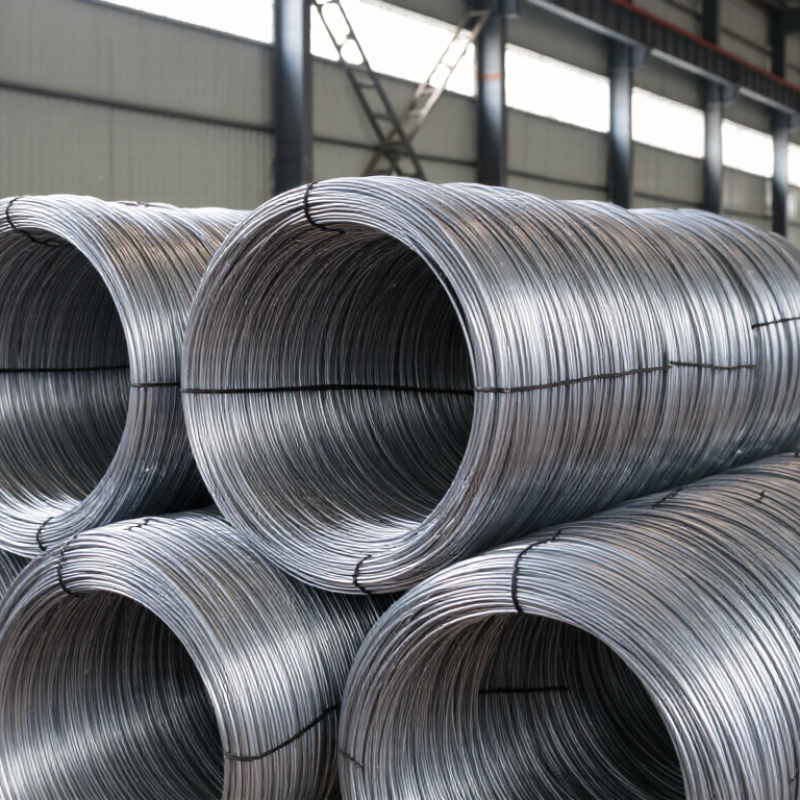
Galvanized steel wire is steel wire protected by a zinc coating. The zinc slows corrosion by separating steel from moisture and air. You can see the coating as a silvery layer, though its finish may range from bright to matte. The wire is used in fencing, binding, mesh, and other applications where exposure and strength both matter.
Manufacturing starts with steel rod, which is cleaned and drawn through dies to reach the required diameter. Depending on the product, galvanizing may happen before or after drawing. In hot-dip galvanizing, the prepared wire passes through a zinc bath; excess zinc is controlled as it leaves. The coating then cools and solidifies. Surface preparation, bath conditions, and line speed all affect coating consistency. Small imperfections matter.
A sound quality check measures wire diameter, coating weight, and tensile properties against the agreed specification. Adhesion checks can reveal whether zinc flakes during bending or handling. Results should be recorded by production batch, not just judged by appearance. A bright surface alone proves little. Galvanized wire is not maintenance-free, and its service life depends on coating thickness, installation, and local exposure. Salt, abrasion, and trapped moisture can shorten it. The process seems simple, but consistent results take control at every stage.
Best Galvanized Steel Wire Manufacturer in China - What Galvanized Steel Wire Is and How It Is Made
| Topic | Information | Practical Considerations |
|---|---|---|
| What galvanized steel wire is | Steel wire protected by a zinc coating. The zinc acts as a barrier against moisture and corrosive environments and can provide sacrificial protection if the coating is locally damaged. | Service life depends on coating thickness, exposure conditions, handling, and maintenance. |
| Common manufacturing routes | Hot-dip galvanizing applies zinc by passing prepared wire through molten zinc. Electrogalvanizing deposits zinc onto the wire using an electrical current in an electrolyte. | Coating appearance, thickness, production speed, and suitable applications vary by process and specification. |
| 1. Wire rod selection | Steel wire rod is selected according to the required wire diameter, strength, ductility, and end use. | Steel chemistry and incoming material quality affect drawing performance and finished-wire properties. |
| 2. Surface preparation | Preparation commonly includes removal of oil and contaminants, pickling to remove scale, rinsing, and fluxing where required for hot-dip galvanizing. | Clean, properly prepared steel helps the zinc coating form consistently. |
| 3. Wire drawing | The rod is drawn through progressively smaller dies to produce the required wire diameter. Depending on the product route, drawing may take place before galvanizing, after galvanizing, or in multiple stages. | Drawing schedules and any intermediate heat treatment depend on the target strength, ductility, and coating requirements. |
| 4. Zinc coating | For hot-dip galvanizing, prepared wire contacts molten zinc and excess zinc is controlled as the wire exits the bath. For electrogalvanizing, zinc is deposited from solution under controlled electrical conditions. | Coating mass or thickness should be specified and checked against the applicable product standard or purchase requirements. |
| 5. Cooling and finishing | Coated wire is cooled and may undergo inspection, winding, and packaging. Additional finishing steps depend on the product and required delivery condition. | Careful winding and handling help reduce coating damage before installation. |
| Key quality checks | Typical checks include wire diameter, tensile properties, coating mass or thickness, coating uniformity, and adhesion-related tests specified for the product. | Test methods and acceptance limits should follow the agreed standard and order specification. |
| Common applications | Galvanized steel wire is used in wire rope and strand, fencing, binding, mesh, overhead-line components, and general industrial products. | Select the wire grade, coating, diameter, and mechanical properties for the intended environment and application. |
Selection note: There is no single coating level or manufacturing sequence that suits every galvanized wire product. Confirm the applicable standard, dimensions, mechanical requirements, coating requirements, and test methods in the purchase specification.