
Your Source for Trays!

10 Best Laser Dielectric Film Suppliers Worldwide

Choosing among the 10 best Laser Dielectric Film suppliers worldwide requires more than comparing catalog prices. These films use carefully controlled dielectric layers to reflect, transmit, or block selected wavelengths. In a laser system, a small coating defect can become visible as reduced transmission, unwanted reflection, or localized heating. Details matter.

Industry reports offer useful context, but their scope needs careful reading. SPIE’s optics and photonics industry reporting tracks broader sector trends, while Grand View Research’s optical coatings market coverage examines a wider coatings category. Neither should be treated as a direct measurement of the Laser Dielectric Film supplier market. Buyers should verify specifications against application needs: wavelength range, laser-induced damage threshold, reflectance, substrate, coating uniformity, and test conditions. A datasheet can look precise. Its test setup may still differ from yours.

Supplier evaluation also depends on evidence from real production: inspection records, sample testing, process-control documentation, and clear answers about tolerances. A polished brochure is not proof. I could not verify an on-record expert quotation specifically about Laser Dielectric Film from the available source material, so I will not invent one or assign unsupported words to a named specialist. That limitation matters. This comparison should therefore distinguish documented capabilities from marketing claims and encourage readers to request comparable test data before shortlisting suppliers.
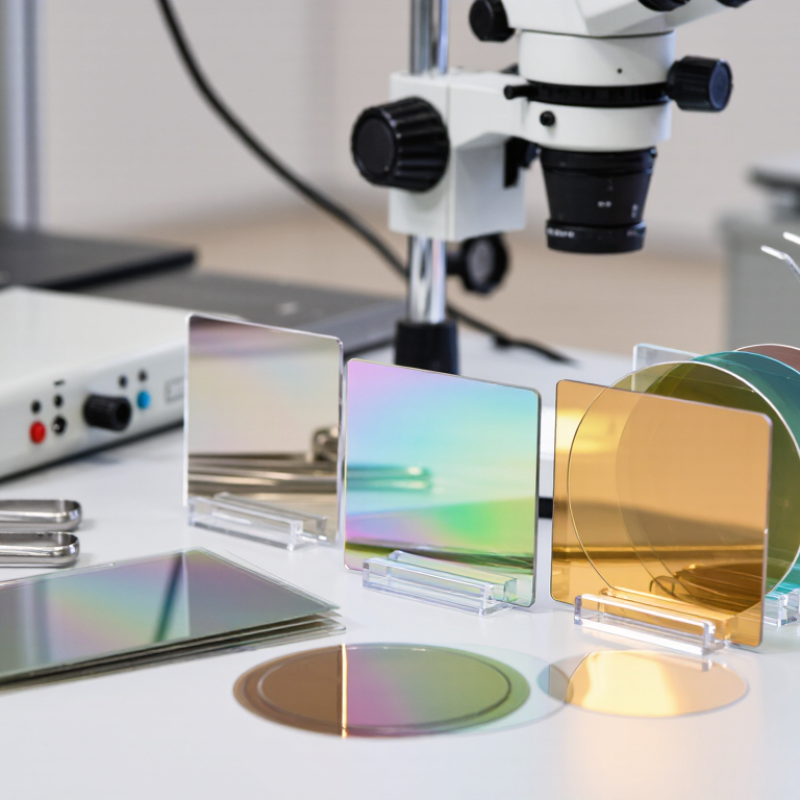
10 Best Laser Dielectric Film Suppliers Worldwide

What Laser Dielectric Films Are and Where They Are Used

Laser dielectric films are thin stacks of alternating materials with different refractive indices. Each layer controls how light reflects or passes at selected wavelengths. A film may form a high-reflecting mirror, a beam splitter, or an antireflection surface. In practice, performance depends on wavelength, angle, polarization, substrate quality, and laser power. Tiny defects can absorb energy and damage a coating.

These films appear in laser cavities, cutting and marking systems, range-finding equipment, and medical instruments. They help keep laser energy on its intended path or reduce unwanted reflections from a lens. Grand View Research’s 2024 Optical Coatings Market report estimated the global market at about $17.6 billion in 2023, reflecting broad demand for coated optical components. That figure covers optical coatings generally, not laser dielectric films alone. A coating that looks perfect on paper can still underperform when operating conditions differ. That part deserves a second look.

Tips: Ask suppliers for test results at your exact wavelength and angle of incidence. Check the specified laser-induced damage threshold, test method, and operating conditions. Also confirm whether the value applies to continuous-wave or pulsed lasers. Small details matter.

How to Evaluate a Laser Dielectric Film Supplier

When evaluating a laser dielectric film supplier, start with your operating conditions, not a catalog headline. Ask for spectral curves across your wavelength band, incidence angle, and polarization. Check reflectance or transmission, absorption, and coating uniformity on the specified substrate. A high laser damage threshold means little without pulse duration, repetition rate, beam diameter, and test method. Details matter.

Request inspection data for the production lot, including measurement methods and instrument calibration. Ask how the supplier tracks coating batches and controls thickness variation across a film sheet. Samples can reveal issues that a data sheet misses, such as pinholes, edge defects, or handling marks. Test them in your own optical setup. It is tempting to rank suppliers by one impressive number, but that can hide a mismatch between test conditions and real use.

Assess practical reliability, too. Confirm packaging protects the coated surface from dust and contact during shipping. Ask about typical lead times, change notifications, and technical support when test results differ from expectations. Clear, specific answers are useful evidence of process knowledge; vague promises are not. A supplier may meet the optical specification yet struggle with repeatable delivery, so compare sample performance with later production lots before committing to a larger order.

How to Evaluate a Laser Dielectric Film Supplier

Suggested evaluation weights for comparing suppliers of laser dielectric films. The criteria reflect practical considerations such as optical performance, laser damage resistance, coating consistency, quality controls, and delivery capability. These weights are a comparison framework, not supplier-specific ratings or market statistics.

Use these criteria as a starting point and adjust their importance to match your wavelength, laser operating conditions, and project requirements.

Profiles of Ten Leading Laser Dielectric Film Suppliers Worldwide

The following profiles highlight ten supplier types found across the global market; capabilities vary by facility. A North American custom-coating specialist may tailor layer designs for narrow laser wavelengths. Ask for measured reflectance and transmission curves. A German precision-optics producer often emphasizes coating uniformity and documented inspection. Its lead times may be less flexible. A Japanese thin-film supplier can bring strong process control to demanding optical assemblies. Confirm performance at your exact angle of incidence. A South Korean high-volume coater may suit repeat orders and consistent specifications. Check minimum order quantities.

A Chinese optical-coating manufacturer may offer broad production capacity and several substrate options. Request sample data before scaling up. A Taiwanese supplier may focus on compact components for industrial laser systems. Verify the film’s damage threshold under your operating conditions. A French optics specialist may support custom designs and small production runs. Engineering support matters. A UK-based coating house may provide precision work for research and specialist applications, though availability can vary. An Indian optical manufacturer may combine coating and substrate preparation, simplifying procurement. Still, inspect traceability records.

A Swiss precision supplier may serve applications where tight tolerances and detailed documentation are essential. These are profiles, not rankings. Compare actual test methods, substrate compatibility, environmental durability, and batch-to-batch variation. One detail is easy to overlook: published specifications may use different test conditions. Request the same wavelength, incidence angle, and measurement method from every candidate. Their answers can reveal more than a polished catalogue.

Comparing Suppliers by Coating Capabilities and Product Range

A useful comparison of ten laser dielectric-film suppliers starts with coating capability, not catalogue size. Check supported wavelengths, angle of incidence, clear aperture, and layer-stack design. A supplier may list mirrors, beam splitters, anti-reflection coatings, filters, and polarizers, yet offer limited custom tuning. Ask for measured reflectance or transmission curves, test conditions, and laser-induced damage threshold data. Small details matter.

MarketsandMarkets’ 2023 Laser Technology Market report estimated the market at USD 20.5 billion and projected USD 30.5 billion by 2028. This growth signals broader demand, not equal coating quality.

Compare suppliers’ wavelength coverage against your actual laser line, pulse duration, and power density. Also review substrate choices and whether coatings are tested across the usable aperture. A neat curve on one sample is not enough. Request batch-level inspection records and clarify how the supplier defines damage thresholds. That comparison can feel tedious. It is still more useful than ranking suppliers by product count alone.

One caveat: published market forecasts describe demand, not the performance of any individual coating.

How to Verify Quality, Compliance, and Technical Support

When evaluating laser dielectric film suppliers, verify performance against your actual wavelength, angle of incidence, and operating environment. A coating rated for one laser setup may behave differently under another. Request spectral transmission and reflection data, coating thickness tolerances, and the test conditions behind each figure. Small details matter. Check whether reported results apply to your wavelength and pulse duration, not just a nearby specification.

Ask for evidence. Request a recent batch certificate showing measured results, along with the supplier’s documented inspection process. For compliance claims, confirm the certificate’s scope, issuing body, and validity; a logo on a datasheet is not enough. If you need adhesion or environmental data, ask how samples were tested and whether the method matches your application. A sample coupon can reveal surface defects, color variation, or handling marks that a table will not show.

Technical support is part of quality. Ask who will review your specifications, how quickly they respond to technical questions, and whether they can investigate a failed test with traceable batch records. Their answers should be specific, not simply reassuring. Even careful supplier checks cannot eliminate every production variation, so agree on acceptance limits and incoming inspection steps before placing a large order. One missed detail can be expensive.

10 Best Laser Dielectric Film Suppliers Worldwide - How to Verify Quality, Compliance, and Technical Support

Use these ten checks to compare unnamed suppliers against your drawing, wavelength range, operating environment, and purchase requirements. Acceptance limits should be agreed in the purchase specification; there is no single universal pass value for every laser coating.

No. Evaluation area How to verify Evidence to request / decision rule
1 Wavelength and coating design Check that the supplier can design for the specified laser wavelength, angle of incidence, polarization, and substrate. Request a written spectral design or coating specification stating the operating conditions and required reflectance or transmittance. Compare the stated limits with the application—not with a generic “high-reflectance” claim.
2 Spectral measurement capability Review a representative test report and confirm that its wavelength range, incidence angle, polarization, and measurement method match the specification. Request actual measured data, instrument details, and the applicable acceptance limits. Ask whether measurements are made on each production lot or on a defined sampling basis.
3 Laser-induced damage testing Check that the damage threshold report states the test wavelength, pulse duration or continuous-wave conditions, beam size, test method, and test environment. Request the test standard or documented method and the actual test conditions. Compare results only when test conditions are sufficiently similar to the intended laser application.
4 Adhesion and environmental durability Ask how coating adhesion, humidity resistance, abrasion resistance, and other environmental properties are qualified for the intended use. Request test reports and agreed conditioning and pass criteria. The ISO 9211 series covers optical coatings, including environmental durability; confirm the specific applicable part and test requirements.
5 Surface quality and inspection Confirm how the supplier inspects scratches, digs, coating defects, clear aperture, and cosmetic requirements. Request the inspection procedure and a sample inspection record. If a scratch-dig specification such as MIL-PRF-13830 is required, confirm the agreed revision, inspection conditions, and acceptance criteria in the contract.
6 Quality management and traceability Verify the quality-management certificate, its validity, and whether its scope covers the relevant manufacturing activities. Request a current certificate, lot identification, inspection records, and a documented nonconformance process. ISO 9001 certification is evidence of a quality-management system, not a guarantee that a particular coating meets your specification.
7 Test laboratory competence For critical measurements, check whether the testing laboratory is accredited for the relevant method and measurement range. Request the laboratory’s accreditation certificate and scope. ISO/IEC 17025 accreditation applies to specified laboratory activities; verify that the particular test is within scope.
8 Regulatory material declarations Identify the regulations applicable to the product, destination market, and intended use; do not assume every optical coating is subject to identical requirements. Where applicable, request current product-specific declarations addressing EU RoHS Directive 2011/65/EU, as amended, and REACH Regulation (EC) No 1907/2006. Confirm product scope, date, and supporting information.
9 Engineering and application support Ask how technical questions, design changes, failure analysis, and coating-related drawing reviews are handled. Request a named technical contact or support process, typical response-time commitment, and an example of a documented design or corrective-action review.
10 Production continuity and change control Review manufacturing lead-time assumptions, capacity planning, packaging, and notification procedures for process or material changes. Request a written change-control and shipment-traceability process, agreed notification requirements, and a clear method for handling schedule or quality issues.