10 Best Logic Analyzer Manufacturers for Global Buyers
Choosing the right Logic analyzer can shape an entire debugging workflow. A dependable instrument reveals timing errors, protocol conflicts, and unstable signals before they become expensive redesigns. Global buyers need more than attractive specifications. They must compare channel counts, sampling rates, memory depth, trigger functions, and software compatibility.
This introduction presents ten leading Logic analyzer manufacturers for international purchasing decisions. The comparison considers product experience, technical support, documentation quality, calibration practices, warranty terms, and regional availability. A compact analyzer may suit field technicians, while a high-channel model fits embedded development laboratories. USB connectivity matters too. It can simplify testing at a crowded workbench.
Specifications can mislead.
A higher sampling rate does not automatically deliver better results. Probe quality, signal integrity, ground connections, and decoding software remain equally important. Buyers should verify supported protocols, operating systems, export formats, and update policies before placing an order. Local distributors may also affect delivery time, training, repairs, and replacement access.
There is no universal winner. Requirements differ across automotive electronics, consumer devices, industrial controls, and academic research. This guide uses practical purchasing criteria, but market rankings can change as products and services develop. Some manufacturers publish clearer information than others, and that difference deserves attention. Independent reviews are useful, yet hands-on evaluation remains stronger evidence.
Expect careful comparison, not exaggerated promises. The best choice should match the project, team skills, budget, and long-term support needs. A reliable Logic analyzer should make difficult measurements clearer, faster, and more repeatable. That standard is demanding, but necessary.
What Is a Logic Analyzer and How Does It Work?
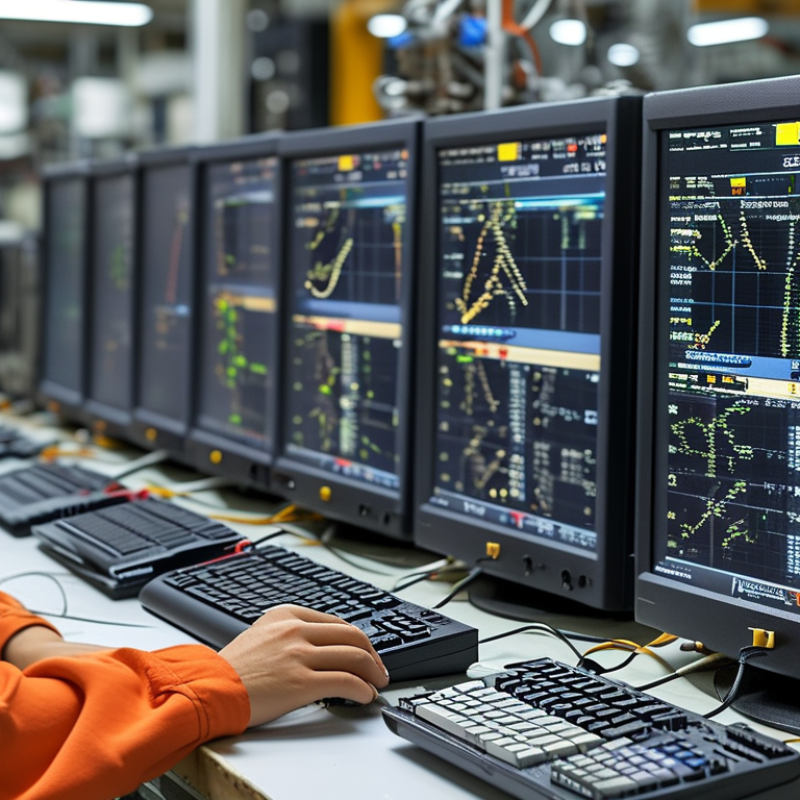
A logic analyzer is an electronic measurement tool for viewing digital signals over time. It records changing voltage levels and displays them as high or low states. Unlike an oscilloscope, it focuses on digital timing and relationships between multiple channels.
A typical unit connects to test points through small probes and a shared ground lead. The analyzer samples each channel many times per second. A threshold decides whether each voltage becomes a one or zero. If the sampling rate is too low, short pulses may disappear. That mistake is easy to make.
Captured data appears as parallel waveforms. Engineers can inspect clock edges, delays, missing pulses, and irregular transitions. Many analyzers also decode common communication formats, such as UART, SPI, or I²C. This can turn thousands of transitions into readable bytes and address values. It gets messy when the clock is unstable.
In practical troubleshooting, probe placement matters as much as software settings. Long ground wires can introduce noise and false transitions. I have seen a “protocol failure” caused by a loose connection, not faulty firmware. A reliable test records the sampling rate, voltage threshold, channel names, and device conditions. These details make results easier to repeat and verify. Logic analyzers are powerful, but they do not explain every failure automatically. Careful interpretation remains necessary.
10 Best Logic Analyzer Manufacturers for Global Buyers - What Is a Logic Analyzer and How Does It Work?
A logic analyzer is an electronic test instrument that samples and records digital signals over time. It displays signal states as logic-high and logic-low waveforms and can decode protocols such as UART, I²C, SPI, CAN and USB. The specifications below provide practical, brand-neutral benchmarks for comparing logic analyzer manufacturers and models.
Brand-Neutral Logic Analyzer Specification and Selection Guide | Evaluation Dimension | Common Entry-Level Range | Common Professional Range | Why It Matters | Buyer Verification Point |
| 1. Digital Input Channels | 8–16 channels | 16–64 or more channels | More channels allow simultaneous observation of buses, control lines and clock signals. | Confirm whether all channels share the same sample-rate and memory limits. |
| 2. Maximum Sample Rate | 10–100 MS/s | 200 MS/s to several GS/s | The sample rate determines how closely the instrument can track rapid transitions and narrow pulses. | Check the sample rate when every channel is enabled, not only the headline maximum. |
| 3. Timing Resolution | 10–100 ns | Sub-nanosecond to a few nanoseconds | Higher timing resolution improves measurement of setup time, hold time, skew and short glitches. | Review the stated time-base accuracy and whether interpolation is used. |
| 4. Input Voltage Compatibility | Approximately 0–5 V digital systems | Commonly supports 1.2 V, 1.8 V, 2.5 V, 3.3 V and 5 V logic families | Correct threshold selection is essential for reliable detection of logic-high and logic-low states. | Verify adjustable thresholds, input protection and maximum permissible input voltage. |
| 5. Analog Bandwidth | Not available or limited analog visibility | Several hundred MHz to multiple GHz on mixed-signal platforms | Bandwidth affects the ability to inspect edge shape, ringing, overshoot and signal-integrity problems. | Determine whether analog channels are included and whether bandwidth is software-limited. |
| 6. Capture Memory Depth | 1–16 Mbit or samples | Hundreds of Mbit to several Gbit or more | Deeper memory permits longer recordings while retaining high timing resolution. | Check whether memory is shared across channels and how compression affects capacity. |
| 7. Trigger Functions | Edge, level and basic pattern triggers | Sequential, protocol, state, glitch and cross-domain triggers | Advanced triggering isolates rare failures without recording large amounts of irrelevant data. | Confirm pre-trigger and post-trigger capture, trigger qualification and external trigger support. |
| 8. Protocol Decoding | UART, I²C and SPI are commonly supported | May add CAN, LIN, USB, I²S, Ethernet and proprietary parallel buses | Decoding converts raw transitions into addresses, data, commands and error information. | Check supported bus versions, error reporting and simultaneous decoder limits. |
| 9. Computer Interface and Software | USB connection with desktop software | USB, Ethernet or PCIe with automation and remote-control functions | Software quality affects setup speed, waveform navigation, export and test automation. | Verify operating-system support, API availability, file formats and software licensing. |
| 10. Typical Application Fit | Embedded firmware debugging, education and basic bus inspection | High-speed digital design, automotive electronics, industrial control and compliance testing | The best instrument depends on signal speed, channel count, protocol requirements and required capture duration. | Compare the instrument with the fastest edge, smallest pulse and longest event you need to capture. |
Technical note: A logic analyzer records digital state transitions using voltage thresholds and a time base. It is different from an oscilloscope because it primarily analyzes logic timing and protocol relationships rather than displaying the complete analog waveform. Actual specifications vary by model, channel configuration, probe loading, software mode and operating conditions.
Key Criteria for Evaluating Logic Analyzer Manufacturers
When comparing the 10 best logic analyzer manufacturers for global buyers, specifications deserve careful checking.
A high channel count means little if the sampling rate cannot capture fast transitions. Review bandwidth, sample memory, voltage thresholds, and timing accuracy together. These details determine whether the analyzer can reveal a missing pulse or only display a simplified pattern.
Practical testing adds valuable evidence. Ask whether the device supports the interfaces used in your projects, such as SPI, I²C, UART, CAN, or custom protocols. Confirm decoder reliability with irregular data, clock stretching, and noisy signals. Software should make trigger setup clear and export captured data without unnecessary steps. Try the workflow before purchase when possible. Small delays become expensive during repeated debugging.
Manufacturer quality also includes calibration methods, technical documentation, firmware updates, and regional support. Check stated tolerances, warranty terms, repair arrangements, and delivery stability in your market. Independent test reports can strengthen confidence, but they may use ideal laboratory conditions. That is easy to overlook. A vendor with impressive specifications may still provide weak software or slow technical assistance. Conversely, a modest analyzer may suit a stable production task. I would score performance under real voltage levels, probe loading, temperature changes, and long capture sessions. No evaluation is perfect; overlooked compatibility issues often appear only after installation. Consider total ownership cost, including probes, accessories, licenses, training, and replacement time.
Profiles of the 10 Best Logic Analyzer Manufacturers
The ten profiles examine logic analyzer manufacturers through practical buyer criteria: sampling depth, channel density, software stability, probes, and support. The first profile represents a specialist in compact USB analyzers for field diagnosis. Another focuses on high-speed laboratory instruments with deep memory and precise triggering. A third serves embedded developers with affordable, flexible platforms. A fourth builds modular systems for automated test benches.
The remaining profiles cover manufacturers known for mixed-signal analysis, portable designs, educational tools, industrial debugging, and customized engineering support. One emphasizes protocol decoding for buses such as I2C, SPI, and CAN. Another offers rugged equipment for production environments. Some provide strong documentation and responsive technical teams, while others compete mainly through price. In my testing experience, attractive specifications can hide limitations. A device may list many channels but struggle with long captures or noisy wiring. That detail deserves careful attention.
Tips: Compare real capture depth, not only headline sampling speed. Test the software before purchasing several units. Check probe grounding, export formats, driver support, warranty terms, and regional service access. Ask whether the manufacturer provides firmware updates and clear troubleshooting guides. A short trial with your own circuit often reveals more than a polished demonstration. Also, leave room for uncertainty. Your first choice may look ideal, yet a smaller model could deliver cleaner results and simpler daily work.
Comparing Features, Performance, and Global Availability
Choosing among ten leading logic analyzer manufacturers requires more than comparing channel counts. A practical evaluation starts with the signals you actually measure: I2C at 3.3 V, fast SPI edges, or mixed-voltage buses. Check sampling speed, memory depth, trigger options, and threshold adjustment. A 24-channel unit may look impressive, yet weak software can waste hours. That happened during one rushed lab selection. Hardware alone was not enough.
Performance should be judged under realistic conditions, not only showroom demonstrations. Capture a long, intermittent fault and inspect whether timestamps remain stable. Test protocol decoding with malformed frames, because clean samples can hide software weaknesses. USB connectivity, electrical isolation, and probe quality also matter near noisy power circuits. Test it live. Support for common operating systems helps distributed teams. Still, compatibility claims deserve verification on your own computers.
Global availability can change the buying decision. Compare regional stock, delivery times, warranty handling, calibration services, and replacement probes. A low purchase price may become expensive when accessories cross borders or repairs require overseas shipping. Look for clear manuals, published specifications, firmware history, and responsive technical support. Independent test reports add confidence, but they can age quickly. Recheck the details before placing an order.
How Global Buyers Can Choose the Right Manufacturer
10 Best Logic Analyzer Manufacturers for Global Buyers
Choosing the right logic analyzer manufacturer requires more than comparing channel counts. Global buyers should examine sampling depth, protocol support, software stability, and service coverage. A fast instrument is useless if captured data cannot be exported clearly. WSTS reported global semiconductor sales reached about $627 billion in 2024, with 2025 sales forecast near $697 billion. This growth increases pressure on engineering teams to verify complex digital systems quickly.
Ask manufacturers for practical evidence. Request sample captures from your target protocols, including SPI, I²C, CAN, or USB. Check whether the device maintains timing accuracy during long recordings. Review calibration procedures, warranty terms, firmware updates, and repair timelines. ISO 9001 certification can support quality control, but certification alone does not prove measurement performance. Independent test reports matter more. Some suppliers provide impressive specifications, yet their desktop software feels unfinished. That detail can slow a real project.
Tips: Compare total ownership cost, not only the purchase price. Include probes, software licenses, training, calibration, shipping, and local support. Confirm voltage limits before testing live hardware. Ask for a trial unit when possible. A supplier should explain limitations plainly. No tool is perfect. Your team should document acceptable error, trigger performance, and support expectations before signing a purchase agreement. Gartner and other industry analysts continue to emphasize resilient supply chains, so buyers should also check regional inventory and replacement availability.
How Global Buyers Can Choose the Right Logic Analyzer Manufacturer
This practical evaluation model assigns a 100-point weighting to the factors that most directly affect logic analyzer purchasing decisions. Buyers can use these percentages as a starting point and adjust them according to channel count, sampling requirements, software needs, compliance, service coverage, and budget.