
585.204.6770
sale@sanblueplastics.com
Your Source for Trays!
Choosing a China-based Paper Cup Board supplier requires more than comparing export prices. Global buyers need stable basis weight, reliable food-contact documentation, and coating performance that survives hot coffee, cold drinks, and long-distance shipping. A slight curl at the rim can disrupt an entire packing line. Small defects matter.
Smithers’ paper-packaging outlook identifies continued demand for renewable fibre materials, while Grand View Research reports steady expansion in the global paper cups market. These trends create opportunity, but they also increase purchasing risks. Capacity claims may look impressive online. Actual quality can vary between production batches. Buyers should therefore examine mill certifications, laboratory results, moisture control, and traceable raw-material records.
Mika Joukio, former CEO of Metsä Board, described the company’s ambition as becoming “the world’s leading producer of premium fresh fibre paperboards.” That statement reflects an important principle: premium cupstock begins with controlled fibre quality, not attractive brochures. For international procurement teams, a dependable Paper Cup Board supplier should provide clear technical data, sample approval, coating options, and responsive after-sales support.
The best supplier is not always the cheapest. It is the one that delivers consistent sheets at scale. Still, no supplier is perfect. Buyers should test reels, review shipment history, and challenge optimistic specifications before signing long-term contracts. This guide examines China’s leading Paper Cup Board suppliers through production capability, quality control, customization, sustainability practices, and global delivery experience.
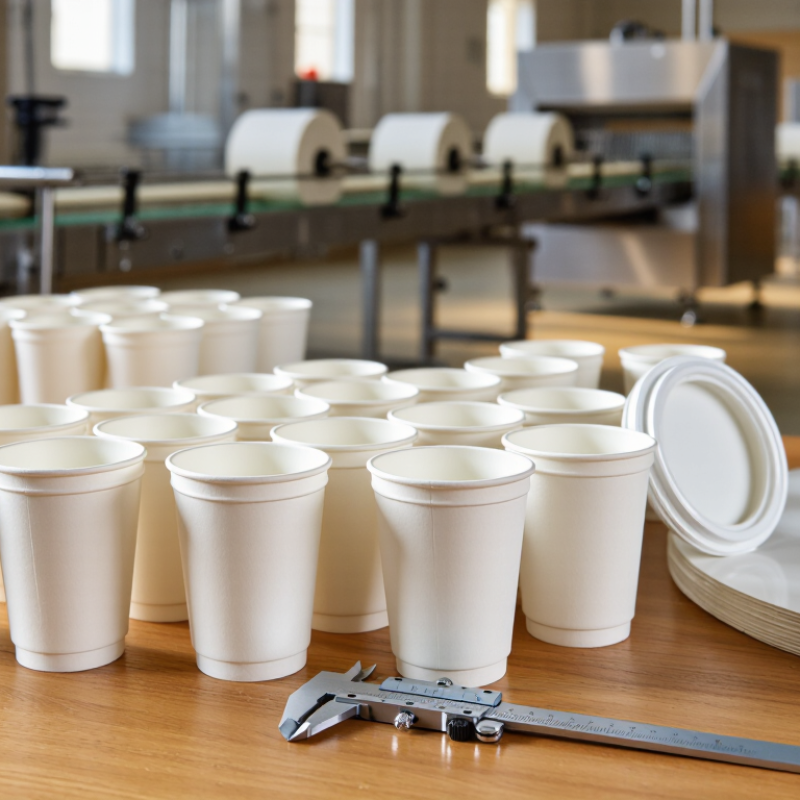
China has become a leading paper cup board supplier because it combines scale, technical capacity, and export experience. The China Paper Association reported over 129 million tonnes of paper and paperboard production in 2023. That industrial base supports stable pulp sourcing, coating lines, laboratory testing, and container logistics. FAO forestry statistics also place global paper and paperboard production above 400 million tonnes, showing the scale of this supply chain.
Cup board performance depends on more than appearance. Experienced buyers check basis weight, caliper, stiffness, Cobb60 water absorption, curl, and coating adhesion. Chinese mills commonly produce board for direct food-contact applications, including single-sided and double-sided coated grades. Many suppliers provide batch samples before production. This helps buyers test forming, heat sealing, printing, and rim strength on their own machines.
Consistency still requires attention. Large capacity does not guarantee identical results from every mill. Moisture variation can affect cup forming, while uneven coating may weaken the seal. Smithers’ paper-based packaging outlook identifies foodservice packaging as an important growth application, but sustainability claims need careful verification. Recycled content, fiber origin, and barrier chemistry should be supported by current test reports, not sales language. China’s advantage is real, though quality control remains a shared responsibility.
China Top Paper Cup Board Supplier for Global Buyers?
How to Evaluate Paper Cup Board Quality and Safety
Choosing paper cup board requires more than checking whiteness or price. A clean, bright sheet can still perform poorly during forming. Experienced buyers examine basis weight, thickness, stiffness, moisture, and curl. These values should remain consistent across production lots. Ask for recent laboratory reports, not old sales samples.
Food-contact safety deserves closer attention. Request testing for overall migration, specific substances, odor, and coating performance. The documents should match the intended market and cup application. Check whether the supplier can provide traceable raw-material records and batch numbers. A responsible manufacturer should explain pulp sources, coating structure, and storage controls clearly. Vague answers are warning signs.
In practical inspections, run a forming trial with the actual machine settings. Watch the rim, side seam, leakage, and bottom seal. Fill finished cups with hot water, then inspect them after several minutes. They should remain stable without softening or unpleasant odor. A small moisture change may affect feeding speed. This detail is easy to miss.
Do not rely on one perfect sample. Samples are selected. Production tells the truth. Ask for retained samples from several lots and compare them independently. I have found visual checks useful, but they cannot replace verified testing. That is an uncomfortable limitation. A supplier’s reliability also depends on corrective-action records, inspection frequency, and honest communication when a result falls short.
Reliable paper cup board begins with controlled raw materials and measurable production standards. Buyers should check fiber origin, base weight, thickness, moisture, and formation consistency. These details affect cup strength, printing quality, and converting speed. A stable board should run smoothly without excessive dust or edge cracking. It should also support accurate die cutting and dependable side-seam sealing. Small variations can create large losses during high-volume production.
Food-contact documentation must match the intended market and application. Ask for current test reports, migration results, and clear batch traceability. Cobb values should suit the coating system and cup structure. Poor moisture control may cause curling, blocking, or weak sealing. It happens more often than expected.
Packaging should protect the board from humidity, odors, and surface damage during transport. Suppliers should provide inspection records, retained samples, and corrective-action procedures. Independent testing can strengthen confidence, especially for new suppliers. However, paperwork alone is not enough.
A promising sample may perform differently during continuous production. Buyers should conduct trial runs under real machine speeds, temperatures, and storage conditions.
Reviewing these results with the supplier encourages practical improvements rather than assumptions. Specification sheets also need regular review because equipment, coatings, and destination requirements can change.
China Top Paper Cup Board Supplier for Global Buyers?
For global buyers, export service begins with clear technical communication. Paper cup board should match the cup size, forming method, and filling purpose. Experienced suppliers confirm grammage, stiffness, coating structure, and roll or sheet dimensions before production. Samples help reveal curling, uneven coating, or weak sealing. Small details matter.
Export teams usually prepare commercial invoices, packing lists, certificates, and shipping instructions with the buyer. Accurate HS code information reduces avoidable customs questions. Packaging must protect the board from humidity, dust, and crushing during ocean transport. Kraft wrapping, moisture-resistant liners, strong pallets, and corner protection support safer handling. Every pallet should carry readable labels showing quantity, size, lot number, and production date.
Delivery planning requires more than quoting a production time. Suppliers should review vessel schedules, port congestion, container availability, and destination requirements. Real-time updates are useful when loading is complete or documents change. A practical supplier also keeps reserve time for inspection and port delays. No shipment plan is flawless. Delays can still happen. In some cases, earlier assumptions about transit time prove too optimistic. Honest communication is better than a perfect-looking promise.
Reliable cooperation grows through records, inspections, and consistent responses. Buyers can request pre-shipment photos, moisture checks, and loading evidence before release. These steps do not remove every risk, but they make problems easier to trace and correct.
How Global Buyers Can Select the Right Chinese Paper Cup Board Supplier
Global buyers should evaluate paper cup board beyond price. FAOSTAT data shows annual global paper and paperboard production has exceeded 400 million tonnes in recent years. This scale creates many choices, but capacity alone proves little. Request recent mill certificates, coating specifications, food-contact declarations, and independent migration test reports. Check whether the documents match the actual production site.
Sample testing should copy real production conditions. Use the buyer’s forming machine, sealing temperature, printing process, and storage environment. Measure stiffness, moisture resistance, curl, and heat-seal performance. A board may look smooth but fail during high-speed forming. Ask for batch traceability and retain samples from every shipment. Small details matter.
Supplier reliability also requires operational checks. Review monthly capacity, minimum order quantities, lead times, export experience, and contingency plans. The World Bank’s Logistics Performance Index shows that delivery quality depends on infrastructure, customs handling, and shipment visibility, not factory price alone. Request a pre-shipment inspection and agree on measurable acceptance limits. A low quotation can hide unstable coating quality or costly delays. That mistake is easy to make. Buyers should also audit communication speed and corrective-action records. Some suppliers provide polished samples, yet their mass production needs closer questioning.
| Evaluation Dimension | Practical Reference or Benchmark | Why It Matters to Global Buyers | Recommended Verification Method | Suggested Weight |
|---|---|---|---|---|
| Baseboard Grammage | Common commercial cupstock specifications are approximately 150–350 g/m², depending on cup size, stiffness, and converting requirements. | Grammage affects cup strength, material consumption, forming performance, and finished-unit cost. | Request a technical data sheet and verify test samples using ISO 536 or an equivalent grammage method. | 10% |
| Thickness and Stiffness | Cupboard thickness is commonly selected within roughly 200–450 μm, subject to grammage, fiber structure, and end-use design. | Adequate stiffness supports side-wall forming, rim quality, stacking, and resistance to deformation during use. | Compare caliper results under ISO 534 and conduct forming, compression, and stacking trials with the intended cup geometry. | 10% |
| Moisture Content | Paperboard moisture should be controlled consistently; the exact target must be agreed in the purchase specification because it varies with grade and storage conditions. | Unstable moisture can cause curling, dimensional changes, poor printing, and inconsistent cup forming. | Define an acceptance range in the contract and test according to ISO 287 or an equivalent oven-drying method. | 8% |
| Barrier Coating | For polyethylene-coated cupstock, coating weight is commonly specified by application and may be around 10–30 g/m² per coated side; the actual requirement must be validated by testing. | Coating quality influences liquid tightness, heat sealing, odor, recyclability considerations, and compatibility with the cup-making process. | Check coating weight, pinholes, adhesion, heat-seal performance, and leakage after filling with the intended beverage. | 15% |
| Liquid Resistance | Cobb test performance should be specified according to the application, coating type, test time, and buyer's internal limit rather than relying on a generic value. | Low and consistent water absorption helps reduce leakage, delamination, and loss of cup rigidity. | Use ISO 535 or an equivalent Cobb test, then perform real-time and accelerated leakage tests with hot and cold liquids. | 12% |
| Food-Contact Compliance | The supplier should provide documentation applicable to the destination market, such as EU Framework Regulation (EC) No. 1935/2004, GMP Regulation (EC) No. 2023/2006, or relevant U.S. food-contact requirements including 21 CFR 176.170 where applicable. | Compliance documentation reduces customs, regulatory, product-safety, and retail acceptance risks. | Review declarations of compliance, migration-test reports, raw-material statements, and batch traceability records for the destination market. | 15% |
| Printing and Surface Quality | The specification should define printable side, color tolerance, surface defects, coating uniformity, and allowable roll or sheet defects. | Consistent surface quality supports accurate branding, clean die-cutting, and stable downstream production. | Approve a signed reference sample, define visual inspection limits, and use color measurement such as CIELAB values when color consistency is critical. | 8% |
| Production Capacity and Lead-Time Control | Capacity should be assessed against the buyer's monthly demand, required safety stock, order cycle, and peak-season forecast rather than a supplier's headline capacity claim. | Reliable capacity reduces stockouts, emergency freight, and production interruptions. | Request a production plan, recent on-time-delivery records, contingency procedures, and confirmed lead times for trial and repeat orders. | 10% |
| Packaging and Logistics | Export packaging should protect the board from moisture, crushing, contamination, and telescoping during container handling and long-distance transport. | Poor packaging can create damage even when the paperboard itself meets the technical specification. | Approve pallet configuration, wrapping materials, carton or roll labels, loading photos, container humidity controls, and Incoterms in writing. | 5% |
| Quality Assurance and Traceability | Each shipment should be linked to a production batch with inspection records, raw-material information, and a defined nonconformance process. | Traceability allows faster investigation, corrective action, and controlled product recalls if required. | Audit the quality system, review certificates of analysis, inspect retained samples, and agree on inspection and claim procedures before ordering. | 7% |
| Total Recommended Evaluation Weight | 100% | |||