China Best Laminated Safety Glass Manufacturers?
Laminated Safety Glass is made by bonding two or more glass layers with an interlayer, commonly PVB or ionoplast. If the glass breaks, the interlayer can help hold fragments together and reduce the chance of pieces falling away. That matters in skylights, façades, doors, and vehicle glazing, where performance depends on the complete glass build-up, not just its thickness. Details matter.
China has many glass manufacturers, but “best” depends on your project. A supplier suited to standard building panels may not be the right choice for oversized, curved, acoustic, or security-focused glazing. Compare manufacturers by the products they actually make, their documented quality controls, and their experience with similar specifications. A polished showroom sample is useful, but it cannot show how consistently a factory produces full orders.
Ask for clear information about glass type, interlayer, total thickness, dimensions, edge finish, and any heat treatment. Request recent test documentation relevant to your intended use and destination, then confirm that it matches the proposed construction. If possible, inspect a sample for bubbles, inclusions, edge chips, and visible distortion. Also check how the supplier handles packaging, delivery, and replacement claims. These details can reveal practical strengths that a low quotation may hide. Still, paperwork and samples have limits. A buyer should verify key claims rather than rely on broad promises or a “top manufacturer” label. This guide looks at how to assess Chinese Laminated Safety Glass manufacturers with a careful, project-based approach. The comparison may take time. That is usually time well spent.
What Laminated Safety Glass Is and How It Works
China Best Laminated Safety Glass Manufacturers?
What Laminated Safety Glass Is and How It Works
Laminated safety glass bonds two or more glass sheets around a clear polymer interlayer, commonly PVB. Heat and pressure fuse the layers. On impact, the glass may crack, but the interlayer helps hold fragments together and keep much of the opening covered. You may see this construction in vehicle windshields and building glazing. Not unbreakable. Edge damage, moisture intrusion, or poor installation can weaken performance over time. The detail people sometimes overlook is that the glass and its frame must work as a system.
The World Health Organization’s Global Status Report on Road Safety 2023 estimated 1.19 million road deaths worldwide in 2021. That figure does not measure laminated-glass performance, but it puts vehicle safety choices in context. Laminated glazing can help retain broken pieces; it cannot prevent every injury or replace careful system design. Standards such as ANSI Z97.1 use defined impact tests to assess safety glazing, with performance depending on the product and test class.
Tips: Check the product’s test documentation, interlayer type, thickness, and intended use. Inspect edges and seals after installation. Small flaws matter. If specifications seem unclear, ask the supplier to explain the tested configuration—not just the glass thickness.
Common Applications of Laminated Safety Glass in China
China Best Laminated Safety Glass Manufacturers?
Common Applications of Laminated Safety Glass in China
Across China’s dense urban districts, laminated safety glass is commonly used in building façades, entrance doors, and interior partitions. Its plastic interlayer helps hold fragments together if the glass breaks. That matters near busy sidewalks. It does not make the pane unbreakable, however, and the right specification depends on the building’s design and use.
Railway stations, airports, shopping centres, and schools also use laminated glass in places where people pass close by. Think of a station screen beside a crowded platform or a shopfront facing a pedestrian street. In homes and offices, it may appear in balcony balustrades and stair panels. Clear sightlines are useful, but secure fixing and careful edge protection matter just as much.
Overhead glazing and skylights can benefit from laminated constructions because broken pieces are less likely to fall freely. Still, heat, moisture, panel size, and installation conditions can affect performance over time. A detail is easy to overlook. Treating every laminated panel as interchangeable is too simple; project teams should match the glass build-up to the location, expected loads, and maintenance plan.
How Manufacturers Produce and Test Laminated Safety Glass
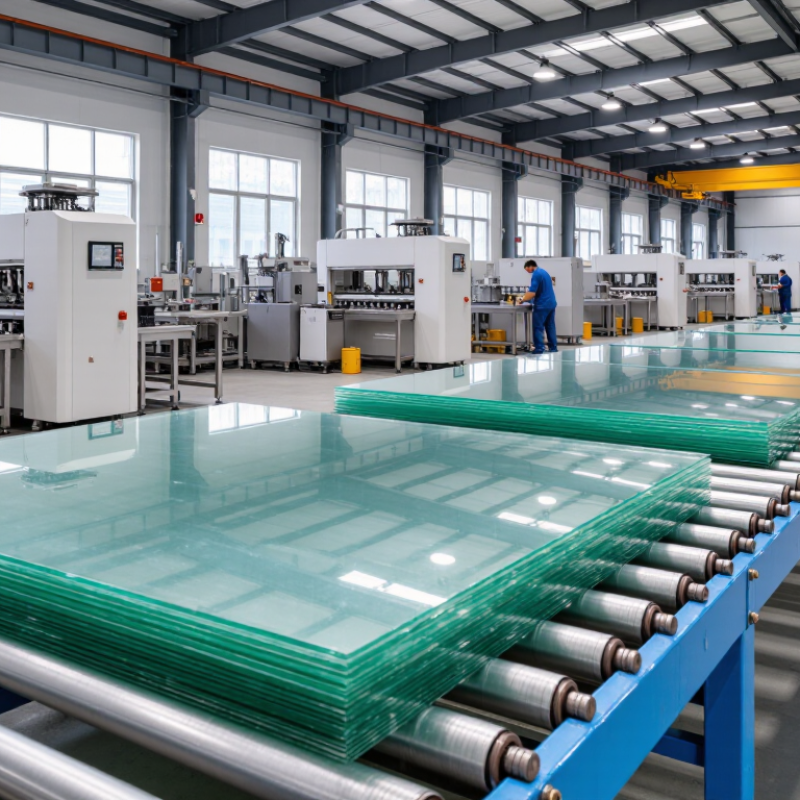
Laminated safety glass begins with two or more cleaned glass sheets and a polymer interlayer, commonly PVB or ionoplast. Workers align the layers in a clean room, then remove trapped air through controlled heating and pressure. An autoclave bonds the stack into one panel. Temperature, pressure, and timing depend on glass thickness and interlayer type; a small process variation can affect clarity or adhesion. Small details matter.
Quality checks cover more than appearance. Technicians inspect for bubbles, edge defects, haze, and distortion, then test samples for impact performance and interlayer bonding. The U.S. Consumer Product Safety Commission’s 16 CFR Part 1201 specifies impact-test categories using 150 and 400 foot-pounds of impact energy. ASTM C1172 also provides specifications for laminated architectural glass. These references help manufacturers set measurable checks, but they do not replace consistent production records. A pane can look clear and still deserve careful testing. That is easy to overlook.
Criteria for Evaluating Chinese Laminated Glass Manufacturers
When evaluating Chinese laminated glass manufacturers, look beyond price and sample appearance. Ask how they control glass thickness, edge quality, interlayer storage, lamination temperature, and autoclave pressure. These details affect clarity and resistance to delamination. Request recent test reports for the exact glass build-up, not a similar product. Check whether testing follows relevant methods, such as ISO 12543 or ASTM C1172, and confirm report dates, sample dimensions, and laboratory identity. Numbers can mislead.
Also assess traceability and production consistency. A reliable supplier should link each shipment to batch records, raw-glass specifications, interlayer type, and inspection results. Ask for defect limits, breakage records, and corrective-action examples. UNEP’s 2024/25 Global Status Report for Buildings and Construction estimates that buildings and construction account for 32% of global energy use and 34% of energy-related CO₂ emissions. This makes performance claims worth checking carefully, though laminated safety glass alone does not determine a building’s energy efficiency.
For façade or overhead applications, compare the tested assembly with the intended use, including thickness, support conditions, and exposure. Ask for packing details too: chipped corners can turn a compliant product into a costly site problem. A polished audit file can still hide gaps; I would trace one batch from incoming glass to final packing. Ask for raw records.
Notable Laminated Safety Glass Manufacturers in China
China’s notable laminated safety glass manufacturers serve architectural, transport, and interior projects, but their capabilities vary. Some focus on large façade panels; others handle curved pieces, decorative interlayers, or smaller custom batches. A useful comparison starts with the project itself: required thickness, panel dimensions, edge finish, and expected exposure to heat or moisture.
Ask how each factory controls the process. Clear answers should cover glass cutting, washing, interlayer placement, and autoclave settings. Ask for recent test reports and production samples, then check whether the sample’s haze, edge alignment, and appearance match your specification. Details matter. A neat sample does not guarantee consistent output across a full shipment, so discuss inspection points and packaging before ordering.
Visits can reveal practical strengths that brochures miss, such as clean assembly areas and careful handling of finished panels. Still, one factory tour is only a snapshot. Even experienced buyers can overlook differences between sample approval and routine production. Request written tolerances, confirm how defects are recorded, and agree on how changes will be communicated. A reliable supplier should explain limitations plainly, not promise that every design is easy to make.