Your Source for Trays!

China Top 10 Vacuum Forming Plastic Manufacturers?

China’s vacuum forming sector serves packaging, automotive, medical, appliance, and retail-display markets. Yet a polished sample tells only part of the story. A clear cover on a showroom shelf may hide uneven wall thickness, inconsistent trimming, or long tooling lead times. Choosing a supplier takes more than comparing photos and unit prices.

Polymer-processing scholar Donald G. Baird’s work offers a useful reminder: material behavior and processing conditions must be evaluated together. This is a paraphrase of that broader principle, not a verified direct quotation. It matters in vacuum forming plastic, where sheet selection, heat control, mold design, and cooling can shape the finished part. Small details count. Ask how suppliers manage repeatability, inspect dimensions, handle secondary operations, and communicate when a design needs adjustment.

This guide introduces ten Chinese manufacturers and the factors buyers can use to assess their fit. It considers product range, equipment, material options, customization, quality practices, and support from sampling through production. A supplier suited to a large appliance panel may not be right for a short run of retail trays. Nor does a broad catalog guarantee strong engineering support. No ranking is perfect; public information can be incomplete, and capabilities may change. Treat each profile as a starting point, then confirm specifications, samples, capacity, and timelines directly before making a decision.
China Top 10 Vacuum Forming Plastic Manufacturers?

Understanding Vacuum Forming and Its Uses in China

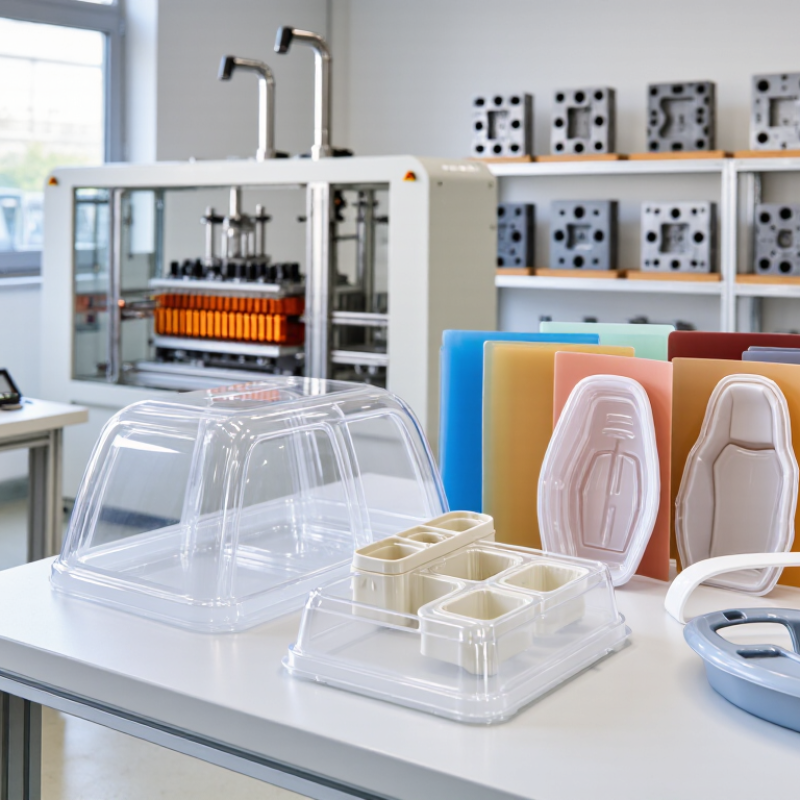
Vacuum forming heats a thermoplastic sheet until it softens, then draws it over a mold using suction. In China, the method serves packaging, appliance interiors, vehicle components, display fixtures, and protective equipment housings. A workshop may form a clear tray around a compact mold, then trim its edges with a CNC router. The process suits broad, shallow shapes especially well. Details matter.

Material choice depends on the part’s use. ABS can provide impact resistance, while PETG is often selected for clarity and ease of forming. Wall thickness may vary across a part, especially near deep corners. Designers should allow for this when specifying strength and appearance. A sample run helps reveal thin spots before larger production begins.

China’s manufacturing base offers access to sheet suppliers, tooling services, and finishing operations in many regions. Still, proximity does not guarantee consistent results. Mold temperature, sheet storage, heating time, and vacuum levels all affect the finished part. I have seen a small change in heating leave one corner cloudy or stretched; the exact cause is not always obvious. Buyers can request material details, dimensional checks, and production samples, then compare them with the intended application. Vacuum forming can be efficient, but it is not ideal for every geometry or tolerance. A careful design review makes a real difference.

Criteria for Identifying Leading Chinese Manufacturers

To assess leading Chinese vacuum forming manufacturers, look beyond quoted price and machine size. Ask which plastics they process regularly, such as ABS, PETG, or polypropylene, and request examples with similar wall thickness and geometry. Experience with deep draws, sharp corners, and large panels can reveal more than a broad capability list. Inspect sample parts for trim edges, surface marks, and thickness variation.

Production control matters too. Ask how operators monitor sheet temperature, forming pressure, cooling time, and mold condition across repeat runs. Review inspection records, material traceability, and procedures for handling rejected parts. Confirm whether tooling design, prototypes, and trimming are managed in-house or through outside partners. Clear answers matter. So does a realistic lead-time estimate. A neat sample may not predict full-volume consistency. A supplier may excel at large panels but struggle with tight corners, so discuss trial runs and measurable acceptance criteria before a large order.

Tips: Request a first-article sample in the intended material and thickness. Photograph key areas and measure critical dimensions against agreed drawings. Note any mismatch, even a small one, and ask how it will be corrected.

Profiles of 10 Notable Vacuum Forming Plastic Manufacturers

China’s vacuum-forming sector spans packaging, transport, appliances, and custom parts. These ten profiles describe different capabilities, not a verified ranking. One manufacturer focuses on clear food trays, where clean edges and consistent wall thickness matter. Another forms refrigerator liners, handling deep draws and large sheets. A third supplies automotive interior panels, where surface texture and fit are critical. A fourth makes protective medical packaging, emphasizing clean production and traceable batches. A fifth produces display covers, often balancing optical clarity with scratch resistance. Details matter. A sixth serves luggage makers with impact-resistant shells. A seventh forms agricultural equipment covers designed for outdoor exposure. An eighth handles electronics enclosures, where accurate openings reduce assembly rework. A ninth specializes in short-run prototypes and flexible tooling. A tenth makes oversized industrial panels, though transport and storage can complicate delivery.

Grand View Research’s 2024 Thermoforming Plastic Market report estimated the global market at about US$48.7 billion in 2023, with projected annual growth of 5.4% from 2024 to 2030.

This figure covers thermoforming plastics broadly, not Chinese vacuum-forming suppliers alone. It signals expanding demand, but does not prove any individual factory’s quality. Buyers should compare sample parts, tooling ownership, material specifications, and production tolerances. Ask to inspect a real formed component, not only a polished catalogue image. A supplier may quote attractive prices while overlooking trimming consistency or packaging damage. These are easy details to miss.

Comparing Materials, Production Capabilities, and Quality Standards

Comparing vacuum-forming manufacturers starts with the sheet, not the sales pitch. ABS handles impact and textured finishes; HIPS suits economical, lightweight housings. PETG offers clarity and easier forming, while polycarbonate supports tougher applications but needs careful heat control. Ask for the resin grade, sheet thickness, recycled-content details, and sample parts. PlasticsEurope’s Plastics—The Fast Facts 2023 reports 400.3 million tonnes of global plastics production in 2022. That figure covers all plastics, not vacuum forming alone, so it provides context rather than a supplier score.

Tips: Request a formed sample with your actual wall thickness and deepest draw. Check corners for thinning, trim edges for burrs, and dimensions against a drawing. Small details matter. A polished sample can hide inconsistent production.

Compare equipment size, heating-zone control, tool-making capability, trimming methods, and repeatable output at your expected volume. Ask how suppliers record process settings and inspect first-off parts. ISO 9001 certification can indicate a documented quality system, but it does not guarantee that every part meets your specification. Consider material-specific test reports and agreed inspection limits. A shortlist is never perfectly comparable: suppliers may quote different resin grades, tolerances, or testing conditions. Put those assumptions in writing before comparing prices.

Industries Served by China’s Vacuum Forming Manufacturers

China’s vacuum-forming manufacturers serve food packaging, transport, medical equipment, electronics, and construction. Common products include food trays, appliance liners, machine guards, and vehicle interior panels. Heated plastic sheets are shaped over molds, so wall thickness, corner radii, and cooling time affect fit and scrap rates. Small details matter.

OICA reported that 93.5 million motor vehicles were produced worldwide in 2023, supporting demand for lightweight interior trim and protective components. However, vehicle production figures do not directly measure demand for vacuum-formed parts. Medical and electronics buyers often need clean surfaces, consistent dimensions, and protective packaging. Food-contact projects also require documented materials and processes; a polished sample alone proves little. The OECD’s Global Plastics Outlook (2022) found that packaging accounted for 40% of global plastic waste in 2019. That figure makes material choice and production scrap recovery practical purchasing questions. Recycling claims can be overstated. Buyers should ask suppliers to specify resin type, recycled content, and recovery limits. Construction orders may include skylights, equipment covers, or display housings, with varied sheet sizes and tolerances. Trial parts and thickness measurements help reveal what a quote may leave unclear.

China Top 10 Vacuum Forming Plastic Manufacturers? – Industries Served by China’s Vacuum Forming Manufacturers

The table below summarizes ten industries that commonly use vacuum-formed plastic parts. It is an industry overview, not a ranking of manufacturers. Material selection depends on the part design, operating environment, regulations, and customer specifications.

Industry Typical Vacuum-Formed Products Common Thermoplastics Typical Requirements
Packaging Trays, clamshells, blisters, and protective inserts for products and components PET, rPET, HIPS, PVC, and PP Product visibility, cushioning, stackability, and suitability for the intended packaging and recycling system
Automotive and transport Interior trim panels, luggage-compartment liners, covers, and equipment housings ABS, ABS/PC, PP, and TPO Dimensional fit, impact performance, surface finish, and temperature or flammability requirements where applicable
Medical and healthcare Equipment covers, instrument trays, and packaging trays for medical products PETG, HIPS, ABS, and PVC, selected for the application Specified cleanliness, traceability, and regulatory or packaging requirements; forming alone does not make a product sterile
Electrical and electronics Equipment enclosures, protective covers, component trays, and internal packaging ABS, PC, HIPS, and PETG Fit, impact resistance, insulation needs, and flame-retardant properties when required by the specification
Appliances Refrigerator liners, appliance door liners, control-panel surrounds, and interior parts HIPS, ABS, and PP Large-part consistency, cleanability, appearance, and compatibility with the appliance’s service conditions
Construction and building products Decorative panels, protective covers, light diffusers, and formed components ABS, PVC, PC, and PMMA Weathering, light transmission, surface appearance, and fire-performance requirements where applicable
Agriculture and horticulture Seedling trays, plant trays, equipment covers, and protective housings PP, HIPS, HDPE, and PET Resistance to handling, moisture, and the relevant outdoor or chemical exposure conditions
Retail and point-of-sale Display components, product holders, signage panels, and presentation trays HIPS, PETG, PVC, and PMMA Appearance, color, transparency or opacity, and ease of assembly or replacement
Food service and food packaging Food trays, lids, serving containers, and protective packaging components PET, PP, and PS, subject to the intended use Food-contact compliance for the target market, temperature limits, and compatibility with the filling or heating process
Industrial equipment and logistics Machine guards, protective covers, reusable component trays, and transport inserts ABS, HDPE, PP, and HIPS Part strength, impact resistance, repeat-use needs, and compatibility with the operating environment