How to Choose the Best Hot Forging Press for Your Needs?
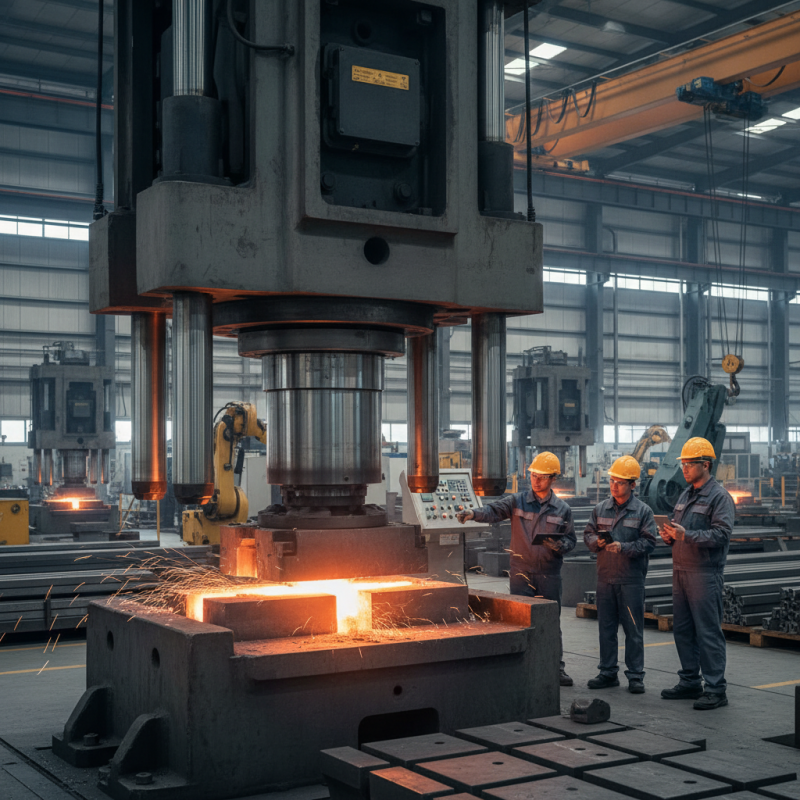
Selecting the right hot forging press is crucial for effective manufacturing. This decision can significantly impact production efficiency and product quality. A hot forging press must meet specific requirements tailored to your needs.
Consider the materials you regularly work with. Different metals require different forging techniques. You should also reflect on the production volume. A press that is too small may hinder output, while an oversized press could be inefficient.
Moreover, the technology inside the hot forging press matters. Look for features that enhance precision and reduce errors. Seeking expert advice can help you navigate these choices. It’s essential to weigh the pros and cons of each option carefully. Rushing the decision may lead to costly mistakes later, so take your time to reflect on what truly fits your operations.
Understanding Different Types of Hot Forging Presses and Their Applications
When selecting a hot forging press, understanding the various types is crucial. Hot forging presses come in many forms, such as mechanical, hydraulic, and friction types. Each is designed for specific applications. Mechanical presses excel in high-speed operations, ideal for producing large volumes. Hydraulic presses offer versatility, allowing for gradual force application, which is beneficial for delicate shaping. Friction presses, though less common, can deliver high energy in short bursts, suitable for specific applications.
Tips for choosing a press include assessing the material you plan to work with. Different materials may require different pressures and temperatures. For instance, titanium demands higher temperatures and specialized tooling. Always consider the production volume. For smaller quantities, a hydraulic press may suffice. However, if you're mass-producing, a mechanical press might be the better choice.
Analyze space and budget constraints as well. A larger press often means higher costs, both in purchase and maintenance. Compact options exist but may limit capabilities. Always weigh the long-term benefits against initial investments. Trial runs can provide insights into performance. Be ready to adapt your choice based on real-world results. This reflection will lead to better decisions in the future.
How to Choose the Best Hot Forging Press for Your Needs?
| Type of Hot Forging Press | Maximum Force Range (tons) | Applications | Key Features |
| Mechanical Press | 100 - 3000 | Automotive parts, Tooling | High speed, Precise control |
| Hydraulic Press | 50 - 2000 | Heavy machinery, Aerospace components | Adjustable force, Features for dense materials |
| Tensor Press | 200 - 5000 | Industrial components, Electric vehicle parts | Increased efficiency, Reduced energy consumption |
| Drop Hammer | 100 - 5000 | Steel production, Railroad ties | High impact force, Simple design |
| Pneumatic Press | 10 - 250 | Lightweight components, Hobby applications | Compact design, Ease of use |
Key Specifications to Consider for Hot Forging Press Efficiency and Output
When selecting a hot forging press, efficiency and output are paramount. Key specifications dictate performance. Pay attention to the press capacity. A higher capacity can improve production rates significantly. However, ensure it aligns with your production requirements to avoid unnecessary expenses.
Another vital specification is the stroke length. This aspect impacts the type and size of parts that can be produced. Longer strokes typically allow for larger components, enhancing versatility. The frame design also matters. A robust frame ensures stability during operation, reducing wear and prolonging the press’s life.
Consider the ram speed. Faster ram speeds can enhance cycle times. Yet, too high a speed might lead to quality issues, such as defects. Additionally, hydraulic systems play a crucial role in performance. Evaluate the system's reliability and maintenance needs. A system with frequent downtimes can disrupt production flow, causing significant losses.
Analyzing Material Compatibility for Optimal Hot Forging Results
When selecting a hot forging press, material compatibility is key. Different materials react uniquely to heat and pressure. For instance, carbon steels provide excellent strength but require specific temperatures for optimal forging. Recent studies show that using temperatures around 1200°C enhances their ductility. Conversely, alloys like titanium need precise control to prevent brittleness.
**Tip:** Always consult materials data sheets. They provide essential insights into thermal properties and recommended forging conditions for various materials.
Another challenge is managing tool wear. Harder materials can lead to faster degradation of press tools. An industry report noted that improper material pairings can increase wear rates by up to 30%. This not only impacts production efficiency but also affects the final product quality.
**Tip:** Conduct regular maintenance checks on your equipment. Keeping an eye on tool integrity helps mitigate unexpected failures.
Understanding the intricacies of material behavior during hot forging promotes better decision-making. Optimizing the material choice enhances product reliability and minimizes waste, making it crucial to stay updated with industry advancements.
Evaluating Power Requirements and Tonnage for Specific Forging Needs
When choosing a hot forging press, evaluating power requirements and tonnage is crucial. Industry statistics reveal that optimal tonnage can vary significantly. For many applications, a range of 1,000 to 6,000 tons is common. However, specialized projects may demand higher capacities. Research indicates that selecting insufficient tonnage can lead to poor material deformation and wasted energy.
Understanding the power requirements of your specific forging application is equally important. Different materials require different energy input to achieve desired shapes. A study by the Forging Industry Association found that inadequate power input can decrease production efficiency by up to 30%. The right press should be matched not only to material type but also to the complexity of the forge.
Design considerations also impact power efficiency. Factors like die design and cooling systems can affect required tonnage. Sometimes, investing in a higher tonnage press pays off in the long run. An inadequate press may force manufacturers to compromise on quality. Manufacturers can reconsider their choices by examining the balance between pressing capacity and operational costs.
Cost vs. Quality: Making Informed Decisions in Hot Forging Equipment Selection
When selecting hot forging equipment, cost and quality are crucial factors. According to a recent industry report, the initial investment in high-quality presses can range from $300,000 to over $1 million. However, opting for cheaper models might lead to higher maintenance costs and shorter lifespan. These hidden costs can erode initial savings, making quality a significant consideration.
Equipment quality not only impacts production efficiency but also affects end product integrity. Studies show that high-quality presses can improve productivity by 30% over their lifecycle compared to lower-quality options. Tools made with advanced engineering materials often outperform their less sophisticated counterparts. This difference is not just theoretical; it manifests through reduced downtime and better energy efficiency. Therefore, while the initial price may seem daunting, long-term gains are often substantial, leading to overall cost-effectiveness.
Many buyers struggle with balancing cost and quality. A cheaper press might seem like a good choice, but frequent breakdowns increase operational risks. In a world where production schedules are tight, reliability is paramount. Investing in a reliable, quality press can be a wise strategy, enhancing both performance and longevity, despite the heavier upfront investment. Making informed decisions can lead to significant gains in both efficiency and profitability.