
Your Source for Trays!

How to Choose the Best Range Exhaust Hood in 2026

Choosing the best Range Exhaust Hood in 2026 is less about buying the highest CFM number and more about controlling cooking emissions where they begin. The U.S. Environmental Protection Agency identifies cooking as a source of indoor particles and gases. The Home Ventilating Institute’s certified product directory lets shoppers compare independently tested airflow and sound ratings. Those details matter when a hood must clear smoke from a skillet without roaring over conversation.

Lawrence Berkeley National Laboratory indoor-air researcher Dr. Brett Singer has emphasized a simple habit: “Use your range hood whenever you cook.” A hood’s value depends on installation, capture area, and whether it exhausts air outdoors. A narrow canopy can miss rising steam from the front burners. A powerful fan can still disappoint if its duct is undersized or sharply bent. Small details matter.

This guide compares hood types, airflow, noise, filters, ducting, and installation constraints. It also explains when a recirculating model may be a compromise, not an equal substitute. Check certified ratings, measure the cooktop, and inspect the duct route before choosing. No single model suits every kitchen. That is worth remembering. Performance claims can look precise, yet real capture varies with burner position, cooking style, and installation quality. A useful choice balances verified specifications with the room you actually have.
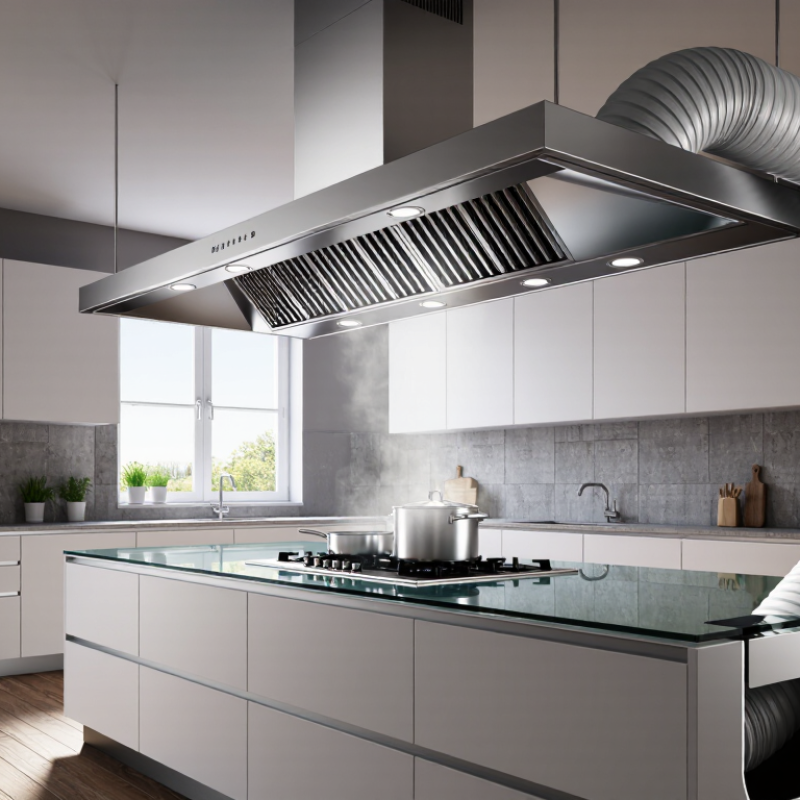
How to Choose the Best Range Exhaust Hood in 2026

Match Hood Type to Cooking Style Using HVI’s 100-CFM-Per-Foot Wall-Hood Guideline

Choosing a range exhaust hood starts with its location and your cooking habits. For a wall-mounted hood, HVI’s guideline calls for at least 100 CFM per foot of cooking-surface width. A 30-inch range therefore points to about 250 CFM as a starting benchmark. Not a promise. The guideline helps compare models, but it cannot account for every kitchen.

Frequent high-heat searing, wok cooking, or several active burners create more smoke and grease than occasional simmering. Consider a hood with greater airflow and a deep capture area that covers the front burners. A shallow hood may let steam escape toward nearby cabinets. That matters. Noise also affects daily use; an extremely loud hood may stay switched off.

Look beyond the CFM number. Long ducts, narrow sections, and multiple bends can reduce delivered airflow, while installation height affects how well fumes enter the hood. Island models face cross-drafts, so the wall-hood formula should not be applied to them automatically. Check the hood’s tested specifications and installation instructions, then ask a qualified installer to assess duct routing and make-up air needs. The guideline is useful, but it is not magic; matching capture area, airflow, and real cooking habits takes judgment.

Size the Capture Area to Cover the Full Cooktop

A hood can have impressive airflow ratings and still miss the cooking plume. Its capture area should cover the entire cooktop, including the front burners where rising steam and grease can drift beyond a shallow canopy. The Home Ventilating Institute’s residential guidance treats cooktop width as a minimum sizing reference; a little extra width provides useful margin. Measure the appliance, not just the cabinet opening. Measure twice.

Depth matters, too. Stand at the stove and check whether the hood’s front edge reaches over the front burners. A 2012 Lawrence Berkeley National Laboratory field study tested 15 installed range hoods and found capture performance varied widely. Burner position and hood design affected how well pollutants were captured. That makes a narrow, shallow hood a risky fit, even when its fan seems powerful. Before buying, mark the hood’s footprint with painter’s tape and compare it with every burner. It is a simple check, though not a perfect test: airflow, mounting height, and cross-breezes still matter. I would not assume a larger fan can compensate for a canopy that misses the cooking surface.

Plan Ducting Around the Manufacturer’s Specified Diameter and Route

A range hood can move less air than expected when its duct is undersized or poorly routed. Check the installation manual before cutting cabinets or ordering materials. It specifies the duct diameter and may show an approved outlet direction. Match those details. Air needs room.

Keep the duct at the specified diameter from the hood to the exterior termination. A smaller section can increase resistance and noise, even across a short distance. Use the shortest practical route, with gentle bends instead of tight elbows. Each turn adds resistance. Measure the full path, including the rise through a cabinet or ceiling, and confirm that the planned route fits the available space.

I have seen kitchen plans look neat on paper but become awkward around joists or existing pipes. Recheck the route before closing a wall; a small offset can change the fittings required. Avoid adding extra elbows just to make installation easier. If the manual allows more than one route, compare them for length and bends, then verify clearances and termination details. A careful plan saves rework, though the first sketch may need revision.

Compare HVI-Certified Airflow and Sound Ratings in Sones

When choosing a range exhaust hood in 2026, compare HVI-certified airflow and sound ratings—not just a large airflow number on a product page. HVI testing gives you a consistent basis for comparing listed performance. Check the certified airflow, measured in cubic feet per minute, and note which operating speed the rating describes. A hood may move plenty of air on its highest setting, but that setting can be too loud for everyday cooking.

Sound is commonly rated in sones. Lower numbers generally mean quieter operation, though your kitchen may sound different after installation. Duct length, bends, and the hood’s mounting height can affect performance. A short, straight duct may work better than a long route with several elbows. I would not treat any rating as a guarantee; real kitchens are imperfect, and I have seen small installation details matter.

Tips: Compare airflow and sones at similar settings. Confirm the exact hood configuration appears in the HVI directory, then check the installation manual for duct requirements. If you often sear food, consider useful airflow at a quieter setting, not only peak power. Listen to a comparable unit in person if possible. That final check is easy to overlook.

Check Local Code: IRC Sets 100 CFM Intermittent or 25 CFM Continuous

When choosing a range hood, check the locally adopted building code before comparing airflow ratings. The IRC is often cited for a minimum kitchen exhaust rate of 100 CFM intermittent or 25 CFM continuous. Local amendments and code editions can change what applies. Confirm the requirement with your building department or a qualified installer.

Intermittent operation means the hood runs only when switched on, often during cooking. Continuous operation uses a lower airflow for longer periods. These figures are not a complete sizing formula. A wide range, high-output burners, or frequent frying may call for stronger capture, depending on the hood design and installation. A pan of sizzling food can send smoke beyond a small hood’s edges.

Check the hood’s rated airflow, but also inspect the duct route, outlet size, and number of bends. A restrictive duct can reduce real-world performance. Noise matters, too; a hood that sounds harsh may rarely be used at full speed. I would not choose a model from its CFM number alone. Match the hood to the cooking surface, verify local code, and ask how the installed system will perform.

How to Choose the Best Range Exhaust Hood in 2026 — Check Local Code: IRC Sets 100 CFM Intermittent or 25 CFM Continuous
Selection Dimension What to Check Practical Guidance
Local code baseline IRC model-code local exhaust rates for a kitchen The IRC specifies 100 CFM for intermittent operation or 25 CFM for continuous operation. These are model-code minimum rates, not a guarantee that a hood will capture every cooking plume effectively.
Local adoption and amendments The code edition adopted by your jurisdiction Confirm requirements with your local building department. The IRC is a model code, and local adoption, amendments, permits, and inspection requirements can differ.
Airflow rating Hood airflow in cubic feet per minute (CFM) Choose a hood suited to the appliance, cooking habits, and duct layout. Check the manufacturer’s performance data for the installed duct conditions; a free-air rating may not represent airflow after duct resistance.
Capture coverage Hood width and depth relative to the cooking surface Select a hood that covers the cooking surface as specified by its manufacturer. Adequate depth and coverage over front burners can help capture rising smoke, grease, and heat.
Installation height Clearance between the cooking surface and hood Follow the hood and cooking-appliance installation instructions. Required clearances vary by product and appliance type; do not assume one height works for every installation.
Duct route and size Duct diameter, length, bends, and material Use the duct size and configuration specified by the hood manufacturer and adopted code. A shorter, straighter duct route generally reduces airflow resistance; avoid reducing the specified duct size.
Exhaust discharge Where the duct terminates For a ducted hood, exhaust outdoors through an approved termination. Do not discharge kitchen exhaust into an attic, crawl space, garage, or other enclosed space.
Makeup air High-capacity exhaust systems and local requirements Some adopted IRC editions require makeup air when a kitchen exhaust system is capable of exhausting more than 400 CFM, subject to code provisions and exceptions. Verify the applicable rule and installation details locally.
Noise Sound rating, commonly listed in sones Compare noise ratings at the airflow setting you expect to use. Lower sone ratings indicate quieter operation under the conditions stated by the manufacturer.
Filters and upkeep Grease-filter type and cleaning instructions Choose a hood with accessible grease filters and follow the manufacturer’s cleaning schedule. Clean filters help maintain airflow and reduce grease buildup.
Recirculating vs. ducted Whether air is exhausted outdoors or returned to the room A ducted hood sends exhaust outdoors. A recirculating model filters air and returns it to the kitchen; it does not provide outdoor exhaust ventilation. Check whether the selected type satisfies local requirements.
Note: The 100 CFM intermittent / 25 CFM continuous figures refer to IRC model-code kitchen local exhaust rates. Always verify the locally adopted code and the hood’s installation instructions before selecting or installing equipment.