Your Source for Trays!

How to Choose Coffee Packaging Bags for Global Sourcing?

Global coffee demand makes packaging a sourcing decision, not a simple purchasing task. The International Coffee Organization’s Coffee Development Report 2022/23 estimated global consumption at approximately 177 million 60-kilogram bags. Every bag must protect a valuable product.

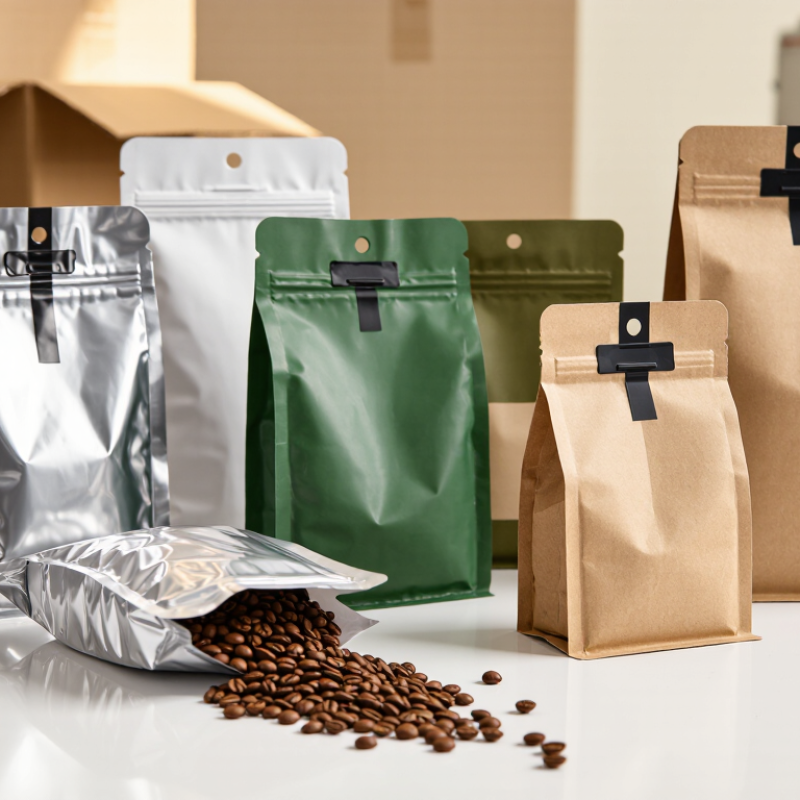
Coffee loses freshness through oxygen, moisture, light, heat, and poor sealing. The right Coffe Packaging Bags should match the roast profile, distribution route, filling equipment, and expected shelf life. A foil laminate may provide strong oxygen protection, while high-barrier recyclable films can support different sustainability goals. Degassing valves also matter, especially for freshly roasted whole beans.

W. Soroka, author of Fundamentals of Packaging Technology, defines packaging as “the means of ensuring safe delivery of a product to the consumer in good condition at the minimum overall cost.” That principle remains practical for global coffee sourcing. A low unit price means little if bags split during ocean freight or lose aroma on humid warehouse shelves.

Industry reports from Smithers and the Sustainable Packaging Coalition show growing pressure for recyclable and lower-impact formats. However, sustainability claims require evidence. “Recyclable” may depend on local collection systems. This is where sourcing becomes difficult.

Check barrier test results. Inspect valve performance. Request migration and food-contact documentation. Confirm seal strength with production samples, not only drawings. A polished sample can still disappoint.

Before selecting a supplier, compare total landed cost, minimum order quantity, lead time, printing quality, and quality-control records. The best Coffe Packaging Bags are not always the cheapest. They are the ones that protect flavor reliably from the roaster to the customer.

How to Choose Coffee Packaging Bags for Global Sourcing?

Define Coffee Packaging Requirements and Sourcing Goals

Global coffee packaging starts with a clear product brief, not a supplier shortlist. Define roast type, bean format, fill weight, shelf-life target, and sales region. A 250-gram whole-bean pouch needs different barrier performance from a one-kilogram foodservice bag. Record oxygen transmission, moisture protection, seal strength, valve requirements, and opening style. Keep it measurable. Avoid vague terms like “premium.”

Your sourcing goal should connect packaging performance with business reality. Set a target unit cost, annual volume, minimum order quantity, lead time, and sampling budget. Ask whether the bag needs recycling claims or disposal guidance for each market. Request material structures, test reports, food-contact declarations, and production samples. I have seen attractive samples fail drop tests or develop weak seals during transport. Small details matter. Yet specifications can become excessive. A thicker laminate may improve protection but increase freight weight and complicate disposal. Review that trade-off carefully.

Build a comparison sheet before requesting quotations. Score suppliers on consistency, communication, traceability, print accuracy, and corrective-action speed. Compare like with like. Clarify whether prices include tooling, freight, taxes, and inspection. A realistic pilot order can expose problems early, especially with zipper alignment and valve placement. Leave room for revision. Your first requirement list may be incomplete, and that is normal. Keep records of test conditions, decisions, and rejected compromises. This creates a sourcing trail that purchasing and quality teams can trust.

Compare Coffee Bag Materials, Structures, and Barrier Properties

How to Choose Coffee Packaging Bags for Global Sourcing?

Coffee bag performance depends on material, structure, and barrier properties. A single film rarely protects roasted coffee sufficiently. Common structures include PET/PE, PET/AL/PE, and kraft paper with an inner plastic layer. PET adds stiffness and print stability. PE supports heat sealing and flexibility. Aluminum foil provides strong protection against oxygen, moisture, and light.

Barrier data should guide sourcing decisions. Check oxygen transmission rate and water vapor transmission rate, not only marketing descriptions. Low OTR helps preserve aroma and slow oxidation. Low WVTR protects beans from humid storage conditions. Foil laminates usually offer the strongest barrier, but they may reduce recyclability. Clear films allow product visibility, yet light can damage flavor over time. There is no perfect material.

Bag structure also affects daily handling. Flat-bottom bags stand well on shelves, while side-gusset bags use space efficiently during shipping. A one-way degassing valve can release carbon dioxide after roasting without allowing much air inside. Test the valve, zipper, seals, and film for leakage. Small seal wrinkles can become serious failures. I have seen attractive bags fail because the seal width was too narrow. That mistake is easy to miss during sampling. Request production samples, run drop tests, and compare results after humid storage. Supplier certificates matter, but verified testing matters more.

How to Choose Coffee Packaging Bags for Global Sourcing? — Compare Coffee Bag Materials, Structures, and Barrier Properties
Packaging Material or Structure Typical Layer Structure Oxygen Barrier Moisture Barrier Light Protection Typical Heat-Seal Performance Mechanical Performance Best-Fit Coffee Applications Global Sourcing Considerations
Uncoated Kraft Paper Paper only; commonly used as an outer wrap or secondary package Low Low Moderate when opaque and sufficiently thick Not suitable for reliable direct heat sealing without an added sealant layer Good stiffness and printability; limited resistance to puncture and moisture Secondary packaging, gift cartons, outer sleeves, and short-duration dry coffee presentation Confirm whether the paper is intended for direct food contact and whether a separate inner barrier is required
Paper / PE Kraft paper / polyethylene sealant layer Moderate; depends strongly on polyethylene thickness and seal quality Good Moderate to good with opaque paper or additional coating Good; polyethylene provides a practical heat-seal layer Good stiffness and handling strength; paper surface can scuff or crease Short- to medium-term coffee packaging where paper appearance and moderate protection are priorities Ask for total basis weight, PE coating weight, seal temperature range, and recycling instructions for the destination market
Paper / EVOH / PE Kraft paper / ethylene-vinyl alcohol barrier layer / polyethylene Very high when the EVOH layer is protected from humidity by suitable polymers Good to very good Moderate unless the paper is opaque or a separate light barrier is added Good, provided the PE inner layer is continuous and properly sealed Good stiffness; barrier performance can be affected by high humidity if the structure is poorly designed Premium coffee requiring high oxygen protection with a paper-forward appearance Request oxygen transmission data at the intended humidity and temperature, because EVOH performance is humidity-sensitive
PET / PE Polyester outer layer / polyethylene sealant layer Moderate Good to very good Moderate; transparent PET does not block light Good when the PE sealant is compatible with the filling line Good tensile strength, stiffness, and abrasion resistance Basic to mid-range coffee packs where strength, clear graphics, and cost control are important Suitable for many form-fill-seal processes; specify PET thickness, PE type, seal window, and puncture requirements
PET / Metallized PET / PE Polyester / vacuum-metallized polyester / polyethylene Very high when the metallized layer is continuous and undamaged Very high Excellent Good; PE supplies the heat-seal layer Good strength and flex-crack resistance compared with many thin foil structures Whole bean or ground coffee requiring strong protection from oxygen, moisture, and light Check metallization uniformity, pinhole performance, flex durability, and whether the structure is accepted in the target recycling system
PET / Aluminum Foil / PE Polyester / aluminum foil / polyethylene Excellent when the foil layer remains intact Excellent Excellent Very good; PE or another sealant layer forms the inner seal Good overall strength, but foil can develop pinholes or cracks after severe folding and flexing Long shelf-life coffee, export shipments, high-aroma products, and demanding storage conditions Strongest general barrier option, but usually less compatible with mono-material recycling targets and may have a higher material footprint
BOPP / CPP Biaxially oriented polypropylene / cast polypropylene Moderate Very good Low when transparent; improved only with an opaque or metallized layer Good; CPP is commonly used as the inner sealant Good stiffness, clarity, and moisture resistance Short- to medium-term coffee packaging and applications prioritizing polypropylene-based structures Confirm compatibility with local polypropylene recycling streams and verify seal performance after filling-line exposure
Mono-PE High-Barrier Laminate Polyethylene-based layers, often including a barrier coating or high-barrier PE film Moderate to high, depending on the barrier coating and film design Very good Moderate; light protection requires opacity or a suitable coating Good to very good; PE-to-PE sealing can simplify production Good flexibility and pouch durability; stiffness may be lower than PET-based structures Brands and importers seeking improved material compatibility with PE recycling systems Do not assume “mono-material” means recyclable everywhere; verify local collection, sorting, and design-for-recycling requirements
Compostable Film Laminate Paper with certified compostable polymer layers, or a compostable polymer laminate Moderate; varies substantially by film composition and humidity Moderate; generally less robust than foil-based structures Moderate when opaque paper is used Usually workable, but the sealing window may be narrower than conventional PE structures Adequate for normal handling; puncture and moisture performance must be validated Shorter shelf-life products where certified compostability and end-of-life communication are central requirements Request recognized certification, migration testing, shelf-life data, and confirmation that commercial composting infrastructure exists in the target market
Side-Gusset Bag with One-Way Degassing Valve Usually a multilayer laminate, such as PET / metallized PET / PE or PET / foil / PE, plus a valve Very high when the laminate and valve are correctly specified Very high for foil or metallized high-barrier structures High when metallized film or aluminum foil is used Reliable bottom and top seals require controlled gusset forming and sealing conditions Excellent shelf stability and upright presentation; gussets add forming complexity Whole bean coffee and freshly roasted coffee that releases carbon dioxide after roasting Specify valve opening pressure, gas-flow direction, aroma retention, seal integrity, and compatibility with automatic filling equipment
Flat-Bottom Bag with Degassing Valve Typically a high-barrier multilayer laminate with a reinforced flat base and valve Very high with metallized or foil-based barrier layers Very high with a properly sealed high-barrier laminate High when the structure includes foil or metallization Good to very good; multiple seals require accurate machine setup Excellent shelf presence, base stability, and cube efficiency during palletization Premium whole bean coffee, larger retail sizes, and products needing a stable stand-up format Evaluate dimensional tolerances, base construction, valve placement, pallet utilization, and filling-line changeover requirements
Quad-Seal Bag with Degassing Valve Four-panel high-barrier laminate, commonly with PE sealant and metallized or foil barrier Very high Very high High to excellent, depending on the barrier layer Good; corner and longitudinal seals require consistent pressure and temperature Excellent structural strength, shelf impact, and pallet stability Retail whole bean coffee, bulk formats, and export-oriented packaging requiring strong presentation Compare seal-area consistency, panel registration, bag dimensions, valve installation, and minimum order quantities for custom tooling
Spouted Stand-Up Pouch Flexible multilayer laminate with a fitment and cap; structure varies by required barrier level Moderate to high, depending on film and fitment design Very good Moderate to high with opaque or metallized layers Good, but the fitment seal and cap closure must also be validated Good convenience and lightweight performance; fitment adds components and potential leakage points Ready-to-use coffee products, concentrates, liquid coffee, and specialty formats rather than standard roasted beans Test fitment integrity, torque, drop resistance, leakage, transport vibration, and food-contact compliance in each destination market
Important sourcing note: Barrier ratings are comparative typical ranges, not guaranteed specifications. Final performance depends on film thickness, coating quality, seal integrity, bag geometry, valve design, storage conditions, and filling-line settings. Request laboratory data for oxygen transmission rate (OTR), water vapor transmission rate (WVTR), seal strength, migration compliance, and shelf-life validation under the intended market conditions.

Select Suitable Bag Formats, Closures, and Degassing Valves

How to Choose Coffee Packaging Bags for Global Sourcing?

Bag format, closure, and degassing valve should match the coffee, filling line, and shipping route. Stand-up pouches suit smaller retail portions and display well on shelves. Flat-bottom bags offer better stability for larger volumes. Quad-seal bags provide strong structure, but they may require more packaging material.

Choose a resealable zipper when consumers open the bag repeatedly. Tin ties work for simple, familiar packaging, but they provide less protection after opening. For freshly roasted coffee, use a one-way degassing valve. It releases carbon dioxide while limiting oxygen entry. Valve placement matters. A poorly positioned valve can interfere with sealing equipment or become hidden under a label.

Tips: Request production samples before placing a large order. Fill them with real roasted coffee, then check seal strength, zipper performance, and valve function after several days. Compare the bag’s barrier data, especially oxygen transmission and moisture protection. A darker roast may release gas differently, so one valve specification may not suit every product. Keep this in mind.

I have seen attractive bags fail during humid sea transport. The coffee remained safe, but the outer film wrinkled and the zipper became difficult to use. That experience showed me that appearance is only one part of packaging quality. Confirm material structure, thickness, printing tolerance, and carton protection with the supplier. Test filled bags in realistic storage conditions. Some packaging decisions still involve compromise, especially between premium appearance, recyclability, and long-distance durability.

Evaluate Suppliers, Certifications, Quality, and Production Standards

How to Choose Coffee Packaging Bags for Global Sourcing?

A reliable coffee bag supplier should explain materials, production controls, and testing methods clearly. Ask where each film layer comes from. Request current food-contact declarations for every material touching the coffee. Certifications should match the factory, product, and production site. Check their scope and expiration dates, not just certificate logos. ISO 9001 may show quality management, but it does not prove barrier performance.

Request samples from normal production, not specially prepared prototypes. Examine seal edges, zipper alignment, valve placement, surface scratches, and print rub resistance. Ask for oxygen transmission and moisture transmission results. These figures matter because roasted coffee loses aroma when protection is weak. A supplier should also provide batch records, inspection procedures, and traceability codes. Small details reveal daily discipline.

Production standards deserve an on-site audit or an independent inspection. Observe hygiene controls, storage conditions, calibration records, and rejected-bag handling. Ask how workers control sealing temperature and pressure. Test bags after filling, transport simulation, and temperature changes. Results can differ between laboratory samples and real shipments. That gap is easy to underestimate. I would not rely on one successful batch. Keep a retained sample from each shipment and compare it later. My own judgment can be imperfect, especially when delivery pressure encourages shortcuts. A clear corrective-action process helps expose problems before they become expensive.

How to Choose Coffee Packaging Bags for Global Sourcing?

Supplier Evaluation, Certifications, Quality, and Production Standards

This practical sourcing scorecard assigns a 100-point evaluation weight to the main purchasing factors for coffee packaging bags. Food-contact compliance, barrier performance, seal quality, production consistency, and traceability should be verified through current certificates, laboratory reports, approved samples, and production audits. The weighting is a procurement framework rather than data from any specific company or brand.

Calculate Costs, Shipping Factors, and Packaging Sustainability

Choosing coffee packaging bags for global sourcing starts with landed cost, not the factory quote. Calculate bag price, printing plates, minimum order quantity, inspection, freight, duty, inland delivery, and expected waste.

A useful formula is:
landed cost = total purchase and logistics costs divided by sellable bags.

In one sourcing review, the missed cost was carton volume, not film price. Measure packed cartons carefully. Maritime transport carries over 80% of global trade by volume, according to UNCTAD’s Review of Maritime Transport 2023. Small dimensional changes can affect pallet count and container utilization.

Shipping conditions also influence bag performance.

Coffee needs protection from oxygen, moisture, light, and aroma loss during long transit. Request oxygen transmission rate, water vapor transmission rate, seal strength, and storage-test results.

A cheaper bag may create leakage, rejected stock, or repacking costs. That calculation is uncomfortable. It is also realistic.

Include buffer stock for port delays and seasonal demand, but avoid excessive inventory.

Sustainability requires evidence, not attractive wording.

The OECD Global Plastics Outlook reports that only 9% of plastic waste was recycled globally in 2019. Ask whether the proposed structure is recyclable in the destination market, not merely technically recyclable.

Compare material weight, recycled content, barrier performance, and end-of-life options using ISO 14040 and ISO 14044-based life-cycle data.

UNCTAD reports that maritime shipping produced about 2.89% of global greenhouse-gas emissions in 2018, cited from the IMO Fourth GHG Study 2020. A lighter package can reduce transport emissions, but only if it still protects the coffee.