
Your Source for Trays!

How to Choose the Best 3 Ton Low Profile Floor Jack?

Choosing the right 3 Ton Low Profile Floor Jack is a practical safety decision, not merely a price comparison. A suitable jack should match vehicle weight, lifting points, ground clearance, and workshop frequency. Grand View Research’s Automotive Lift Market Size, Share & Trends Analysis Report identifies growing demand for safer, more efficient vehicle-maintenance equipment. That trend matters in small garages, where every millimeter of clearance and every wheel movement affects control.

Start with capacity, but do not stop there. A three-ton rating describes maximum lifting capacity under specified conditions. It does not guarantee stability on every floor. Check the jack’s minimum height, saddle diameter, chassis length, handle design, and lifting range. ANSI/ASME PALD-2014 provides recognized safety requirements for portable automotive lifting devices, including performance and construction considerations. Look for documentation that clearly states compliance. Vague claims deserve caution.

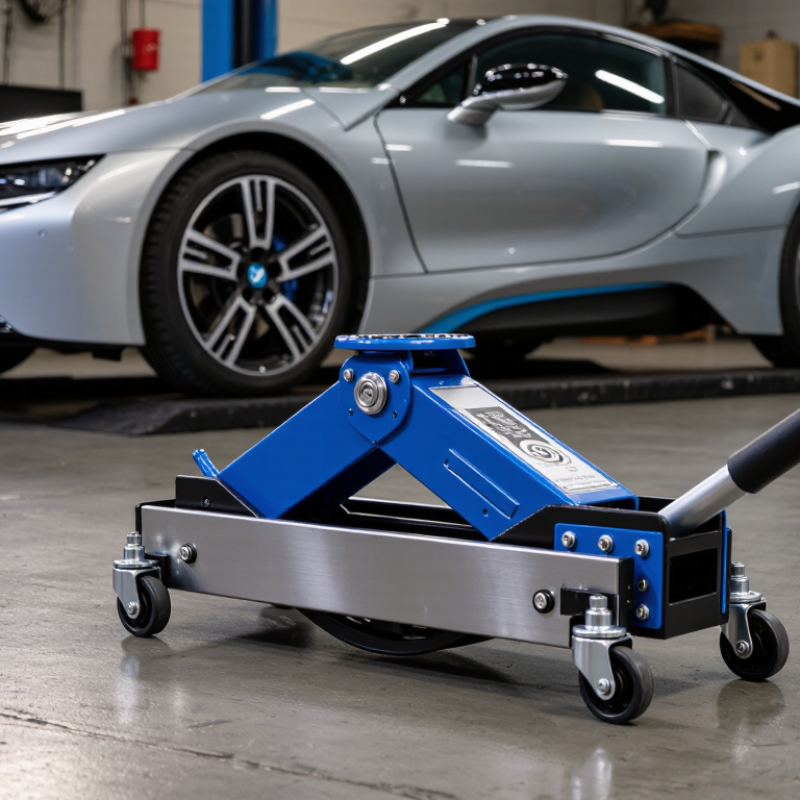
Real-world use exposes details that product photos hide. A low-profile jack should slide beneath a sports car without scraping its splitter. Its casters should roll smoothly across clean concrete, not wobble under load. The release valve should lower the vehicle gradually. Small flaws matter. I have seen buyers focus on maximum height and overlook saddle reach, then struggle beneath modern unibody vehicles.

This guide compares those practical factors, alongside manufacturer specifications and professional safety guidance. Remember, a floor jack lifts; properly rated jack stands support. Never place any part of your body beneath a vehicle supported only by hydraulic pressure. The best choice is not always the heaviest model. It is the jack that fits your vehicle, workspace, and habits with dependable control.
How to Choose the Best 3 Ton Low Profile Floor Jack?

Define Your Lifting Needs and Vehicle Compatibility

Choosing the best 3 ton low profile floor jack begins with your actual lifting needs. A three-ton rating does not mean every vehicle is suitable. Check the vehicle’s gross weight and the manufacturer’s recommended lifting points. Then estimate the load on one end, not the whole vehicle. Leave a practical safety margin.

Measure the lowest clearance beneath the vehicle. Some sports cars need a very low entry height, while larger vehicles may require greater lifting range. Check the jack’s minimum and maximum saddle heights against those measurements. Also confirm the saddle shape fits the approved contact points without crushing panels or underbody parts. Do not guess.

Read the vehicle service manual carefully. Use wheel chocks on the opposite axle and place rated support stands before working underneath. A jack lifts; it should not support a person or a vehicle for extended periods. Work on a firm, level surface, never loose gravel. Hydraulic leaks, bent arms, damaged wheels, or a slipping saddle require immediate attention.

In practical workshop checks, smooth pumping and controlled lowering matter as much as capacity. A jack that lifts quickly but drops abruptly is a poor choice. I have seen users focus on low clearance and overlook handle access near a side skirt. That mistake is easy to make. Recheck the lifting points after the first few centimeters of movement, because the vehicle may shift slightly. Safety margin matters more than convenience.

How to Choose the Best 3 Ton Low Profile Floor Jack? - Define Your Lifting Needs and Vehicle Compatibility

Vehicle or Lifting Need Typical Vehicle Weight Recommended Jack Capacity Suggested Minimum Clearance Useful Maximum Lift Height Compatibility Notes
Low sports car or lowered sedan 2,800–4,000 lb
(1,270–1,814 kg)
3 ton / 6,000 lb
(2,722 kg)
2.75–3.00 in
(70–76 mm)
17–20 in
(432–508 mm)
Confirm that the saddle can reach the manufacturer-designated lifting point without contacting the side skirt, undertray, or battery enclosure.
Standard compact or midsize sedan 3,000–4,200 lb
(1,361–1,905 kg)
3 ton / 6,000 lb
(2,722 kg)
3.00–3.50 in
(76–89 mm)
18–21 in
(457–533 mm)
A low-profile 3-ton jack normally provides sufficient capacity and reach for wheel, brake, and suspension work on one end of the vehicle.
Small crossover or compact SUV 3,500–4,800 lb
(1,588–2,177 kg)
3 ton / 6,000 lb
(2,722 kg)
3.25–4.00 in
(83–102 mm)
19–22 in
(483–559 mm)
Check the maximum lift height and saddle position, because extra ground clearance may require more vertical travel.
Midsize or full-size SUV 4,200–5,800 lb
(1,905–2,631 kg)
3 ton / 6,000 lb
(2,722 kg), with limited margin
4.00–5.00 in
(102–127 mm)
20–24 in
(508–610 mm)
Verify the actual curb weight and lifting-point height. A 3-ton rating may be adequate for one end, but a higher-capacity jack can provide a larger safety margin.
Light-duty pickup truck 4,000–5,500 lb
(1,814–2,495 kg)
3 ton / 6,000 lb
(2,722 kg), only when within the vehicle manual limits
4.00–5.00 in
(102–127 mm)
20–24 in
(508–610 mm)
The frame, axle, or approved suspension point must be accessible. Do not use the jack to support the vehicle while working underneath it.
Frequent workshop or performance use Up to approximately 5,000 lb
(2,268 kg) per lifting end
3 ton / 6,000 lb
(2,722 kg)
2.75–3.50 in
(70–89 mm)
19–23 in
(483–584 mm)
Prioritize a rigid frame, low saddle, long chassis, smooth hydraulic control, a removable handle, and a replaceable saddle pad.
Key selection checks for a 3-ton low-profile floor jack:
  • Choose a minimum height lower than the vehicle's approved lifting-point clearance, allowing room for the saddle pad.
  • Choose a maximum height that reaches the approved lifting point while leaving enough travel to remove the wheel.
  • A 3-ton rating equals 6,000 lb or approximately 2,722 kg, but the jack should lift only the portion of the vehicle specified by the service procedure.
  • Use the vehicle owner's manual to identify approved lifting points and always support the raised vehicle with properly rated jack stands.

Compare Capacity, Lift Range, and Low-Profile Clearance

Choosing a 3-ton low-profile floor jack starts with the vehicle, not the label. A 3-ton rating means up to 6,000 pounds, but it does not make every lift equally safe. Check the vehicle’s curb weight and approved lifting points. I prefer capacity comfortably above the expected load, especially when lifting one end. A steel frame feels reassuring, yet its weight can matter during daily storage.

Lift range deserves a close comparison. Many low-profile models begin near 2.75 inches and reach roughly 18 to 20 inches, though measurements vary. Measure the floor-to-lifting-point distance before buying. A short maximum height can make suspension work awkward. A tall minimum height can prevent the saddle from sliding beneath a lowered vehicle. Test handle movement in your garage. Walls and side skirts may limit access. Small clearance errors become frustrating quickly.

I once chose a jack mainly for its low entry height. It fit beneath the car, but its maximum lift felt limited. That was my mistake. Look for a stable saddle, smooth lowering control, and a wide wheelbase.

Use the jack only on firm, level ground, then support the vehicle with properly rated stands. Never rely on hydraulic pressure alone. Read the manual for contact points and maintenance intervals.

Evaluate Frame Design, Stability, and Construction Quality

Choosing the best 3-ton low profile floor jack starts with the frame. A low entry height matters for modern cars, but shallow frames can flex under load. EPA’s Automotive Trends Report shows average new-vehicle weight has exceeded 4,000 pounds in recent model years. A 3-ton rating equals 6,000 pounds, yet that figure does not mean every lifting position is equally safe.

Inspect the steel thickness, weld continuity, and saddle mounting point. The frame should spread force across a wide footprint, not concentrate it near one hinge. ASME PALD guidance emphasizes rated capacity, stability, and controlled lowering for portable automotive lifting devices. Look for a reinforced side plate and a handle that does not twist the chassis. It should feel rigid. Excessive paint can hide uneven welds.

Stability also depends on wheel layout. Larger rear casters roll more smoothly over concrete joints, while a broad front axle reduces tipping during pumping. DOE’s Vehicle Technologies Market Report places many current light-duty vehicles near two tons before passengers and cargo. That makes correct jacking-point alignment essential. Never judge quality by lifting speed alone. A jack that rises quickly may lower harshly. I have found visual inspection imperfect, especially when coatings conceal small cracks, so test the release valve gradually and check for frame movement under a modest load. Loose hardware is a warning, not a minor annoyance.

Check Safety Features, Ease of Use, and Maintenance Needs

Choosing a 3 ton low profile floor jack starts with safety, not lifting height. Look for a clearly marked capacity, overload protection, and a wide, stable saddle. ASME PASE-2019 covers portable automotive service equipment, including performance and safety requirements for jacks. A compliant design should lower smoothly, without sudden handle drops. I test this slowly.

Never trust the jack alone. OSHA requires vehicles to be supported by suitable stands or blocking during servicing. The 2023 U.S. Bureau of Labor Statistics reported about 2.6 million recordable injuries in private industry, including roughly 888,100 cases involving days away, restriction, or transfer. These figures are not jack-specific, but they show why stable support matters. A jack with a low entry height helps reach modern vehicles, while a long handle can reduce awkward bending. Still, a long handle may hit nearby bodywork in a crowded garage. Measure your workspace first.

Ease of use depends on more than wheel size. A readable release valve, smooth casters, and a rubber-padded saddle make positioning easier. Check that the lifting range suits the vehicle before purchase. For maintenance, inspect hydraulic fluid, seals, wheels, and the saddle regularly. Keep the frame clean and store the jack fully lowered. I once treated slow lowering as harmless; that was poor judgment. Small leaks can become dangerous. Service intervals vary, so follow the technical manual and record inspections. Data sheets can omit real workshop conditions, so hands-on testing remains necessary.

Balance Performance, Warranty, and Overall Value

How to Choose the Best 3 Ton Low Profile Floor Jack?

Balance Performance, Warranty, and Overall Value

Choosing a three-ton low-profile floor jack starts with usable performance, not the largest number on the box. Measure your vehicle’s minimum clearance, then compare it with the jack’s collapsed height. A lift range around three to five inches suits many passenger vehicles, but every chassis differs. Check the saddle diameter, frame width, and release-control precision. A stable, smooth raise matters more than dramatic speed. Test the pump with a load when possible. Empty lifting can hide weakness.

Overall value includes durability, serviceability, and warranty clarity. Look for welded steel construction, protected casters, and a handle that locks without excessive play. A replaceable seal kit may extend useful life after years of shop dust and hydraulic oil. Read warranty exclusions carefully. Coverage for manufacturing defects is useful, but shipping responsibility and repair procedures matter more than a generous headline. Some warranties sound impressive. Their process may be inconvenient.

Keep the jack’s weight and storage needs in view. A lighter model is easier to position, yet it may feel less planted under load. That tradeoff deserves honest thought. Compare price against expected use, not occasional discounts. For home maintenance, dependable control and accessible support often beat premium lifting speed. For frequent workshop work, stronger wheels and faster recovery can justify extra cost. Never treat the jack as a substitute for properly rated stands. That detail is easy to overlook.