How to Choose the Best Stacking Bins for Your Needs?
Choosing the best stacking bins can seem overwhelming. There are many options available, each with its unique features. Stacking bins are essential for organizing spaces efficiently. They come in various sizes, colors, and materials. Think about your specific needs first.
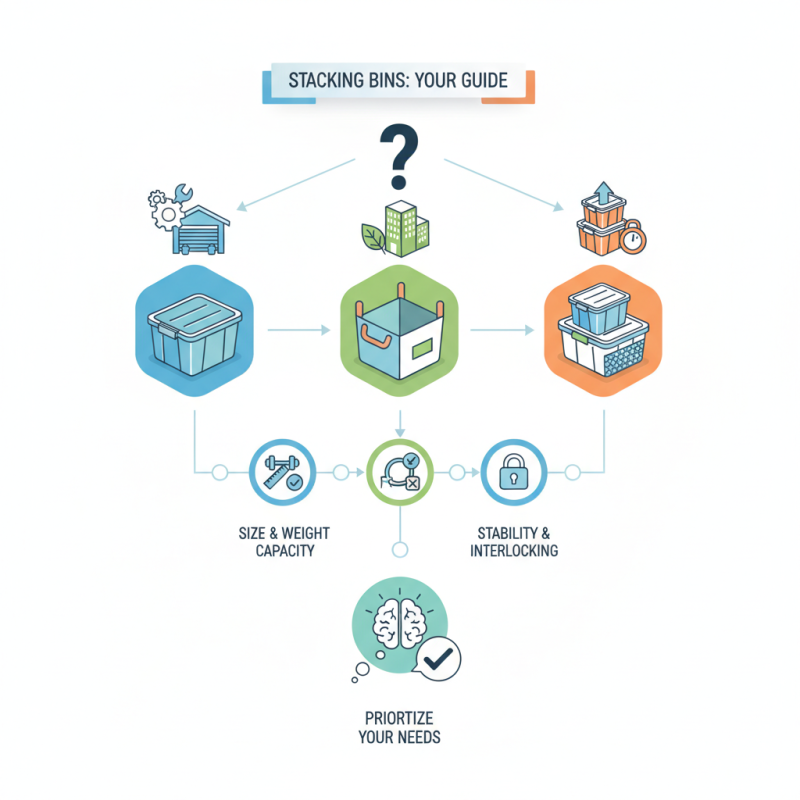
Consider where you will use these bins. If you need them for a garage, durability is key. For office use, aesthetics might matter more. Not all stacking bins fit every space perfectly. Some might not hold as much weight as expected, leading to frustration. Pay attention to dimensions and weight limits.
Moreover, functionality is crucial. Are you stacking them high? Ensure they have a sturdy design. Some bins might slip or become unstable when stacked. Look for bins with interlocking features or non-slip bases. It's okay to have doubts. Reflect on your choices and prioritize your storage needs wisely.
Factors to Consider When Selecting Stacking Bins for Storage
When choosing stacking bins for storage, several factors come into play. The size of the bins is crucial. Consider your storage space. Measure your area before purchasing. Think about how many bins you need. This helps avoid overcrowding or wasted space. Pay attention to the dimensions. Larger bins can hold more, but they may be harder to stack neatly.
Material is another important aspect. Plastic bins are lightweight and easy to clean. However, they may not hold up under heavy weights. On the other hand, metal bins offer durability but can be bulkier. Reflect on what you'll store. Heavy items? Choose sturdy materials. For lighter items, plastic may suffice.
Tips: Always check the weight capacity of the bins you consider. Look for bins that have reinforcement in the corners. This can prevent tipping when stacked high. Also, consider bins with clear sides. It helps you see the contents without opening each one. Finally, think about the environment. Some materials are better for the planet. Choose wisely to reduce waste and choose sustainable options.
Material Options: Plastic vs. Metal vs. Fabric Stacking Bins
When selecting stacking bins, the material plays a crucial role in functionality and durability. Plastic bins are popular due to their lightweight nature. They are easy to clean and come in various colors. However, they can become brittle over time. Consider the environment where they will be used. Plastic may not hold up well in extreme temperatures.
Metal bins provide robustness and a stylish appearance. They can withstand heavier loads and are resilient against wear and tear. On the downside, they may rust if not properly coated. Also, their weight can be a disadvantage for stacking. You may need to assess the balance between sturdiness and portability.
Fabric bins offer flexibility and softness. They can fit into tight spaces and come in various designs. However, they may lack the support that plastic or metal bins provide. They can also collect dust and allergens more easily. Reflect on your storage needs carefully before deciding. Each material has its pros and cons. Choose what best fits your lifestyle.
Material Options for Stacking Bins
Weight Capacity and Load Distribution: Key Specifications to Review
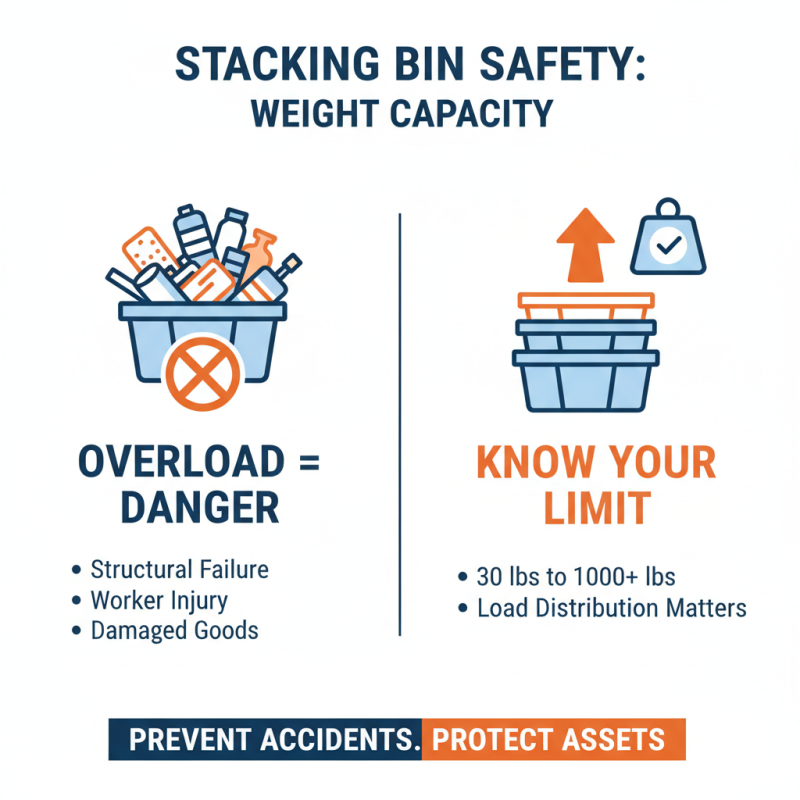
When selecting stacking bins, understanding weight capacity and load distribution is crucial. Many industry studies indicate that the weight capacity of bins varies widely. Some bins can hold as little as 30 pounds, while others support over 1,000 pounds. Knowing the maximum weight limit is the first step. Overloading a bin can lead to structural failure. This potentially endangers workers and damages goods.
Moreover, load distribution plays a key role in performance. Unevenly loaded bins can tip over, causing accidents. An industry report highlights that 30% of workplace accidents are related to improper loading. Different materials affect how weight is distributed. For example, plastic bins often distribute weight differently compared to metal ones. It is essential to ask: is your bin designed for uniform weight?
Consider the bin's intended use. Are you storing heavy tools or lighter items? Adjust your selection accordingly. Many workers overlook this detail. They choose based solely on size. But weight capacity and load dynamics should guide your choice. This helps avoid waste and ensures safety.
Dimensions and Space Management: Ensuring Optimal Fit in Your Space
When selecting stacking bins, dimensions and space management play a critical role. Ideal measurements ensure that bins fit seamlessly within available spaces. According to a recent study by the Organization for Machine Safety, 72% of storage issues stem from improper sizing. This emphasizes the need to measure your space accurately before making a purchase.
Consider the height, width, and depth of each bin. For example, a bin with a depth of more than 15 inches might consume too much space in narrow aisles. Similarly, a towering stack of bins can cause accessibility problems. Research shows that bins with a height of 12 inches or less are often easier to manage. Ensure that they align with your shelving units or storage areas.
However, manufacturers often overlook user needs. Many products come in standard sizes that may not suit all environments. This misalignment can lead to wasted space. In fact, about 40% of users report dissatisfaction due to sizing mismatches. Prioritize dimensions that fit your specific context to avoid these common pitfalls.