
585.204.6770
sale@sanblueplastics.com
Your Source for Trays!
How to Choose the Right Connector Hose Pipe?
Choosing the right Connector Hose Pipe starts with understanding what it must carry and where it will operate. A hose used for water may not suit oil, chemicals, compressed air, or hot fluid. Check the manufacturer’s compatibility information before selecting a material. Small details matter. Measure the required inside diameter and connection type, then confirm that fittings match the equipment. A mismatch can cause leaks, restricted flow, or avoidable wear.
Pressure and temperature ratings deserve equal attention. Compare the hose’s working limits with the system’s normal conditions, including pressure changes during startup or shutdown. Leave enough length for movement, but avoid sharp bends, twisting, and contact with hot or abrasive surfaces. Not glamorous, but important. Consider whether the hose needs reinforcement and whether its outer cover can withstand moisture, sunlight, oils, or cleaning products. A rating alone does not guarantee suitability; installation and maintenance matter too.
This guide explains how to assess materials, dimensions, fittings, and operating conditions before making a choice. It also highlights practical checks, such as inspecting for cracks, bulges, loose couplings, and leaks. Product labels and technical data sheets are useful starting points, though unclear specifications should be verified with the supplier or a qualified technician. There is no perfect choice for every setup. The right option depends on the actual application, and small assumptions can lead to costly problems.
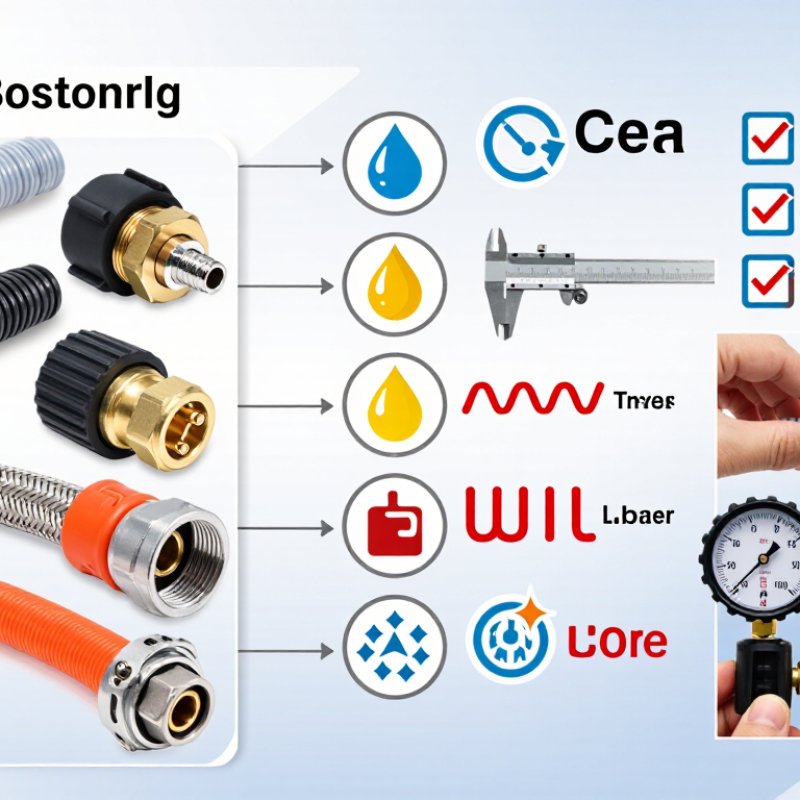
Determine the Hose’s Purpose and Operating Conditions
How to Choose the Right Connector Hose Pipe?
Determine the Hose’s Purpose and Operating Conditions
Start with the job the hose must perform. Will it carry water, oil, air, or another fluid? Check the fluid’s temperature and composition, since some materials can swell, soften, or degrade when exposed to certain media. A hose suitable for cool water may not be safe for hot fluid.
Then examine operating conditions. Note the normal pressure, possible pressure spikes, and expected flow rate. Consider whether the hose will sit still or flex repeatedly. Nearby heat, sunlight, abrasion, and tight bends can shorten its service life. Leave enough room for movement, and respect the manufacturer’s minimum bend radius. Small details count.
It is easy to focus only on diameter. That can be a mistake: a correct bore does not make a hose suitable for the pressure or fluid. Confirm that the hose, fittings, and connector ends are compatible as a complete assembly. Check how each end attaches, and look for clear pressure and temperature ratings. If the actual conditions are uncertain, measure them before choosing; estimates can miss brief spikes. A careful match may take longer, but it helps prevent leaks and premature wear.
How to Choose the Right Connector Hose Pipe? — Determine the Hose’s Purpose and Operating Conditions
| Application | Medium and Typical Conditions | Suitable Hose Construction | Important Selection Checks |
|---|---|---|---|
| Automotive coolant connection | Water-based coolant; commonly exposed to elevated engine-bay temperatures and system pressure. | Coolant-rated elastomer hose, often reinforced where required by the vehicle system. | Check coolant compatibility, temperature rating, pressure rating, inside diameter, bend radius, and resistance to engine-compartment heat. |
| Compressed-air line | Compressed air; pressure varies considerably between tools and installations. Air may contain moisture or compressor oil. | Air-service hose with reinforcement appropriate to the working pressure and intended environment. | Use a hose specifically rated for compressed air—not a general water hose. Confirm working pressure, temperature, fitting retention, and resistance to oil or abrasion as needed. |
| Hydraulic equipment connection | Hydraulic oil or compatible fluid; pressure can be high and may fluctuate during operation. | Hydraulic hose with the specified reinforcement and end fittings for the equipment circuit. | Match the hose assembly to the system’s maximum operating pressure, impulse duty, fluid, temperature, and fitting standard. Depressurize the system before service. |
| Potable-water supply | Drinking water at ambient or moderately warm temperatures; pressure depends on the plumbing system. | Hose materials certified for potable-water contact in the intended region and application. | Verify drinking-water certification, pressure and temperature limits, taste or odor requirements, and compatibility with the connector materials. |
| Hot-water appliance connection | Hot water; temperature and pressure depend on the appliance and installation. | Hot-water-rated reinforced hose or a specified flexible connector assembly. | Check continuous and peak temperature ratings, working pressure, fitting type, installation clearance, and local plumbing requirements. |
| Chemical transfer | Acids, alkalis, solvents, or other process chemicals; compatibility is specific to the chemical and its concentration. | Chemical-transfer hose with an inner tube and fittings selected for the exact service. | Confirm chemical name, concentration, temperature, exposure duration, and permeation limits. Do not assume that a hose suitable for one chemical is suitable for another. |
| Food or beverage transfer | Food products or beverages; may involve cleaning cycles, warm liquids, or repeated sanitation. | Food-contact hose with materials and construction suitable for the product and cleaning method. | Check applicable food-contact compliance, product compatibility, cleaning-agent resistance, temperature limits, and whether the hose is intended for repeated sanitation. |
| Water suction or discharge | Water moved by a pump; suction service can create vacuum and may cause an unsupported hose to collapse. | For suction, use a hose designed to resist vacuum, typically with suitable reinforcement or a helix. For discharge, use a pressure-rated hose. | Distinguish suction from discharge duty. Check vacuum rating, working pressure, flow rate, hose length, bend radius, and the effect of water temperature. |
Selection note: Conditions shown are general guidance, not universal ratings. Always verify the hose and connector assembly against the actual fluid, pressure, temperature, movement, environment, and applicable standards before installation.