What Are Forged Round Rings Used For?
Forged Round Rings are valued for their strength, uniform shape, and ability to carry heavy loads. You may find them in pressure vessels, industrial machinery, lifting systems, and large rotating equipment. Their uses depend on more than appearance. Engineers consider the ring’s dimensions, material grade, heat treatment, and operating conditions before selecting one.
A forged ring begins as heated metal shaped under controlled pressure. This process can produce a continuous grain flow around the ring, helping it withstand demanding service. Picture a thick steel ring supporting a turbine shaft: small defects or poor dimensional control could matter greatly. Still, forging alone does not guarantee performance. Inspection, machining, and documented material testing remain important.
A practical expert perspective can be expressed this way: “A forged ring earns its place through verified material quality, accurate dimensions, and performance suited to its real operating conditions.” This is an editorially written summary, not a verified quotation from a named specialist. The distinction matters. Reliable technical guidance should identify its sources, not borrow authority through an invented attribution.
This article explains where Forged Round Rings are used, what makes them suitable for demanding applications, and which selection details deserve attention. The right choice is rarely based on size alone. In practice, the operating environment can change everything.
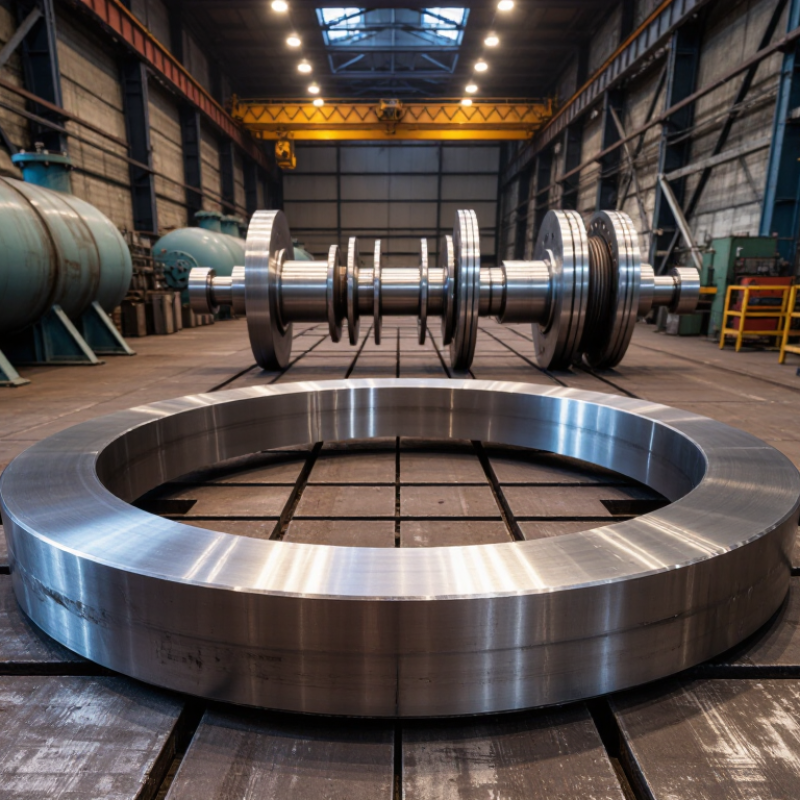
What Forged Round Rings Are and How They Are Made
Forged round rings are circular metal components shaped under compressive force. They appear in demanding equipment, including pumps, turbines, pressure vessels, and heavy machinery. Their round form can distribute loads around a shaft or opening. Many are made as seamless rings, without a welded joint.
For a seamless ring, production often begins with a heated steel billet. A press pierces its center, creating a thick, doughnut-shaped blank. Ring-rolling equipment then squeezes the blank between rolls and expands its diameter over a mandrel. The metal moves and reshapes under pressure. After forming, the ring may be heat-treated, machined, and checked for dimensions or internal flaws. Forging can help align the metal’s grain flow with the ring’s shape, but it does not guarantee a defect-free part. Temperature control and inspection still matter.
Tips: Check the drawing for material grade, dimensions, and required testing. Look closely at the ring’s intended load and operating temperature. A forged ring is not automatically the right choice; selection depends on its actual service conditions. Forging is precise work, but not magic.
Key Properties That Suit Forged Rings for Industrial Use
Forged round rings are used in bearings, gear systems, turbines, and pressure equipment, where rotating loads and repeated stress demand dependable material. Their production shapes heated metal under compressive force. This can create grain flow that follows the ring’s contour and reduce internal voids, when the process is properly controlled. The result is a strong starting point, not a guarantee.
The World Steel Association reported 1,882.6 million tonnes of crude steel production worldwide in 2024, reflecting the scale of steel-based industry. For ring performance, however, the alloy and heat treatment matter more than production volume. ASTM A668/A668M specifies carbon and alloy steel forgings for general industrial use, with requirements varying by class. Buyers should check mechanical test results, dimensional records, and nondestructive inspection requirements against the service conditions. A ring near a hot turbine shaft faces different risks from one supporting a slowly turning bearing. But not automatically. Forging can still leave defects if heating, deformation, or cooling is poorly managed, so traceable process records deserve attention.
Forged Round Rings in Power Generation and Heavy Industry
In power plants, forged round rings become load-bearing parts rather than visible features. Machined into bearing races, flanges, gear blanks, or rotor components, they help support rotating equipment and contain pressure. A turbine hall makes the demands tangible: heat, vibration, and repeated starts load each part differently. Forging can refine the metal’s structure, but material choice, heat treatment, and inspection still determine service performance. Not every ring qualifies.
The International Energy Agency’s Electricity 2025 report says global electricity demand grew 4.3% in 2024. The Global Wind Energy Council’s Global Wind Report 2025 records 117 gigawatts of new wind capacity that year. These figures indicate expanding power infrastructure, not a direct measure of forged-ring demand. In heavy industry, similar rings serve crushers, rolling mills, and large gearboxes, where impact and torque can be severe. Dimensions matter. Engineers specify alloy, grain flow, tolerances, and nondestructive testing around the actual load case. A ring that looks substantial may still fail if its heat treatment or machining leaves a weak section. That detail is easy to underestimate.
How Material and Design Shape Ring Applications
What Are Forged Round Rings Used For?
How Material and Design Shape Ring Applications
Forged round rings are used in bearing assemblies, flanges, gears, and heavy-duty machinery. Their circular shape helps distribute loads around a shaft or joint. The forging process can create a strong, continuous structure, but performance still depends on the alloy, heat treatment, and finished dimensions. Steel may suit high-load parts, while corrosion-resistant alloys can be better for wet or chemically demanding settings. No material is best for every job.
Tips: Match the ring’s alloy to its operating temperature, load, and environment. Check wall thickness, inner diameter, and machining tolerances against the mating parts. Ask for material and inspection records when reliability matters.
Design details shape how a ring behaves in service. A thicker section may resist deformation, yet add weight and cost. A precise inner surface can improve fit around a shaft. In rotating equipment, poor balance or an incorrect fit may cause vibration and wear. That part is easy to underestimate. Forging can support demanding applications, but it does not replace sound design or quality checks. The right choice starts with the actual load and conditions, not appearance alone.
What Are Forged Round Rings Used For?
Material choice helps determine where a forged ring is used. This chart compares the approximate density of representative materials commonly used for forged components.
Application examples: Carbon-steel rings are used in heavy-duty equipment and pressure systems; stainless-steel rings suit applications requiring corrosion resistance; aluminum-alloy rings can help reduce weight; and titanium-alloy rings are used where low weight and high strength are important. Values are representative and vary by specific alloy.