
Your Source for Trays!

China Best Control Valve Manufacturers How to Choose?

China’s Control Valve manufacturing sector has become a serious sourcing option for oil and gas, power generation, water treatment, and chemical processing. MarketsandMarkets estimates that the global control valve market will grow steadily through 2029, supported by industrial automation and process optimization. Grand View Research also identifies energy efficiency and digital monitoring as major growth drivers. These reports show opportunity, but market growth does not guarantee supplier quality.

Choosing a reliable Chinese manufacturer requires more than comparing catalog prices. A capable supplier should provide accurate valve sizing, material traceability, pressure testing, and documented inspection procedures. Look for compliance with IEC 60534, ISO 9001 quality systems, and project-specific standards. Factory experience matters. Ask for application records, not only product photographs. A valve controlling steam at 300°C needs different engineering from one handling clean water at ambient temperature.

Technical support is equally important. Check whether engineers can review flow rate, pressure drop, cavitation risk, actuator torque, and fail-safe requirements. Request test reports, calibration records, and clear warranty terms. Independent inspection can add confidence before shipment. It is not excessive.

However, no shortlist is perfect. Some manufacturers present impressive workshops but offer weak after-sales support. Others quote low prices while excluding actuators, accessories, or testing. A careful buyer should compare the complete operating cost, delivery reliability, spare-parts access, and field service capability. This guide explains how to evaluate China’s best Control Valve manufacturers with practical evidence, technical questions, and a realistic understanding of supplier risk.
China Best Control Valve Manufacturers How to Choose?

China’s Control Valve Market: Key Types, Functions, and IEC 60534 Standards

China’s control valve market is expanding with chemical, power, water, and process automation projects. MarketsandMarkets’ Control Valves Market report estimates global value will rise from about USD 7.2 billion in 2023 to USD 9.1 billion by 2028. Asia Pacific remains the largest regional market. China’s industrial scale supports strong local demand, but supplier quality varies.

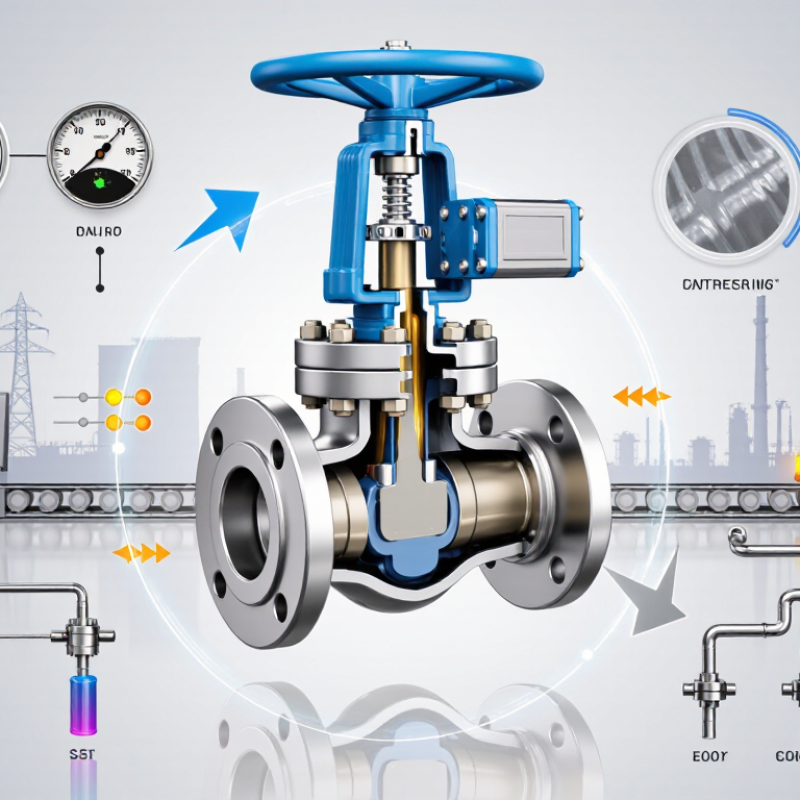
Common valve types include globe, butterfly, ball, and eccentric rotary valves. Globe valves suit precise throttling. Butterfly valves reduce weight in large pipelines. Ball valves provide fast shutoff, but they need careful control selection. A control valve changes flow by responding to a signal from the process controller. Its actuator, trim, positioner, and body must work as one system.

IEC 60534 provides a useful technical framework. IEC 60534-2-1 defines flow-capacity sizing methods for incompressible and compressible fluids. IEC 60534-4 covers leakage classification and production testing. IEC 60534-8-2 addresses laboratory noise measurement. These details matter near pumps, compressors, and occupied work areas. The Global Industrial Valve Market report by Grand View Research identifies automation and energy efficiency as major demand drivers. Yet, a larger market does not guarantee better engineering. Buyers should check cavitation calculations, seat leakage data, actuator torque, materials, and documented test procedures. Field experience shows that some specifications look complete, but omit real operating temperature or minimum flow. That omission can become expensive.

How to Match Valve Size Using Cv, Flow Rate, Pressure Drop, and ANSI Classes

Choosing among China’s control valve manufacturers requires more than comparing catalog prices. The reliable starting point is a clear duty sheet. Record normal, minimum, and maximum flow, inlet pressure, outlet pressure, temperature, fluid density, and viscosity. Do not size the valve from pipe diameter alone. Use the operating pressure drop and required flow coefficient, Cv.

For liquids, a common calculation is Cv = Q × √(SG/ΔP), using consistent units. Q represents flow, SG is specific gravity, and ΔP is pressure drop. For gases, pressure ratio, absolute pressure, temperature, and compressibility also affect sizing. Suppose water flows at 100 gpm with a 10 psi drop. The estimated Cv is about 31.6. That value is only a starting point. Real projects need cavitation, flashing, noise, and velocity checks.

Valve authority matters. An oversized valve may control poorly near the seat. Small control movements can create large flow changes. I have seen this mistake survive several spreadsheet reviews. The calculation was correct, but the operating range was not. Select a travel range that keeps normal flow near the middle of the valve stroke.

ANSI classes define pressure-temperature ratings, not Cv. Class 150 may suit one temperature and material, but fail at another condition. Check the applicable pressure-temperature table, body material, trim, flange standard, and shutoff requirement. Ask manufacturers for certified Cv data, sizing assumptions, test records, and material certificates. Then compare their calculations against your actual process data.

How to Match Valve Size Using Cv, Flow Rate, Pressure Drop, and ANSI Classes

The chart shows the calculated required Cv for water at different flow rates and pressure drops. Cv is calculated using Cv = Q × √(SG / ΔP), where Q is flow in US gallons per minute, SG is specific gravity, and ΔP is pressure drop in psi. The calculation uses SG = 1.0 and converts flow from m³/h.

Select a valve with a rated Cv higher than the calculated requirement, while also checking controllability, cavitation, noise, velocity, material compatibility, and the applicable ANSI pressure-temperature class. ANSI classes are pressure-temperature ratings and are not determined by Cv alone.

How to Evaluate Chinese Manufacturers by ISO 9001, API, and SIL Certifications

When choosing a Chinese control valve manufacturer, certification evidence should be checked before price. The ISO Survey 2022 reported more than 1.2 million ISO 9001 certificates worldwide. That figure shows popularity, not automatic quality. Ask for the certificate number, certified site, scope, expiry date, and accredited auditing body. The scope should cover valve design, machining, assembly, and testing. A certificate for trading activities is insufficient.

API credentials must match the valve’s actual service. Check whether the supplier holds relevant approvals for pipeline, fire testing, or pressure testing. Verify the certificate in the official industry registry. Review material certificates, pressure-test records, calibration labels, and nonconformity reports. I would not accept a scanned logo alone. Traceability matters.

SIL evaluation requires more care. A valve is not automatically SIL-rated because a factory owns ISO 9001. Request an IEC 61508 assessment, proof of functional safety management, and reliability data such as failure rates and PFDavg. Check whether the assessment covers the valve, actuator, solenoid, or complete final element. The IEC 61511 lifecycle also requires installation, testing, maintenance, and proof-test planning. Ask for sample calculations and witnessed tests. Small gaps often appear here. Buyers can miss them. ISO 9001 proves a management system, while API and SIL evidence must prove application-specific capability.

How to Verify Leakage, Emissions, and Testing Under IEC 60534-4 and ISO 15848

China Best Control Valve Manufacturers: How to Choose?

A reliable control valve supplier should explain testing under IEC 60534-4 and ISO 15848 clearly. IEC 60534-4 checks pressure integrity and seat leakage during controlled tests. Ask for the leakage class, test medium, pressure, duration, and valve position. The report should identify the valve size, trim, temperature, and calibrated instruments. Vague certificates deserve careful questioning.

ISO 15848 focuses on fugitive emissions from valve stems and shaft seals. It evaluates leakage during mechanical and thermal cycles. Check the declared leakage class, temperature class, endurance class, and packing arrangement. A serious manufacturer can provide type-test records, production-test procedures, and traceable calibration documents. In practice, I have seen reports with correct numbers but missing test conditions. That weakness matters.

Tips: Request a complete sample report before ordering. Compare serial numbers, drawings, and inspection records. Confirm whether an independent laboratory witnessed testing. Do not accept “zero leakage” without a defined measurement method. Test language can sound impressive. Evidence is better. Also ask how rejected valves are controlled and retested. This detail is often overlooked, including by experienced buyers. A supplier may meet the standard once, yet fail to control routine production consistently.

How to Compare Quality, Lead Time, After-Sales Support, and Total Cost of Ownership

China Best Control Valve Manufacturers: How to Choose?

Quality should be checked through evidence, not polished promises. Request material certificates, pressure-test records, leakage results, and actuator torque data. A factory visit can reveal calibration habits, storage conditions, and whether final inspections are properly documented. Ask for samples from similar media, pressure classes, and operating temperatures. A valve that performs well in water may behave differently with steam or corrosive fluids. My experience suggests that small documentation gaps often become costly field problems.

Tips: Compare lead time by milestone, not by one delivery date. Confirm drawing approval, production, testing, packing, and shipping schedules. Ask how delays are reported and corrected.

After-sales support deserves the same attention as manufacturing quality. Check response times, troubleshooting procedures, spare-parts availability, and technician qualifications. Clarify warranty limits in writing, especially for seals, actuators, and control accessories. Total cost of ownership includes energy use, maintenance labor, downtime, replacement parts, and disposal. A cheaper valve may require frequent adjustment or cause unstable process control. However, a premium specification is not automatically better. I have seen projects overpay for features operators never used. Build a comparison sheet with purchase price, expected service life, maintenance intervals, and realistic failure risks. Leave room for uncertainty; operating conditions are rarely perfect.

China Best Control Valve Manufacturers How to Choose? - How to Compare Quality, Lead Time, After-Sales Support, and Total Cost of Ownership

Evaluation Dimension Key Indicators Typical Industry Reference Documents or Evidence to Request Suggested Weight
Product Quality and Reliability Pressure rating, leakage performance, material traceability, cycle life, dimensional consistency Design and testing aligned with applicable standards such as IEC 60534, API 598, API 6D, or ISO 5208, depending on valve type and service Material certificates, pressure-test reports, inspection and test plans, calibration records, sample inspection results 30%
Certifications and Process Control Quality management, welding control, machining capability, calibration, non-conformance handling A valid ISO 9001-based quality system is a basic qualification; project-specific certificates may be required for hazardous or regulated applications Current certificates, audit reports, process flow charts, corrective-action records, factory acceptance test procedures 10%
Lead Time and Delivery Reliability Standard-item availability, engineering approval time, production capacity, on-time delivery rate Standard valves commonly require approximately 4–8 weeks; engineered, actuated, or special-alloy valves may require approximately 8–16 weeks or more Recent delivery performance, production schedule, capacity statement, approved drawings, milestone plan, packaging and shipping procedure 15%
Technical Capability Sizing accuracy, cavitation control, noise reduction, actuator matching, material selection, application engineering The supplier should provide verifiable sizing calculations and clearly state operating limits, trim design, pressure drop, temperature range, and fluid compatibility Valve data sheets, sizing calculations, flow coefficients, noise estimates, drawings, application references with comparable service conditions 15%
After-Sales Support Response time, spare-parts availability, troubleshooting, commissioning assistance, warranty process A practical support target is an initial technical response within 1 business day and commonly used spare parts available within approximately 2–6 weeks, subject to specification Warranty terms, escalation procedure, spare-parts list, service contacts, troubleshooting guides, training and commissioning plan 15%
Total Cost of Ownership Purchase price, freight, installation, energy consumption, maintenance, downtime, spare parts, disposal The lowest purchase price is not necessarily the lowest five-year cost; lifecycle cost should include expected maintenance and failure-related losses Itemized quotation, energy or pressure-loss data, maintenance intervals, spare-parts prices, warranty exclusions, expected service life 15%

Total Cost of Ownership Comparison Framework

Cost Component Calculation Basis What to Compare Five-Year Cost Share Guide
Initial Purchase Valve, actuator, accessories, inspection, documentation Compare equivalent specifications, materials, pressure classes, testing scope, and included accessories 10–30%
Logistics and Installation Freight, duties, local handling, alignment, wiring, commissioning Check delivery terms, packaging quality, installation requirements, and commissioning support 5–15%
Maintenance and Spare Parts Routine inspection, packing, seals, trim, actuator parts, labor Compare recommended maintenance intervals, parts interchangeability, service procedures, and spare-parts prices 15–35%
Energy and Operating Losses Pressure loss, pumping or compression requirements, control instability Use comparable flow conditions and request sizing calculations rather than comparing price alone 10–30%
Downtime and Risk Lost production, emergency repairs, safety events, expedited freight Assess failure history, response capability, critical-spares strategy, warranty coverage, and process consequences 15–40%
Recommended Selection Method: Shortlist suppliers that meet the mandatory technical requirements first, verify documents and samples, then score quality, lead time, support, and five-year total cost using the weighted criteria above. Lead-time ranges and cost-share figures are industry reference values and should be confirmed for the specific valve type, size, material, pressure class, actuator, and application.

Article Source: