How to Choose the Right Exterior Doors for Your Home?
Choosing the right Exterior Doors for your home starts with more than color or curb appeal. Your front entry faces rain, wind, sunlight, muddy shoes, and years of daily use. Architect Juhani Pallasmaa captured the human side of a doorway: “The door handle is the handshake of the building.” That small point matters. A door should feel welcoming, close firmly, and suit the way your household moves. Still, a beautiful slab cannot compensate for a poor frame or careless installation.
Before comparing materials, consider local weather, insulation needs, privacy, and everyday traffic. Wood offers warmth and can be refinished, but it needs regular care. Fiberglass can resist moisture and mimic wood grain; steel often offers strength, though dents may show. Glass panels brighten a dim hall, yet they affect privacy and heat gain. Measure the opening, check the threshold, and consider the door’s swing. Small details matter. A draft along the floor or a latch that sticks can turn a costly upgrade into a daily annoyance. Compare complete door systems, not just the visible panel; the frame, weatherstripping, hardware, and installation all affect performance. Ask a qualified installer about site conditions, warranties, and maintenance before you commit. There is no universal best choice. Appearance matters, of course, but comfort and upkeep deserve equal attention. This guide explores those trade-offs and helps you choose a door that fits your home, not merely the catalog photograph.
Assess Your Entryway’s Exposure, Traffic, and Functional Needs
Before choosing a door, study what your entryway faces. A west-facing door can take harsh afternoon sun, while a windward entrance may meet driving rain and drafts. Check the sill after a storm, too; water marks can reveal exposure better than a quick glance. ENERGY STAR’s Residential Doors Version 7.0 criteria set maximum U-factors for opaque hinged doors from 0.17 in the Northern climate zone to 0.25 in the Southern zone. U-factor measures heat transfer; lower values generally mean better insulation. Compare the door’s rating with your climate, and check whether glass changes the tested performance.
Traffic matters just as much. Count the daily trips, including muddy shoes, grocery bags, pets, and children rushing through. A narrow hall may need a door that swings clear of furniture, while a busy household benefits from a durable finish and hardware that feels easy to operate. Think about visibility, too. Glass can brighten a dim foyer, but privacy and nighttime sightlines may matter more. It is easy to overvalue curb appeal here.
Match the door’s function to the entrance, not just the catalog photo. A side entry used for deliveries may need a different balance of security and light than a formal front entrance. Review the National Fenestration Rating Council label for independently rated energy performance, then ask an installer to assess the frame, threshold, and weatherstripping. A high-performing slab in a poorly fitted frame can still leak air. That detail is often missed.
Compare Exterior Door Materials, Cores, and Construction
Exterior doors differ in more than appearance. Fiberglass resists moisture and dents less easily than many wood doors, making it practical for exposed entries. Steel often offers a sturdy, budget-conscious option, though its surface can dent and needs prompt attention if scratched. Wood brings natural grain and can be repaired, but changing humidity may cause swelling or sticking. No material is perfect.
The core affects comfort and weight. A foam-filled door can reduce heat transfer, while a solid wood core feels substantial but may need more upkeep. Check the stated insulation rating, but do not judge by that number alone. A door with gaps around its edges can still let cold air reach your ankles. Look closely at weatherstripping, the threshold, and the fit of the frame.
Construction matters, too. Compare the thickness of the skins, the strength of the stiles and rails, and how the glass is sealed. A well-built door should close evenly, without scraping the floor or rattling in its frame. Small signs matter. Installation can undermine a good door, and that detail is easy to overlook. I would measure the opening carefully and consider sun, rain, and daily use before choosing a finish or core. A south-facing entry, for example, may fade or heat up more than a shaded one.
How to Choose the Right Exterior Door for Your Home
Compare approximate insulation performance by door type. Higher R-values indicate greater resistance to heat flow.
Typical values are approximate: actual performance varies with door thickness, core, glazing, weatherstripping, and installation. Check the manufacturer's specifications for the specific door.
Choose a Door Style, Size, and Opening Configuration
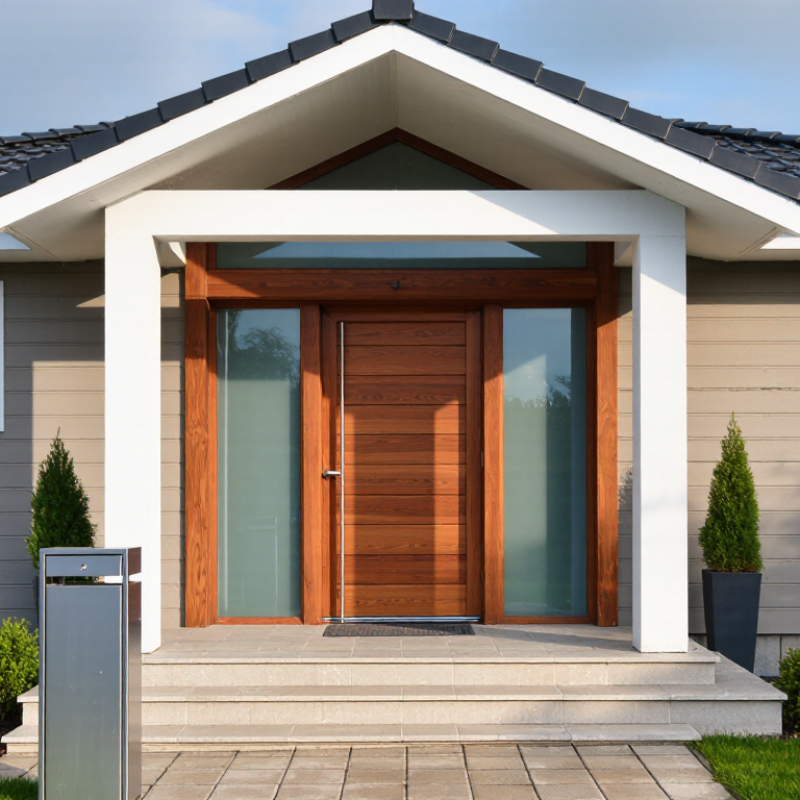
Start by choosing a style that suits the home’s exterior and the way you use the entrance. A simple, solid door can keep a compact entry feeling calm, while glass panels bring daylight into a dim hallway. Small details matter. Check whether sidelights or a transom will fit without crowding trim, lights, or house numbers. The U.S. Department of Energy notes that windows account for about 25–30% of residential heating and cooling energy use, so consider glazing performance where your design includes glass.
Measure the existing door slab, frame, and rough opening separately; they are not interchangeable dimensions. Record the width at the top, middle, and bottom, then check the height on both sides. Older openings can be uneven. I would not assume a standard size will slide neatly into place. Also confirm whether the door should swing inward or outward, and which side the hinges belong on. That choice affects furniture clearance, steps, and the approach from outside. For context, Zonda’s 2024 Cost vs. Value report estimated a national average steel entry-door replacement cost of $2,355 and resale value of $4,430. Those modeled figures are not a resale guarantee, but they show why fit, durability, and curb appeal deserve attention together.
Evaluate Energy Efficiency, Security, and Weather Resistance
How to Choose the Right Exterior Doors for Your Home?
Evaluate Energy Efficiency, Security, and Weather Resistance
A well-chosen exterior door should suit your climate, entryway, and daily use. Check its energy-performance rating and look for a tight-fitting frame, quality weatherstripping, and an insulated core. Even a good door can leak air if the frame is poorly installed. On a cold day, feel around the edges for drafts; after rain, check the threshold for dampness. Small gaps matter.
Tips: Compare the whole door system, not just the slab. Ask how the frame, glass, seals, and threshold perform together.
For security, consider a sturdy frame, a strong deadbolt, and reinforced strike areas. Glass near the lock may need added protection, but the right choice depends on your layout and needs. A heavy door can feel reassuring, yet weight alone proves little. Installation quality matters, too. Weather resistance deserves equal attention: inspect seals for compression, choose materials suited to local moisture and temperature swings, and make sure water can drain away from the entry. There is no perfect door for every home. A feature that helps in one climate may be less useful in another.
Check Installation Requirements, Maintenance, and Building Codes
A good exterior door must fit the opening, not just the style of the house. Measure the rough opening, wall thickness, threshold, and swing direction before ordering. During installation, a level frame, properly flashed sill, and sealed gaps help manage water and drafts. Small details matter. Follow the door manufacturer’s instructions, and ask the installer how the sill will drain after heavy rain.
Check local building requirements before choosing a size or glass configuration. The 2021 International Residential Code, Section R311.2, specifies a minimum 32-inch clear width and 78-inch clear height for at least one required egress door in covered homes. Local adoption and existing-building rules can differ. Codes vary locally. Confirm requirements with your building department, especially in areas with wind, snow, or flood hazards.
Plan for upkeep, too. Inspect weatherstripping, hinges, finish, and the threshold each year; repair peeling paint or loose seals before moisture gets behind the frame. Remodeling’s 2024 Cost vs. Value report estimated a national average cost of $2,355 for steel entry-door replacement and a resale value of $4,430. That is a market estimate, not a guaranteed return. I would not choose a door by that number alone; installation quality and maintenance can matter more in daily use.