Top Industrial Laser Equipment Trends for 2026
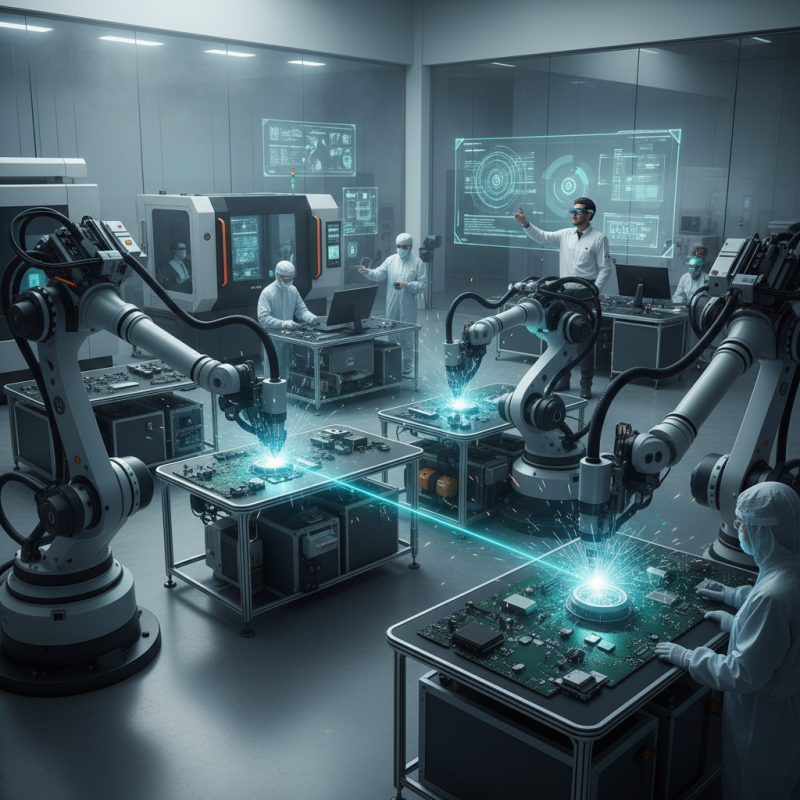
In the rapidly evolving realm of manufacturing, "Industrial Laser Equipment" remains at the forefront. By 2026, advancements in laser technology will reshape industries such as automotive, aerospace, and electronics. These trends will highlight the growing integration of automation and artificial intelligence.
As businesses strive for improved efficiency and precision, innovative laser solutions are vital. They offer reduced waste, enhanced product quality, and lower operational costs. However, the reliance on these technologies raises questions about employee training and adaptation.
Balancing advanced technology with human expertise will be a challenge. It's essential to consider how these changes affect the workforce and operational processes. The future of Industrial Laser Equipment promises exciting advancements, but companies must navigate potential pitfalls to fully realize these benefits.
Emerging Technologies in Industrial Laser Equipment for 2026
As we look ahead to 2026, the realm of industrial laser equipment is poised for remarkable advancements. Emerging technologies will likely reshape manufacturing landscapes. Innovations such as fiber lasers are becoming more efficient. These lasers can cut through thicker materials with precision, reducing production time. Their lower energy consumption means significant cost savings for manufacturers.
Additionally, the integration of artificial intelligence (AI) will play a crucial role. AI can optimize laser parameters in real-time, creating customized solutions tailored to specific projects. However, AI's implementation is not without challenges. There are concerns about data privacy and potential job displacement. Companies must navigate these hurdles thoughtfully.
Moreover, advancements in laser safety measures will be critical. Manufacturers are investing in better protective equipment for operators. Enhanced training programs are being developed to ensure safety and efficiency. Heightened safety awareness is essential as technologies evolve. Balancing innovation with safety will be a key focus as we approach 2026.
Innovations in Laser Materials and Coatings for Enhanced Performance
In the evolving landscape of industrial laser equipment, innovations in laser materials and coatings are crucial for enhancing performance. Recent industry reports highlight a growing shift towards advanced coatings that improve durability and efficiency. For instance, the global market for laser materials is projected to exceed $4 billion by 2026, driven by these upgrades.
One key innovation is the development of high-temperature-resistant coatings. These materials extend the lifespan of laser components. Companies utilizing these coatings report up to 30% longer performance life in demanding environments. However, despite these advancements, some users struggle with adhesion issues. This requires further exploration.
Additionally, research into nanostructured coatings is gaining traction. These coatings enhance laser beam quality. Reports indicate that lasers with nanostructured elements can achieve efficiency improvements of up to 25%. Yet, implementation remains slow. Many industries need more education and testing to adopt these technologies widely. Understanding these materials' potential and limitations is essential for future progress.
Top Industrial Laser Equipment Trends for 2026
This chart displays the projected advancements in laser materials and coatings for enhanced performance in industrial laser equipment by 2026. The trends include developments in fiber lasers, diode lasers, and solid-state lasers.
Sustainability Trends in Manufacturing with Laser Technology
The manufacturing landscape is evolving, with sustainability becoming a key focus. Laser technology is at the forefront of this change. According to a recent report by the International Laser Manufacturing Association, laser processes can reduce waste by up to 20%. This is significant for industries striving to lower their carbon footprints.
As companies invest in laser equipment, they also benefit from energy efficiency. Lasers consume up to 50% less energy compared to conventional tools. This efficiency does not just benefit the environment; it enhances profitability. More than half of manufacturers report lower operational costs when utilizing laser technology. However, the transition requires careful planning and investment.
While lasers offer numerous benefits, challenges remain. High initial costs can deter some companies. Furthermore, not all laser systems are compatible with existing processes. It is vital for manufacturers to assess their capabilities before adopting new technologies. Balancing sustainability with cost-effectiveness will remain a complex issue. However, the potential for innovation in this space is enormous.
Automation and AI Integration in Laser Equipment Operations
The integration of automation and AI in laser equipment is reshaping industrial operations. Research indicates that by 2026, around 30% of laser cutting and engraving systems will incorporate AI capabilities, enhancing precision and efficiency. AI algorithms analyze data in real-time, optimizing laser settings for various materials. This leads to reduced material waste and improved throughput, a vital metric for industries striving for sustainability.
Moreover, automated systems reduce human error. A recent study found that factories using automation can increase productivity by 20% or more. Yet, the shift toward AI in laser equipment is not without challenges. Organizations must navigate the complexities of AI training and data management. Many companies face obstacles in integrating these technologies due to skills shortages and resistance to change.
With the right strategies, however, businesses can leverage AI to redefine their operational capabilities. As the landscape evolves, the importance of continuous learning and adaptation cannot be overstated. Professionals must embrace new technologies while ensuring their teams are equipped with the necessary skills. The future of laser operations may heavily rely on this balance between automation and human expertise.
Market Growth Predictions and Key Players in the Laser Industry for 2026
The laser industry is poised for extensive growth by 2026. Predictions indicate a shift in market dynamics. Emerging technologies are reshaping how lasers are used in various sectors. Industries such as automotive and medical are increasingly integrating laser solutions. These applications highlight the versatility of laser equipment.
Key players in this market face numerous challenges. Competition is fierce, with startups and established firms racing to innovate. Industry leaders must navigate supply chain complexities. Additionally, they must address regulatory changes that can impact operations. This dynamic environment creates an uncertain yet exciting landscape.
Investments in research and development are crucial. They ensure that companies remain relevant. As customer demands evolve, adaptability will be vital. Companies may need to rethink their approaches. The focus will likely be on efficiency, cost reduction, and enhanced performance. Continuous improvement will be essential for success in this rapidly developing industry.