585.204.6770
sale@sanblueplastics.com
Your Source for Trays!
Plastic containers are molded vessels made from polymers such as PET, HDPE, polypropylene, and PVC. Their shapes range from small medicine bottles to large food storage tubs. Each material offers different strength, flexibility, clarity, and temperature resistance. For example, a clear PET bottle may hold water, while a sturdy HDPE jug often stores milk or household products. These choices are not random. Manufacturers match the polymer with the product, filling process, and expected storage conditions.
In daily life, plastic containers protect products from moisture, dust, spills, and physical damage. They support food packaging, healthcare supplies, cosmetics, industrial materials, and home organization. A tight cap can preserve freshness, while a wide opening makes repeated use easier. However, safe performance depends on proper design and handling. Not every container suits hot liquids, microwaves, freezers, or long-term storage. Check the label. Reuse should also be considered carefully, especially when scratches, odors, or deformation appear. A container is not automatically recyclable because it is plastic. Local recycling systems accept different resin types, and contamination can prevent recovery. This point is often overlooked.
Responsible packaging decisions require more than choosing the lightest option. Specialists examine durability, product safety, manufacturing energy, transportation weight, and end-of-life management. Plastic containers can reduce breakage and food waste, yet they also create environmental concerns when poorly managed. The practical answer is rarely perfect. Understanding their materials and uses helps consumers, businesses, and designers make more informed choices.
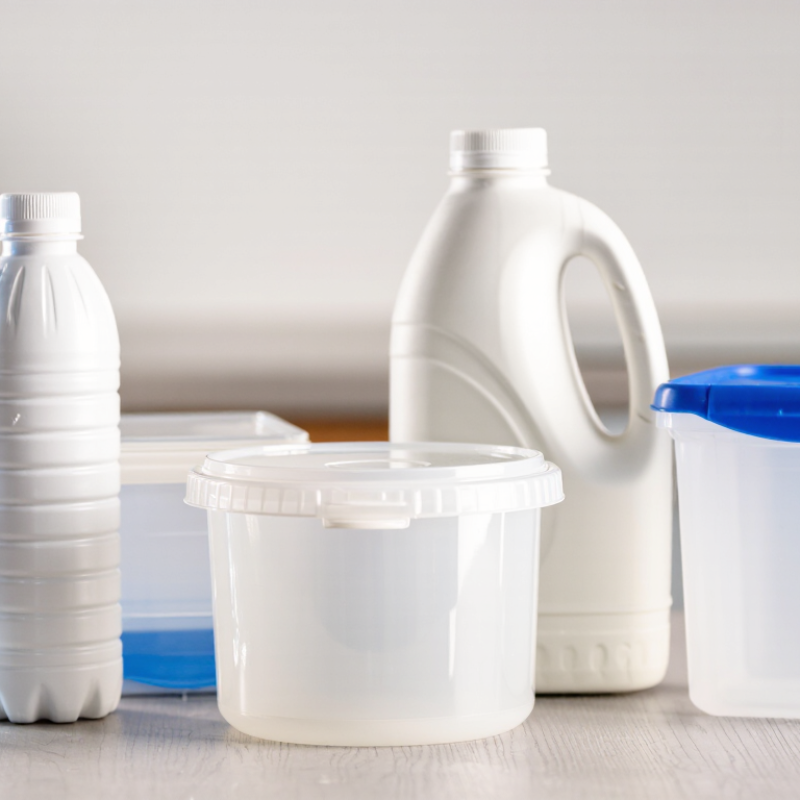
Plastic containers are molded vessels made from polymers that can be shaped, sealed, and transported efficiently. They hold water, food, medicine, cleaning products, and household materials. Their light weight reduces handling effort, while their walls can resist moisture, impact, or chemical exposure. The right material depends on temperature, pressure, contents, and intended reuse.
The seven Resin Identification Codes help identify the main plastic resin.
The number identifies resin type, not automatic recyclability or safety. Local collection rules differ. A container marked with Code 5 may still be rejected by a local facility.
I have learned that a clean, dry container is easier to sort than one with oily residue.
That detail matters. Check the label, avoid unapproved heating, and replace containers that become cloudy, cracked, or heavily scratched. “Reusable” is not permanent. Temperature, sunlight, and repeated washing can slowly change plastic performance.
What Are Plastic Containers and How Are They Used?
Plastic containers are molded packages designed to protect, store, and dispense products. Their performance depends heavily on resin selection. According to the OECD’s Global Plastics Outlook, the world generated about 353 million tonnes of plastic waste in 2019. Only 9% was recycled. This gap makes material identification important for manufacturers, users, and recyclers.
PET is clear, lightweight, and strong, so it suits beverage bottles and food jars. HDPE resists moisture and impact, making it practical for milk containers, detergent bottles, and industrial drums. PVC offers durability and chemical resistance, but additives and mixed structures can complicate recycling. LDPE remains flexible and soft. It appears in squeeze bottles, liners, and thin films. PP handles heat better than many common packaging plastics. It is used for food tubs, caps, and reusable containers. PS is rigid and easy to shape, yet foam versions are fragile and difficult to recover economically.
Small details matter. A hinged PP lid may survive repeated opening, while a thin PS tray can crack under pressure. In workplace testing, I would inspect wall thickness, closure fit, temperature exposure, and product compatibility. Labels and colored layers can also reduce recycling value. The Ellen MacArthur Foundation has reported that only 14% of plastic packaging is collected for recycling globally. The figure deserves careful reading, because collection is not the same as successful reprocessing. Material choices still involve trade-offs. A lighter package may reduce transport emissions, but it can also become harder to sort.
What Are Plastic Containers and How Are They Used?
Manufacturing Methods: Injection Molding, Blow Molding, and Thermoforming
Plastic containers protect food, chemicals, medicines, and household products during storage and transport. Their shape, wall thickness, and closure depend on the manufacturing method. Injection molding forces heated resin into a metal mold. It produces accurate jars, caps, and rigid boxes with detailed threads. Blow molding forms a hollow tube, called a parison, inside a mold. Air expands it against the mold walls. This method suits bottles, tanks, and lightweight containers. Thermoforming heats plastic sheets until flexible. A vacuum or pressure then pulls the sheet over a tool. It commonly creates trays, cups, and shallow packages.
The method affects cost, strength, weight, and production speed. Injection molding offers excellent repeatability, but tooling can be expensive. Blow molding reduces seams in hollow products. Thermoforming can generate more edge scrap, although some factories recycle clean in-house material. The OECD Global Plastics Outlook reported 353 million tonnes of plastic waste in 2019. Packaging created about 40% of that waste. These figures make design choices harder to ignore. A thinner wall may save resin, yet it can reduce drop resistance. That trade-off deserves testing, not guesswork.
Tips: Match the process to the container’s geometry. Check wall thickness at corners and around openings. Test filled containers after heat, impact, and stacking exposure. Measure leakage and deformation, not appearance alone. Recycled content can change flow behavior and color. It may require new settings. Small errors matter. Specification reviews should include operators, mold engineers, and quality staff. My practical concern is simple: a container can look efficient before real distribution exposes its weakness.
Injection molding, blow molding, and thermoforming use different heating and forming conditions. The chart shows representative temperature ranges in degrees Celsius; actual settings vary according to the polymer, container design, and equipment.
Plastic containers are rigid or flexible vessels made from materials such as PET, HDPE, polypropylene, and polyethylene. They hold food, drinks, cleaning products, medicines, and personal-care goods. Their light weight reduces transport loads, while tight closures help protect contents from moisture, oxygen, and contamination. A small bottle can survive handling, stacking, and temperature changes. That practical strength explains its popularity.
Packaging drives this market. The OECD’s Global Plastics Outlook estimates that packaging represents about 40% of global plastics demand. In 2019, the world generated approximately 353 million tonnes of plastic waste, according to the same report. Containers appear in kitchens, warehouses, clinics, and delivery networks. They are not limited to retail shelves.
However, convenience creates a difficult design problem. The OECD reports that only about 9% of global plastic waste was recycled in 2019. Many containers combine labels, caps, barriers, or multiple materials. These details can complicate sorting and processing. The United Nations Environment Programme’s 2023 report, Turning off the Tap, identifies reuse, better product design, and improved recycling as important solutions. Refill systems may reduce waste, but they need reliable collection and cleaning infrastructure. That part is often underestimated. A container may be technically recyclable yet rarely recycled in practice.
What Are Plastic Containers and How Are They Used?
Plastic containers include bottles, tubs, trays, jars, and food boxes. Manufacturers choose different polymers for strength, flexibility, transparency, or heat resistance. A thin pouch may protect dry food, while a rigid container can carry detergent or medical supplies. Their light weight reduces transport emissions in some applications. However, convenience often hides a difficult waste problem.
The OECD Global Plastics Outlook reports that only 9% of plastic waste was recycled globally. About 50% was sent to landfills, while 22% was mismanaged. These figures expose a practical weakness: collection, sorting, and processing systems remain uneven. A container may carry a recycling symbol, yet local facilities may reject it. I used to see that symbol as a promise. That assumption was too simple.
Clean, empty, and separated containers are easier to recover. Caps, labels, food residue, and mixed materials can complicate sorting. The United Nations Environment Programme reported in Turning off the Tap that major plastic pollution reductions require reuse, better product design, and stronger waste systems. Recycling alone cannot absorb endless growth. It also loses material quality in many processing cycles. For households and businesses, checking local collection rules is more reliable than guessing from a package label. Better choices can include refillable formats, simpler designs, and containers made for established recycling streams. Still, even careful disposal has limits. Waste infrastructure decides much of the final outcome.