
585.204.6770
sale@sanblueplastics.com
Your Source for Trays!
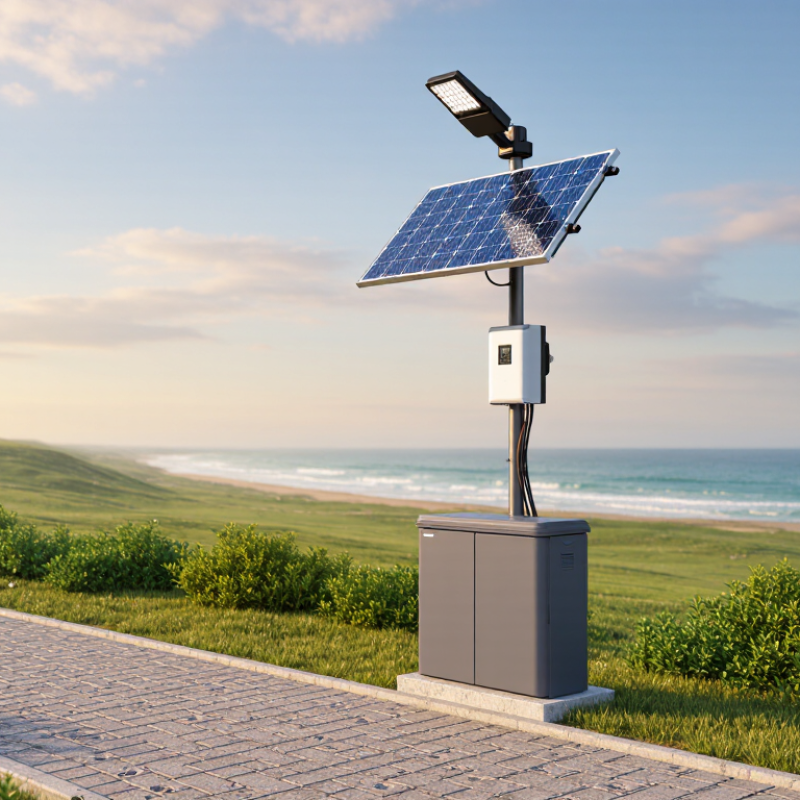
A solar energy light pole is a standalone outdoor lighting system that combines a photovoltaic panel, battery, LED fixture, controller, and supporting pole. During daylight, the panel converts sunlight into electricity and stores it in the battery. After sunset, the controller powers the LED light, often using programmed dimming or motion detection. No trenching is normally required.
The technology reflects a wider shift toward distributed solar power. The International Energy Agency’s Renewables 2023 report expects solar photovoltaic and wind power to provide about 95% of global renewable capacity growth through 2028. IRENA’s Renewable Capacity Statistics 2024 also recorded roughly 1,419 gigawatts of global solar capacity at the end of 2023. These figures do not directly measure solar street lighting, but they show why solar components are becoming more accessible and familiar.
Real performance depends on more than panel wattage. A coastal pole may face salt corrosion, while a shaded pathway may receive limited winter charging. Battery chemistry, autonomy days, LED optics, pole height, and local weather records all matter. Professional designers should review illuminance targets, glare control, wind loading, and relevant IEC or local lighting requirements. Photometric testing is valuable because a bright lamp can still leave dark gaps.
The system is not maintenance-free. Batteries age. Panels collect dust. Controllers can fail quietly. A careful specification should include realistic nighttime runtime and replacement access, not only attractive energy-saving claims. The IEA and IRENA provide strong market evidence, yet site-specific engineering remains essential. That distinction is easy to miss.
What Is a Solar Energy Light Pole and How Does It Work?
A solar energy light pole is an independent outdoor lighting system powered by sunlight. Its main components include a photovoltaic panel, charge controller, rechargeable battery, LED luminaire, pole, wiring, and protective enclosure. During daylight, the panel converts sunlight into electricity. The controller regulates charging and helps protect the battery from overcharging or deep discharge. After sunset, stored energy powers the LED fixture, often through a timer or motion sensor.
The International Renewable Energy Agency reported 1,419 GW of global solar photovoltaic capacity at the end of 2023. That scale reflects solar’s growing technical maturity, although a light pole still depends heavily on local conditions. The U.S. Department of Energy notes that LED lighting uses at least 75% less energy and can last up to 25 times longer than incandescent lighting. This makes LEDs suitable for limited battery capacity.
The battery is the system’s quiet risk. Poor sizing can leave a pathway dark after several cloudy nights. Engineers therefore consider solar radiation, winter temperatures, lighting hours, battery chemistry, and required autonomy. A practical design may use a dusk-to-dawn setting, reduced midnight brightness, and motion-based boosting. These details improve endurance, but they also add control complexity. Dust, shade, loose connections, and snow can reduce real-world output. Field inspections still matter. A specification sheet cannot fully predict every installation site.
A solar energy light pole is an outdoor lighting system that converts sunlight into electricity. Its main components are a photovoltaic panel, charge controller, rechargeable battery, LED luminaire, pole structure, and protection system. During the day, the photovoltaic panel charges the battery; at night, the battery supplies energy to the LED light.
Calculation basis: a 24 V, 50 Ah battery provides 1,280 Wh of nominal storage. The estimates use 80% usable battery capacity and 85% power-conversion efficiency, giving approximately 870 Wh of usable energy. Actual runtime varies with temperature, battery age, lighting controls, and weather.
A solar energy light pole turns sunlight into stored electrical power for outdoor lighting. Its key component is the photovoltaic panel, usually fixed above the lamp to receive open sky. When sunlight strikes silicon cells, photons release electrons and create direct-current electricity. The panel does not “make” sunlight stronger. It only harvests available energy. Bright, cool weather often supports better performance than hot, hazy conditions. A cloudy afternoon can still produce power, but much less.
Wires carry this electricity to a charge controller inside the pole. The controller regulates voltage and protects the battery from excessive charging or deep discharge. The battery stores energy during daylight hours.
After sunset, a light sensor or programmed controller activates the LED fixture. LEDs need relatively little electricity, so stored power can support several hours of illumination. Panel angle, dust, shade, and battery age all affect that result. Small design errors matter.
From field inspections, shading is one of the easiest problems to miss. A nearby tree may leave the panel clear at noon but cover it in late afternoon. Cleaning also sounds simple, yet dust and bird residue can reduce incoming light. Designers should compare local sunlight data with expected nighttime demand, not rely on ideal summer conditions. I would question claims of “all-night” operation without weather assumptions. Winter darkness lasts longer, and cloudy days may reduce the reserve.
A solar energy light pole uses a photovoltaic panel to convert sunlight into electrical energy. During daylight, the panel sends power through a charge controller to a rechargeable battery. The controller regulates voltage and helps prevent overcharging, which can shorten battery life. At dusk, a light sensor activates the LED fixture. The battery then supplies stored electricity through the night.
Battery capacity determines how long the pole can provide useful lighting. A larger battery stores more energy, but it also increases weight, cost, and installation demands. Lithium iron phosphate batteries often deliver stable performance and tolerate many charging cycles. Lead-acid batteries may cost less, although they usually need more maintenance and careful ventilation.
Sizing requires more than checking wattage. Engineers consider nightly operating hours, winter sunlight, local temperature, and several cloudy days. A practical design may reserve two or three nights of backup power.
That pause matters.
If the battery reaches a low-voltage limit, the controller may dim or switch off the lamp to protect it. Field inspections should check loose terminals, panel dust, water entry, and declining nighttime brightness. Even a well-designed pole is not perfect. A shaded panel, unexpected storm, or aging battery can reduce performance. Reviewing real lighting records helps reveal whether the original assumptions were too optimistic.
A solar energy light pole combines a photovoltaic panel, battery, LED fixture, controller, and pole structure. Its lighting control system operates automatically, without a grid connection or daily switching. During daylight, the panel converts sunlight into electricity and charges the battery. A charge controller prevents overcharging and protects the battery from excessive discharge.
At dusk, a photocell measures falling light levels and activates the LED lamp. Many systems also use programmed schedules, motion sensors, or dimming settings. For example, the lamp may operate at 100% brightness near sunset, reduce output to 30% after midnight, then brighten when movement is detected. This approach limits wasted energy while maintaining visibility near pathways and roads. IRENA reported 1,419 GW of global solar capacity by the end of 2023, showing the technology’s expanding infrastructure. However, a solar pole still depends on local conditions.
Cloudy weather, dust, shading, and winter darkness can reduce charging time. The U.S. Department of Energy’s solid-state lighting research identifies controls and dimming as important efficiency measures, but real savings depend on settings and maintenance. A poorly positioned panel can undermine an otherwise advanced system. Battery aging also changes nighttime performance. In practice, technicians should review seasonal load data, inspect panels, and adjust dimming schedules. Automation is useful. It is not infallible.
| System Dimension | Typical Data or Operating Range | Function in the Lighting System | Automatic Control Behavior |
|---|---|---|---|
| Solar photovoltaic panel | Monocrystalline or polycrystalline module; commonly 80–200 W for one outdoor light unit | Converts sunlight into direct-current electricity during the daytime. | The charge controller regulates the power sent to the battery and prevents overcharging. |
| Rechargeable battery | Usually lithium-based or sealed lead-acid; commonly 12 V or 24 V system voltage | Stores daytime solar energy for use after sunset. | The controller monitors battery voltage and may reduce light output when the stored energy is low. |
| LED lighting module | Typical power rating: 20–100 W; high-efficiency outdoor LEDs often provide approximately 100–180 lm/W | Produces directional illumination with lower energy consumption than traditional outdoor lamps. | The driver adjusts LED power according to the programmed schedule, battery condition, or sensor input. |
| Light sensor | Photocell or digital ambient-light sensor; commonly responds near dusk and dawn | Detects changes in surrounding brightness. | Automatically switches the lamp on when ambient light falls below a preset level and switches it off after daylight returns. |
| Lighting controller | Programmable charge and LED control unit with low-voltage protection | Coordinates solar charging, battery use, LED operation, and system protection. | Runs the lighting cycle without requiring a permanent grid connection or manual switching. |
| Dimming schedule | Common example: 100% output for the first 4–6 hours, followed by 30–70% output | Reduces overnight energy consumption while maintaining useful illumination. | The controller changes brightness according to time-based settings stored in its programming. |
| Motion detection | Optional passive infrared or microwave sensor; detection distance varies by sensor design and installation | Identifies pedestrians, vehicles, or other movement near the pole. | The lamp can remain at a low standby level and temporarily increase brightness when motion is detected. |
| Pole height | Common outdoor installation range: approximately 4–12 m | Positions the luminaire above the area requiring illumination and helps determine light coverage. | Height, mounting angle, and light distribution are selected during installation rather than controlled electronically. |
| Operating time | Often designed for approximately 8–12 hours per night, depending on local sunlight and system sizing | Defines how long the lamp can operate after the solar panel stops generating power. | The controller uses the stored energy according to the selected schedule and available battery capacity. |
| Autonomy period | Common design target: 2–5 consecutive nights without sufficient sunlight | Provides continued lighting during cloudy or rainy weather. | The system may dim the LEDs or enter an energy-saving mode to extend operation during low-charge periods. |
| Battery protection | Overcharge, deep-discharge, short-circuit, and reverse-polarity protection | Protects the energy-storage unit and connected electrical components. | The controller disconnects or limits charging and output when electrical thresholds are exceeded. |
| Weather resistance | Outdoor enclosures are commonly designed to resist rain, dust, and temperature changes; protection ratings vary by component | Allows the solar panel, controller, battery enclosure, and luminaire to operate outdoors. | Sealed housings and corrosion-resistant materials reduce maintenance caused by environmental exposure. |
| Energy source | Solar radiation captured during daylight; no routine grid electricity is required | Enables installation in locations where trenching or grid connection is difficult. | The system automatically repeats the cycle: charge during daylight, illuminate at night, and recharge the next day. |
A solar energy light pole combines a photovoltaic panel, battery, LED fixture, controller, and pole structure. During daylight, the panel converts sunlight into electricity and charges the battery. At night, the controller powers the LED fixture from stored energy. A photocell or timer usually manages automatic operation. In practice, performance depends heavily on local sunlight, temperature, and panel orientation.
The main benefit is reduced grid dependence. Installation can be practical along rural roads, walkways, parking areas, parks, and construction sites without nearby electrical wiring. Solar poles can also lower trenching costs and improve lighting access in remote locations. LED technology uses less energy and provides focused illumination. However, these systems are not maintenance-free. A poorly sized battery may cause dim lighting after several cloudy days, which planners sometimes underestimate.
Maintenance should include cleaning dust, leaves, and bird residue from the panel several times yearly. Technicians should inspect cable connections, pole foundations, battery housing, and LED output for damage or moisture. Battery condition deserves close attention. Many batteries gradually lose storage capacity, even when the light still appears normal. In areas with snow, salt spray, or heavy dust, inspections may need to occur more often. Keep records of charging performance and nighttime operating hours. This simple habit can reveal faults before users notice dark sections. Safety checks should follow local electrical and structural requirements. Be practical. A visually clean panel does not always mean efficient charging.