
585.204.6770
sale@sanblueplastics.com
Your Source for Trays!
Buying Steel Rod across borders is not simply a matter of comparing prices. Diameter, grade, surface condition, straightness, and tensile strength can affect production results immediately.
A reliable purchasing process begins with a clear technical specification. Confirm the required standard, chemical composition, tolerance range, packaging method, and test requirements. Ask suppliers for recent mill certificates, inspection records, and traceable batch numbers. A photograph of bundled Steel Rod may look convincing, but it cannot replace independent verification. Small details matter.
Logistics also deserve close attention. Check loading methods, bundle weight, moisture protection, port handling, insurance, and agreed delivery terms. A low factory price can become expensive after freight, duties, storage, and quality claims. Experienced buyers compare the complete landed cost, not only the quotation.
This guide presents ten practical buying tips for global buyers. It considers supplier evaluation, product testing, documentation, payment security, shipping coordination, and after-sales support. The recommendations reflect common industrial purchasing practices, but requirements vary by destination and application. Verify current standards with qualified inspectors and local authorities.
No checklist is perfect. Even experienced teams overlook a tolerance line or assume that a certificate covers every bundle. That is why careful communication, documented approvals, and independent checks remain valuable. Slow down when the order matters. Reliable sourcing is built through evidence, not promises.
Before requesting steel rod quotations, define how the rod will work, not only its diameter. State whether it will serve as reinforcement, a machined shaft, a threaded component, or a fabricated frame. Each application changes the required grade, strength, ductility, straightness, and surface condition. Measure twice. Record nominal diameter, permitted tolerance, cut length, quantity, and packing requirements in one specification sheet.
For construction use, identify concrete exposure, humidity, temperature changes, bending details, and required corrosion resistance. For machining, specify tensile strength, hardness range, weldability, cutting allowance, and dimensional stability. A rod used outdoors near saltwater needs stricter corrosion controls than one kept inside a dry workshop. Check applicable standards for the destination market, then request a material test certificate and batch traceability. Do not accept “standard quality” as a technical requirement.
A practical purchasing review should compare the drawing with actual service conditions. Specifications are sometimes copied from old projects, even when loads and temperatures have changed. That shortcut can create unnecessary cost or an unsuitable product. Ask for test methods, sampling frequency, tolerance inspection, and documentation before production. If the rod will be threaded or welded, confirm compatibility with the joining process and filler material. Leave room for correction. An overlooked detail, such as a 2 mm machining allowance, can affect both price and performance.
When buying steel rods internationally, verify the material grade before comparing prices. A36, S275, and 42CrMo4 are not interchangeable. Their chemistry, yield strength, tensile strength, and elongation can differ significantly. Specify the governing standard, product diameter, heat-treatment condition, and permitted tolerances in the purchase order.
Ask for a heat-specific mill test certificate, preferably an EN 10204 3.1 document. Match its heat number with the rod bundle and shipping records. Check carbon, manganese, chromium, and sulfur values against the standard’s limits. Do not rely on a generic certificate. A certificate can still be wrong. Independent testing should follow ISO 6892-1 for tensile properties, while hardness testing can provide a useful secondary check.
Production scale increases the risk of documentation mistakes. The World Steel Association reported approximately 1.89 billion tonnes of crude steel production in 2023, showing the vast volume moving through complex supply chains. That volume does not guarantee consistency. Request sampling records, calibration dates, and test temperatures when low-temperature performance matters. For structural applications, confirm impact requirements under the applicable standard, not merely the advertised grade. A practical receiving inspection should include visual checks, diameter measurements, identification marks, and random retesting. This step costs time, but skipping it may create a much larger engineering problem.
When buying steel rods internationally, compare dimensions before comparing prices. Diameter, length, and shape affect machining, transport, and final assembly. A rod listed as 20 mm may actually require a controlled tolerance, such as ±0.05 mm. Ask whether measurements follow a recognized standard and whether inspection reports are available. In practice, a small dimensional error can create costly fitting problems.
Tip: Request samples before placing a large order. Check diameter at several points, not only at the end. Tolerances should match your drawings, equipment, and cutting method. Do not assume “standard size” means identical accuracy everywhere. That assumption often fails.
Surface quality needs equal attention. Look for scratches, scale, pits, rust marks, and uneven grinding lines under good lighting. Cold-drawn rods usually offer a smoother surface than hot-rolled material, but the required finish depends on use. Options may include polishing, grinding, peeling, coating, or oil protection. Ask how the surface is measured and packed for overseas shipment. Humidity can damage an acceptable finish during a long voyage. I have seen buyers focus on strength data while overlooking surface defects that later affected sealing and appearance. A better specification includes photos, acceptance limits, packaging details, and a clear inspection process.
Global steel rod buying requires more than comparing a few quotations. Start by checking each supplier’s production history, equipment, and export experience. Ask for recent mill test certificates, not only scanned samples. The certificate should match the rod’s grade, diameter, heat number, chemical composition, and tensile results. Verify the issuing laboratory when possible. Small details matter.
Pricing needs careful analysis. Compare the same grade, tolerance, surface condition, packaging, payment terms, and delivery basis. A low price may exclude testing, inland transport, or protective wrapping. Request a detailed cost breakdown. It makes hidden charges easier to identify. Currency changes can also affect the final budget. Fixed prices may look safer, but they can include a risk premium.
Production capacity deserves practical proof. Request monthly output, current order volume, typical lead time, and backup equipment details. A large stated capacity means little if the factory is fully booked. Arrange a remote or independent inspection before placing a major order. Check whether quality controls are performed during rolling, cooling, cutting, and loading. I once focused too heavily on price and underestimated inspection delays. That mistake changed the purchasing process. Leave time for retesting, document corrections, and unexpected production interruptions. Supplier evaluation is not perfect, but consistent evidence improves decisions.
| Buying Tip | What to Evaluate | Practical Data or Benchmark | Documents or Questions to Request | Warning Signs |
|---|---|---|---|---|
| 1 Define the Required Grade | Confirm the steel grade, chemical composition, mechanical properties, and intended use before requesting quotations. | Reinforcing steel specifications commonly identify yield strength, tensile strength, elongation, bar diameter, and rib geometry. Requirements may be based on standards such as ASTM A615/A615M or EN 10080. | Request the applicable standard, grade designation, mill test certificate format, chemical composition limits, yield strength, tensile strength, and elongation values. | The supplier offers a generic “high-strength” description without stating a recognized standard or measurable mechanical properties. |
| 2 Verify Supplier Quality Systems | Review whether the supplier has a documented quality management system and controlled inspection procedures. | ISO 9001 certification addresses quality management systems, but it does not by itself certify that every steel rod meets a specific product standard. | Request a current certificate, certification scope, issuing body, validity dates, factory address, inspection plan, calibration records, and recent nonconformance statistics. | A certificate is expired, issued for a different facility, outside its stated scope, or cannot be verified with the certification body. |
| 3 Check Independent Testing | Establish whether material properties are confirmed by an accredited laboratory or an agreed third-party inspection agency. | Tests may include tensile strength, yield strength, elongation, bend or rebend performance, dimensional checks, chemical analysis, and mass per metre. | Ask for sample test reports, laboratory accreditation details, test methods, sample identification, heat number, test date, and traceability from the report to the shipment. | Test reports contain no heat number, product identification, test method, laboratory details, or connection to the supplied batch. |
| 4 Compare Price on the Same Basis | Compare quotations only after standardizing grade, diameter, length, quantity, packaging, delivery term, payment term, and inspection scope. | Steel rod pricing is commonly quoted per metric tonne, but the final landed cost also includes freight, insurance, duties, inland transport, testing, bank charges, and possible dimensional or weight tolerances. | Request a detailed quotation showing unit price, currency, Incoterm, minimum order quantity, packing cost, inspection cost, taxes or duties, validity period, and payment schedule. | A low price excludes freight, testing, duties, packaging, or other charges that are included in competing offers. |
| 5 Assess Production Capacity | Determine whether the facility can produce the required volume consistently within the requested schedule. | Evaluate annual production capacity, monthly rolling capacity, available capacity for the order, number of rolling lines, billet supply, shift pattern, and maintenance schedule. | Request a production plan, realistic lead time, capacity statement, planned shutdown dates, current order load, and evidence of previous shipments with comparable tonnage. | The supplier promises immediate delivery for a large order but cannot explain production allocation, raw-material availability, or loading dates. |
| 6 Confirm Dimensional Accuracy | Check nominal diameter, length, straightness, rib geometry, mass per metre, and permissible tolerances. | The permitted deviations depend on the selected product standard and diameter range. Mass-per-metre verification should use the applicable nominal cross-sectional area and steel density requirements in the relevant standard. | Request dimensional inspection records, calibrated equipment details, diameter measurements, length tolerance, bundle weight records, and the applicable tolerance table. | The supplier states only a nominal size and does not provide tolerance limits or inspection records. |
| 7 Secure Heat and Batch Traceability | Ensure every bundle can be linked to its heat number, production date, grade, test result, and shipping documents. | A robust traceability system links the cast or heat number on the product marking and bundle tag to the mill test certificate and packing list. | Request sample bundle tags, product markings, heat-number records, packing lists, certificates, and the supplier’s procedure for mixed heats or split deliveries. | Bundle tags are missing, markings are illegible, or certificates cover a different heat number from the shipped material. |
| 8 Review Export and Logistics Capability | Check whether the supplier can prepare export documents, seaworthy packaging, and reliable shipment coordination. | Key logistics factors include port access, loading method, bundle dimensions, maximum bundle weight, moisture protection, container or breakbulk suitability, and customs documentation. | Request previous shipping references without confidential customer data, packing specifications, commercial invoice, packing list, certificate of origin process, and proposed transport schedule. | The supplier cannot define the shipping unit, loading port, document responsibilities, or packaging method for long-distance transport. |
| 9 Clarify Inspection and Claims Terms | Define how pre-shipment inspection, quantity verification, quality claims, replacement, and refund procedures will work. | The purchase contract should specify inspection timing, sampling frequency, acceptance criteria, document review, notification period, and responsibility for inspection costs. | Include approved specifications, inspection agency, sampling plan, nonconformity procedure, claim deadline, corrective-action process, and applicable governing law. | The contract relies on verbal assurances or allows the supplier to change grade, quantity, or delivery date without written approval. |
| 10 Run a Sample or Trial Order | Validate quality, communication, packaging, delivery performance, and documentation before committing to large volumes. | A trial order should represent the intended grade, diameter range, packaging method, inspection requirements, and shipping route. Results should be compared with the agreed acceptance criteria. | Request pre-production samples where practical, a signed specification sheet, production photos or inspection access, sample certificates, and a post-delivery performance review. | The supplier refuses a reasonable trial order, independent inspection, sample testing, or written confirmation of specifications. |
10 Steel Rod Buying Tips for Global Buyers
Steel rods can look identical in photographs, yet their performance may differ greatly. I have learned to request the chemical composition, tensile strength, yield strength, elongation, and dimensional tolerance before placing an order. Ask for a recent mill test certificate, not only a standard template. Verify whether an independent laboratory can confirm the results. Small gaps in testing records can create expensive problems later.
Tips: 1. Match the test standard to your project. 2. Check heat numbers on certificates and bundles. 3. Request sample measurements before production. 4. Confirm rust-prevention requirements for your climate. 5. Inspect bundle labels, weight, length, and quantity. Packaging should use strong straps, protective wrapping, and clear marks. Wet timber or loose bundles are warning signs. I once underestimated port humidity. That was a costly lesson.
Tips: 6. Ask for loading photos before dispatch. 7. Confirm container weight and stacking limits. 8. Use moisture-resistant packaging for long voyages. 9. Agree on shipping terms, vessel schedules, and insurance responsibilities. 10. Prepare import documents early, including the commercial invoice, packing list, certificate of origin, bill of lading, and test certificates. Check product codes and local duty rules with a qualified customs broker. Do not assume the supplier’s paperwork fits every destination. Recheck names, quantities, and document dates before shipment.
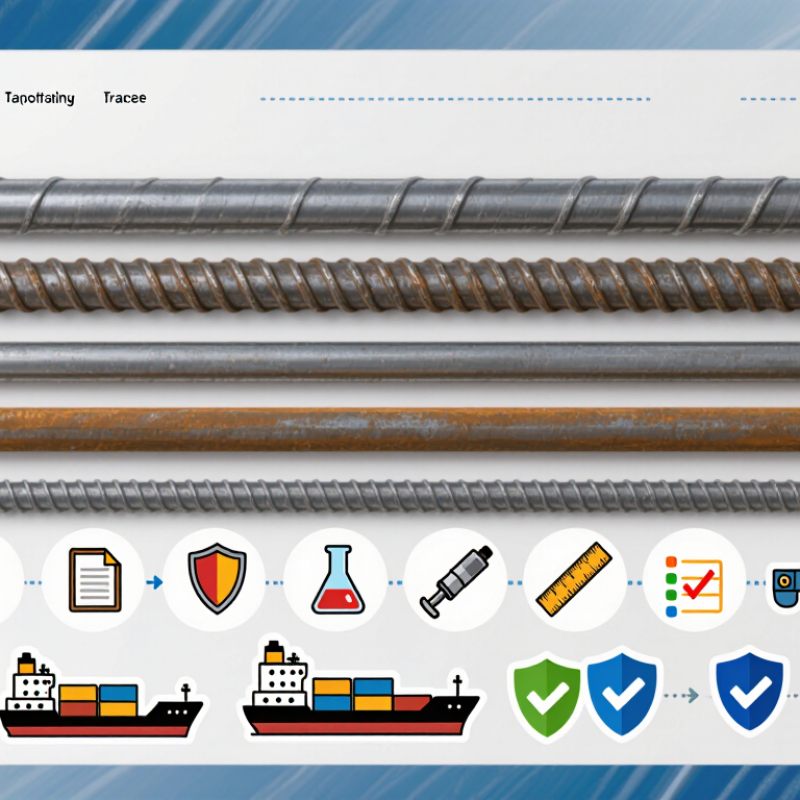
Confirm testing, packaging, shipping, and import documentation before placing an international order.
This checklist groups the practical evidence buyers should request: product specifications, material testing, dimensional inspection, packaging details, shipping records, and import documents. The values show the number of recommended checks in each control area, not market-share or company-performance data.