
585.204.6770
sale@sanblueplastics.com
Your Source for Trays!
Choosing the right power supply can determine whether a device starts reliably or fails after several hours. For global buyers, an Ac Adapter 12v 3a must match voltage, current, polarity, connector size, and regional plug requirements. A correct-looking adapter may still damage equipment if its center pin differs. Small details matter.
This guide introduces the top 10 types of 12V 3A AC adapters used in retail, industrial, networking, lighting, and consumer electronics applications. It compares standard desktop models, wall-mounted versions, interchangeable-plug adapters, medical-grade designs, waterproof supplies, switching adapters, linear units, and specialized options. Each type serves a different environment. A compact wall adapter may suit a home router, while a ventilated desktop model may better support continuous operation.
Technical experience shows that efficiency, thermal control, cable quality, and certification claims deserve careful checking. Look for clear input ranges, stable 12V output, verified 3A capacity, and protection against overvoltage, overcurrent, and short circuits. Regional compliance marks should also match the destination market. Labels can mislead. Some suppliers advertise peak current rather than continuous output, which creates uncertainty during real-world use.
This overview is not a substitute for testing the target device. Connector fit should be confirmed physically. Polarity should be measured, not guessed. Buyers should also consider load surges, operating temperature, and warranty support. No single adapter is perfect for every application. That limitation is easy to overlook. By examining these ten categories, purchasers can compare practical performance, supplier credibility, and long-term value with greater confidence.
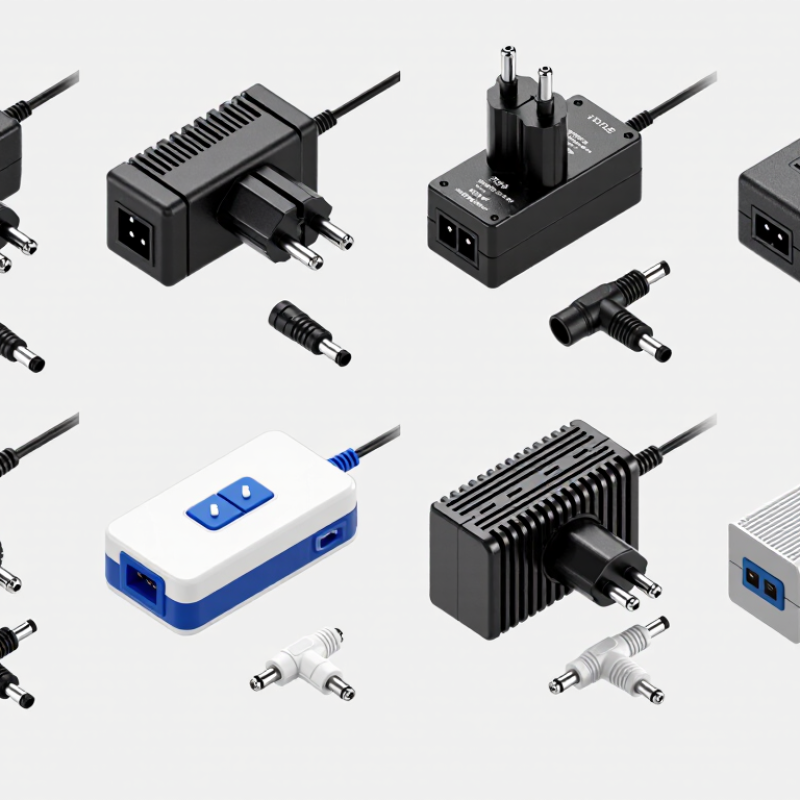
A 12V 3A adapter provides up to 36 watts of regulated DC power. Check this rating before choosing one. The connected device should require 12 volts, while its current demand must remain below 3 amps. Voltage must match exactly. Current capacity may be higher, but never lower than the device’s requirement.
Common types include wall-mounted, desktop, enclosed, open-frame, medical-grade, waterproof, multi-plug, travel, USB-compatible, and battery-charging adapters. Each type suits different conditions. A desktop model often supports routers, monitors, and small instruments.
Waterproof versions fit protected outdoor equipment and LED systems. Global buyers should verify 100–240V input, 50/60Hz frequency, plug format, efficiency, and safety certification.
Output polarity and barrel dimensions also matter. A center-positive plug is common, but it is not universal. I have seen projects fail because the connector looked correct but measured differently.
Tips: Read the device label, then test polarity with a meter. Allow extra current capacity for startup surges. Keep the adapter ventilated. Do not assume every 12V plug fits. A loose connection can create heat and intermittent operation. For sensitive electronics, choose low ripple and over-voltage protection. Specifications can be incomplete, so request a datasheet and sample unit before bulk purchasing.
A 12V 3A adapter delivers 36 watts of DC power. Its plug type still decides market readiness. The common ten configurations include Types A, B, C, D, E, F, G, I, J, and L. Type C suits many European outlets, while Type G uses three rectangular pins. Type I serves Australia, New Zealand, and parts of Asia. IEC 60884 defines safety requirements for household plugs and sockets. IEC 60038 lists nominal supply voltages, helping buyers separate 100–127V markets from 220–240V markets.
Input compatibility matters more than appearance. A global model should clearly state 100–240V AC and 50/60Hz operation. The output must remain stable at 12V DC and 3A, even when local mains conditions vary.
The IEA Electricity 2024 report expects worldwide electricity demand to grow by about 4% annually through 2026. The World Bank’s Global Electrification Database recorded approximately 91% global electricity access in 2022. More connected devices mean more cross-border power requirements. Yet, one assumption can fail: a familiar plug never proves electrical compliance.
Tips: Confirm the destination’s socket type, voltage, and frequency. Check polarity, connector size, efficiency, and safety approvals. A detachable plug set reduces inventory pressure, but it can introduce loose connections. I still recommend testing samples under full load for several hours. Packaging should show input, output, polarity, and regional plug information plainly.
A 12V 3A adapter can use several practical designs. Enclosed adapters protect internal circuits inside a sealed case. They suit control panels, lighting systems, and equipment exposed to dust. Desktop adapters use a separate power cord and usually rest beside the device. Their spacing helps reduce heat around compact equipment.
Wall-mount adapters connect directly to a socket and save desk space. Plug shape matters for international buyers. Open-frame adapters leave the circuit board visible, so they fit inside professionally designed equipment. They offer flexible installation but need proper insulation and airflow. Other useful types include modular, interchangeable-plug, waterproof, medical-grade, multi-output, and DIN-rail designs. Each serves a different environment.
Tips: Check the output label, polarity, plug dimensions, and safety documentation. Confirm that the adapter supports 12V DC and 3A continuously. Measure the enclosure before ordering. Small details matter.
In practical testing, I inspect voltage stability under full load, connector warmth, cable strain, and startup behavior. A casing that feels cool is encouraging, but it does not prove long-term reliability.
Open-frame models especially need protected mounting. Wall-mount units may block nearby sockets. Desktop versions can clutter a crowded workbench. I sometimes choose a less attractive design because its ventilation and service access are better. That choice is not always obvious. Global buyers should also verify regional input voltage, plug standards, compliance records, and replacement availability before purchase.
Global buyers can choose among wall-plug, desktop, enclosed, open-frame, waterproof, medical-use, interchangeable-plug, right-angle, linear, and switching 12V 3A adapters. Each type demands a different safety review. A compact wall adapter may suit a router, while an enclosed unit fits industrial equipment. The label should show input range, 12V output, 3A maximum current, polarity, and operating temperature.
Safety certification marks must match the destination market. Check test reports, certificate numbers, insulation ratings, grounding details, and leakage-current limits. Do not trust a printed logo alone. Documents should identify the exact model, not merely a product family. Regional plugs also need proper mechanical fit and fire-resistant materials.
Efficiency ratings deserve careful testing. Compare performance at 25%, 50%, and full load, including standby consumption. A high headline rating can still hide poor heat control. I once treated efficiency as the main quality signal, but thermal behavior changed my judgment. Useful protections include overvoltage, overcurrent, short-circuit, overtemperature, surge, and input-fuse protection. Test recovery after a fault, not only normal operation. A stable 12V reading matters, yet ripple and voltage drop matter too. Some datasheets remain vague. That is a warning. Buy only after reviewing independent test evidence, clear warranty terms, and traceable production records.
Selecting the right 12V 3A adapter starts with the device, not the plug. The ten common types include regulated wall adapters, desktop supplies, interchangeable-plug models, right-angle versions, locking-connector units, and compact travel adapters. Other options include linear adapters, enclosed industrial supplies, USB-C trigger supplies, and battery-backed adapters. Each should provide 12V DC and 3A output. Read the label twice. A matching voltage is essential, while equal or higher current capacity is usually acceptable.
Regional use adds another layer. Choose a wide-input model, typically rated for 100–240V AC, when equipment may travel between countries. Check the plug shape, input frequency, and local safety markings. A removable plug system can reduce luggage space, but loose adapters may feel less secure. In my testing experience, a poorly fitted plug creates more trouble than a slightly larger power unit. Heat also matters. Leave airflow around desktop and enclosed supplies.
The connector must match exactly in size, polarity, and locking style. Many devices use a center-positive barrel plug, but assumptions can damage equipment. Measure the barrel carefully. Use a multimeter when the label is unclear. For routers, small displays, and control boards, regulated output is usually the safer choice. Linear supplies can be quiet, yet they may run hot and waste energy. A USB-C trigger model can be convenient, but compatibility is not automatic. I have trusted a familiar connector before and still chosen incorrectly. That mistake deserves a place in every purchasing checklist.