
585.204.6770
sale@sanblueplastics.com
Your Source for Trays!
Top 10 Chocolate Wrapping Machinery Manufacturers for Buyers
Chocolate wrapping is a precision task, not merely a final step on the production line. A machine must protect glossy surfaces, form tight seals, and handle delicate pieces without slowing output. For buyers, the right choice depends on product shape, wrapper material, line speed, changeover time, and access to service support.
Raw-material conditions also shape purchasing decisions. The International Cocoa Organization’s May 2024 Quarterly Bulletin estimated a 439,000-tonne global cocoa deficit for the 2023/24 season. That supply pressure makes production planning and avoidable packaging waste more consequential for confectionery businesses. It does not make every high-speed machine the right investment. A modest line with quick changeovers may serve a varied product range better than equipment built for one format.
Small details matter. A crumpled foil edge, uneven seal, or repeated stoppage can undermine an otherwise attractive bar. This guide to the Top 10 Chocolate Wrapping Machinery Manufacturers for Buyers compares suppliers through practical criteria: wrapping formats, rated output, product handling, controls, customization, and after-sales service. Buyers should verify stated speeds using their own product and wrapper; catalog figures may not reflect real production conditions. Chocolate Wrapping Machinery should be assessed against actual line requirements, not brochure claims alone. No ranking can replace a factory trial, and that is worth remembering.
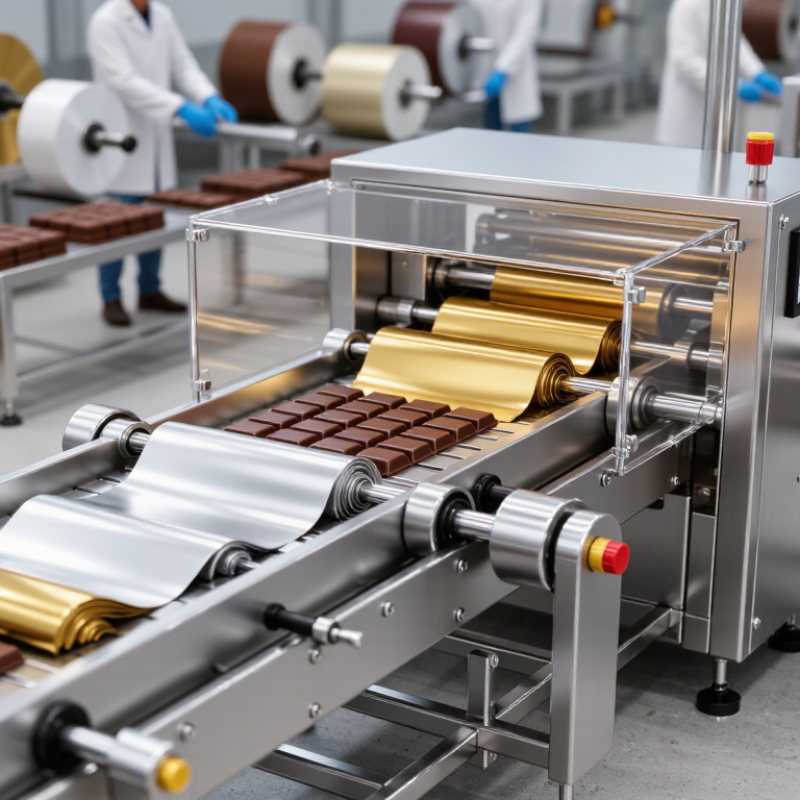
What Chocolate Wrapping Machinery Does and How It Works
Chocolate wrapping machinery protects finished pieces from moisture, handling, and scuffing while keeping their shape presentable. A 2024 Grand View Research report estimated the global chocolate market at USD 119.4 billion in 2023, underscoring the scale of production that packaging lines must serve. The figure describes the chocolate market, not machinery sales. Still, it helps explain why dependable wrapping matters.
A typical line uses a feeder to space chocolates evenly, then a conveyor carries each piece toward the wrapping station. Depending on the product, the machine folds foil or paper around it, or forms a sealed film wrapper. Sensors track product position and printed-film marks; cutters and sealing jaws finish each pack. Small timing errors can cause creased wrappers or missed seals. The details matter.
Operators adjust speed, tension, and temperature for different chocolate sizes and wrapper materials. A glossy coating can soften near warm sealing parts, while a cold room may make some films less flexible. Clean changeovers and routine checks help prevent jams, but no setting works perfectly for every product. That deserves attention. Buyers should assess actual line trials, reject rates, and cleaning access, not just advertised speed. Grand View Research’s Chocolate Market Size, Share & Trends Analysis Report provides market context; it does not replace testing machinery with the intended product and packaging.
| Machinery Category | Typical Product or Pack | How It Works | Common Packaging Materials | Buyer Considerations |
|---|---|---|---|---|
| 1. Horizontal flow wrapper | Chocolate bars, tablets, and other regularly shaped pieces | Feeds products into a continuous film tube, forms a longitudinal seal, then seals and cuts the pack ends. | Heat-sealable flexible films, selected according to product and barrier requirements | Check product dimensions, feeding accuracy, film compatibility, changeover needs, and seal quality. |
| 2. Single-twist wrapper | Individually wrapped chocolates and confectionery pieces suited to twist wrapping | Places a cut piece of wrapping material around the product and twists the ends to hold the wrap in place. | Twistable wrapping papers and suitable flexible laminates | Confirm that the product shape and wrapping material allow secure, consistent twists. |
| 3. Double-twist wrapper | Small, individually wrapped chocolates with two twisted ends | Wraps the piece and twists both ends of the material around it; the exact motion depends on the machine design. | Twist-compatible paper, foil, or flexible laminate | Assess product size range, feed orientation, material behavior, and the desired appearance of both ends. |
| 4. Fold-wrapping machine | Chocolate tablets, bars, or shaped pieces wrapped with folded edges | Positions a sheet around the product and folds the material over the faces and edges; some packs use an additional band or seal. | Paper, foil, or compatible laminated wrapping materials | Review fold style, pack dimensions, material stiffness, and whether a separate outer band is required. |
| 5. Envelope-style wrapping machine | Flat or shaped individual chocolates requiring an overlapping wrap | Centers the product on a sheet, folds the material around it, and closes the overlapping flaps by the method supported by the pack design. | Wrapping paper, foil, or laminates selected for the product and closure method | Check the product’s shape, required overlap, closure method, and how easily packs can be opened. |
| 6. Foil-wrapping machine | Individual chocolates or bars requiring a foil-based inner wrap | Feeds foil around each product and forms the specified folds or closures; some lines add a paper label or outer wrap. | Aluminium foil or foil-based laminates; optional paper outer wrap | Confirm foil thickness and handling requirements, product presentation, and compatibility with any overwrap. |
| 7. Coin or medallion wrapping machine | Flat, round chocolate pieces such as chocolate coins | Feeds each piece into a wrapping station, places a cut sheet around it, and folds or crimps the material to suit the pack style. | Printed foil, paper, or suitable flexible laminates | Look for reliable piece separation, accurate print registration where needed, and gentle product handling. |
| 8. Vertical form-fill-seal machine | Small chocolate pieces, buttons, or coated confectionery sold in bags | Forms a bag from a film roll, receives a measured product dose, and seals the package. A separate dosing system typically supplies the product. | Heat-sealable flexible packaging film | Evaluate dosing accuracy, product fragility, bag style, film sealability, and protection from moisture or oxygen as required. |
| 9. Cartoning machine | Wrapped bars or assortments placed into folding cartons | Erects a carton, loads the wrapped product or group of products, and closes the carton. It is secondary packaging rather than an individual chocolate wrapper. | Paperboard cartons; individual products may have a separate primary wrap | Check carton dimensions, loading pattern, closure style, and integration with upstream wrapping equipment. |
| 10. Multipack bundling or shrink-wrapping machine | Groups of individually wrapped chocolate bars or cartons | Collects products into a group and applies an outer film or bundle wrap; shrink systems use heat to tighten compatible film around the group. | Bundling film or shrink film suited to the selected equipment | Consider pack count, bundle stability, film use, product heat sensitivity, and whether a tray or support is needed. |
| Buyer note: These are machinery categories, not a ranked list of manufacturers. Actual capabilities, output, material compatibility, and changeover performance vary by machine configuration, product, and packaging specification. Verify requirements with equipment suppliers and conduct product trials before purchase. | ||||