
585.204.6770
sale@sanblueplastics.com
Your Source for Trays!
Electrical Film plays a quiet but critical role in insulation, capacitors, electronics, and power equipment. In a finished product, it may be only a thin layer, yet its thickness, dielectric strength, heat resistance, and surface quality can affect long-term performance. Buyers comparing Chinese manufacturers should look beyond a product name or a low quoted price. The right grade depends on the operating temperature, voltage, processing method, and environment. Small details matter.
This guide introduces ten Electrical Film manufacturers in China as a starting point for supplier research. It considers factors buyers can verify, including product range, stated technical capabilities, quality-control practices, customization options, and communication support. A ranking cannot fit every application. No list is perfect. A company with broad capacity may not suit a highly specialized order, while a smaller producer may offer useful flexibility. That trade-off deserves a closer look.
Before requesting samples, prepare clear specifications and ask for current datasheets, test methods, tolerances, and relevant quality documentation. Where possible, compare samples under the same conditions used in your own process. Published claims are useful, but they do not replace technical review or production trials. Manufacturer details and product lines can change, so confirm them directly before making a sourcing decision. This overview can narrow the field; the final choice still depends on evidence, fit, and consistent performance.
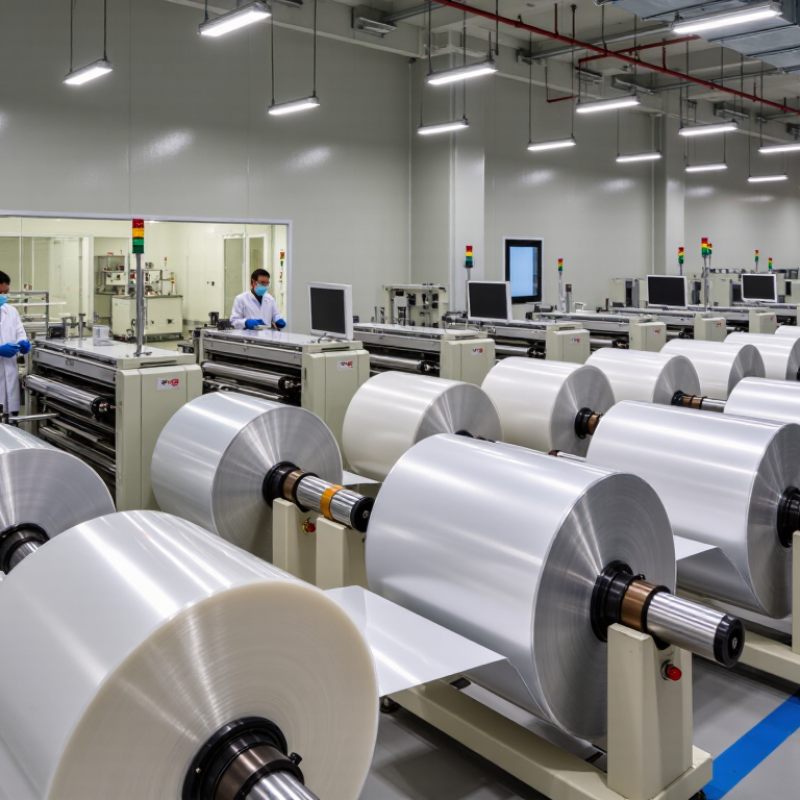
Electrical films are thin polymer sheets that insulate, separate, or protect electrical parts. Common materials include polyester, polypropylene, and polyimide. Their job is easy to overlook. Yet a film only fractions of a millimeter thick can help prevent short circuits in a motor winding or capacitor. It may also serve as a barrier in transformers and cables, where heat, vibration, and moisture challenge insulation over time.
Film choice depends on the application. Capacitors need stable dielectric properties, while motor slot liners must tolerate heat and mechanical stress. In electric vehicles, insulating films can appear in motors, power electronics, and battery assemblies. The International Energy Agency’s Global EV Outlook 2024 reports nearly 14 million electric car sales in 2023, around 18% of global car sales. That growth puts more attention on reliable electrical insulation, though film alone does not determine system safety. Small details matter. Thickness and edge damage can matter, too.
Tip: Check operating temperature, dielectric strength, thickness, and exposure to oil or moisture before selecting a film. Ask for test data under conditions close to actual use. A datasheet is useful, but it may not capture every installation detail.
China’s electrical film industry is structured around material suppliers, film producers, processors, and equipment makers. Upstream companies provide polymer resins and additives. Film producers turn these inputs into thin sheets through casting or stretching. Some add coatings to improve insulation, heat resistance, or surface performance.
Downstream converters slit, laminate, or treat films for capacitors, motors, transformers, and other electrical equipment. Buyers usually assess thickness consistency, dielectric strength, heat aging, and defect rates. A clean sample is useful, but stable performance across production batches matters more. The supply chain can be efficient, though responsibilities may be spread across several firms. That makes traceability worth checking.
Tips: Ask for test data tied to a production batch. Check roll edges and thickness variation. Clarify who handles coating and quality claims.
The market includes large-scale producers and specialist manufacturers serving narrower applications. Regional production networks can shorten delivery routes and support customization. Still, “electrical film” covers many grades, so a supplier suited to one use may not fit another. Buyers should match film properties to operating temperature, voltage, and processing conditions. A careful review takes time. Even experienced teams can overlook small differences in test methods, so compare like with like.
When comparing electrical film manufacturers in China, match each supplier’s materials to your operating conditions. Check film type, nominal thickness, thickness tolerance, dielectric strength, thermal performance, and tensile properties. Ask for recent test reports and confirm the methods and sample conditions. Numbers are useful only when they are comparable. Details matter.
Tips: Request samples from the production line, not only hand-selected pieces. Test them using the same equipment and conditions you use in-house. Record thickness at several points, inspect edges for burrs, and check whether rolls unwind evenly. Also review batch traceability, quality-control records, lead times, and how the supplier handles nonconforming material. Ask who answers technical questions.
A factory visit or live production review can reveal storage conditions, inspection steps, and capacity limits. Verify that the supplier can maintain stable output at your required width and volume. Compare written specifications with actual samples before placing a large order. Run the trial. A spreadsheet can make a weak supplier look tidy, so keep your own test notes. Some details may still be hard to verify remotely; treat that uncertainty as part of the comparison, not as proof of poor quality.
| No. | Selection Criterion | What to Compare | Evidence to Request | Why It Matters |
|---|---|---|---|---|
| 1 | Film material and product range | Confirm whether the supplier makes the required base film, such as PET, PEN, or polyimide, and whether it offers electrical grades, coated films, or laminated constructions. | Product datasheets identifying material type, grade, construction, and intended electrical application. | Different polymers and constructions have different thermal, dielectric, mechanical, and processing characteristics. |
| 2 | Electrical properties | Compare dielectric strength, dielectric constant, dissipation factor, volume resistivity, and test conditions for the specific grade and thickness. | Recent test reports with units, test methods, sample thickness, conditioning, and acceptance limits. | Electrical values are meaningful only when test methods and conditions are comparable. |
| 3 | Thickness and dimensional control | Check available thicknesses, stated tolerances, width range, and whether measurements are controlled across the roll. | Specification sheets, inspection records, and representative thickness or width measurement data. | Consistent dimensions support insulation design, converting, lamination, and reliable downstream processing. |
| 4 | Thermal performance | Review continuous-use temperature guidance, thermal shrinkage, heat-aging behavior, and suitability for the intended temperature class. | Thermal test data and written application guidance for the selected grade. | Temperature capability depends on the complete material system and operating conditions, not simply the polymer name. |
| 5 | Mechanical and processing properties | Compare tensile strength, elongation, tear behavior, surface treatment, and compatibility with the intended slitting, coating, printing, or lamination process. | Datasheets, process recommendations, and trial-roll evaluation results where available. | Mechanical and surface properties affect converting yield, handling, and bonding performance. |
| 6 | Quality management and traceability | Assess documented quality controls, lot identification, inspection frequency, change control, and complaint handling. | Current quality-system certificates, sample inspection documents, and a description of lot traceability. | Traceability and controlled processes help identify and contain material or production issues. |
| 7 | Standards and compliance | Determine which product, safety, environmental, or customer-specific requirements apply to the intended end use and destination market. | Applicable declarations, certificates, or test reports; verify their scope, validity, and relevance to the exact grade. | A certificate for a facility or a different product does not automatically establish compliance for the film being purchased. |
| 8 | Production capacity and lead time | Compare confirmed capacity for the required grade, order size, width, and delivery schedule, including peak-demand arrangements. | Written production and delivery commitments, sample availability, and contingency information. | Capacity claims should be matched to the specific specification and purchase schedule. |
| 9 | Customization and technical support | Check whether the supplier can support custom thicknesses, widths, surface treatments, coatings, or trial production, and how technical questions are handled. | Written capability confirmation, sample plan, technical contact details, and trial-evaluation process. | Clear technical communication helps prevent specification gaps and reduces qualification delays. |
| 10 | Total cost and commercial terms | Compare quoted price alongside minimum order quantity, packaging, payment terms, freight, delivery terms, and the cost of qualification or testing. | Like-for-like quotations based on the same grade, dimensions, quantity, delivery destination, and trade terms. | The lowest unit price may not represent the lowest total cost if yield, logistics, or qualification requirements differ. |
The ten Chinese manufacturer profiles are best read as capability snapshots, not a strict ranking. They cover distinct areas: capacitor-grade polypropylene, metallized capacitor film, PET motor insulation, polyimide films, flexible laminates, slot liners, and other electrical insulation materials. Some suppliers specialize in narrow, high-specification products; others offer broader converting services. Small details matter. Compare thickness consistency, dielectric strength, heat resistance, roll width, and batch traceability—not just catalogue breadth.
Demand context is useful, but it needs careful interpretation. The International Energy Agency’s Global EV Outlook 2024 reports that China sold more than eight million electric cars in 2023, around 60% of global sales. That growth supports demand for electrical components, including insulation and capacitor materials, but it does not directly measure film consumption. Not automatically. A practical supplier profile should therefore distinguish verified product data from market assumptions. Ask for test methods, sample certificates, and performance results under the intended operating conditions. One caveat: published specifications can look precise while saying little about lot-to-lot variation. That is where buyers should probe further.
Top 10 Electrical Film Manufacturers in China?
How to Match Manufacturers with Application Requirements
Choosing an electrical film supplier starts with the operating conditions, not a ranking. Define the film’s role, then compare dielectric strength, thickness tolerance, thermal class, tensile performance, and chemical resistance. A motor winding exposed to heat and vibration needs different protection from a capacitor dielectric or battery insulation layer. IEC 60674-1 provides general requirements for plastic films used in electrical applications; use the relevant test methods to check supplier data, not just catalogue values. IEA’s Global EV Outlook 2024 reports that electric-car battery demand reached about 750 GWh in 2023, around 40% above 2022. That growth makes consistent insulation quality increasingly important, but it does not mean one film suits every design.
Ask manufacturers for test conditions, batch-to-batch tolerance records, and samples from routine production. Then test samples using your actual winding tension, edge profile, and temperature cycle. A film can pass a laboratory test and still wrinkle on a fast production line. Small details matter. I would also review change-control practices and traceability; these are easy to overlook during price comparisons.
Tips: Send suppliers a one-page application brief with voltage, temperature, thickness, processing speed, and failure risks. Request a trial roll before approving volume orders. Keep a little uncertainty in the plan: real production can expose issues that datasheets miss.
Typical relative permittivity of common electrical film materials
Polypropylene’s lower relative permittivity can suit capacitor designs prioritizing low dielectric loss, while PET, PEN, and polyimide offer higher permittivity options for other design needs. Values shown are representative typical figures near room temperature and around 1 kHz; actual properties vary with grade, processing, thickness, and test method. Confirm application-specific data with the material supplier.