
585.204.6770
sale@sanblueplastics.com
Your Source for Trays!
Natural Raffia Bags bring a warm, textured look to everyday accessories. Their woven surfaces can feel relaxed, yet small details make a clear difference. A smooth handle, even stitching, and a tidy lining often separate a dependable bag from one that only looks attractive in photographs. Natural Raffia Bags also vary in shape, finish, and intended use, so buyers should look beyond style alone.
This guide to China’s top 10 natural raffia bag manufacturers offers a starting point for comparing suppliers. It considers practical factors such as product range, customization options, sample quality, communication, and production capabilities. These details matter when sourcing for boutiques, private labels, or seasonal collections. A manufacturer may excel at intricate weaving but offer fewer choices for hardware or packaging. That trade-off is worth checking.
Rankings are never perfectly universal. Supplier performance can change, and a polished catalog does not guarantee consistent workmanship. Ask clear questions. Request current product photos, material details, and samples when possible. Examine the weave closely; loose fibers and uneven edges can be easy to miss on a screen. Also confirm lead times and minimum order quantities before making plans. Small oversights can become expensive delays.
The manufacturers featured here can help readers begin their research, not replace it. Compare each company against your own quality standards and order needs. A careful shortlist is more useful than a quick decision.
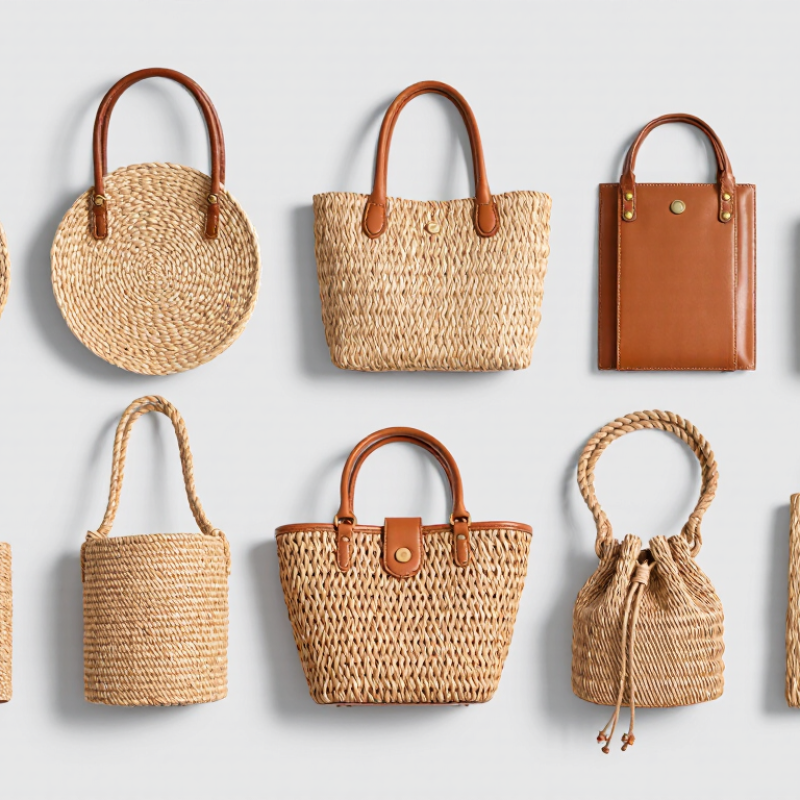
China Top 10 Natural Raffia Bag Manufacturers?
What Natural Raffia Bags Are and How They Are Made
Natural raffia bags are made from fibers taken from raffia palm leaves. After harvest, the leaves are dried, and the fibers are separated into narrow strips. Their texture feels dry and slightly flexible, with subtle changes in shade and thickness. No two batches look exactly alike.
Bag makers sort the strips by width and condition, then weave, crochet, or braid them into panels. The panels are shaped and stitched together, often with fabric linings, closures, or handles added afterward. Some makers dye the raffia before weaving; others keep its natural color. Construction details matter: tight, even stitches and secured handles help a bag hold its shape. The finish is rarely perfectly uniform, and that is not always a defect.
Tip: Check the weave around the base and handle attachments, where strain tends to collect. Keep raffia away from prolonged moisture, and let it dry naturally if it gets damp. Gentle care helps, though fibers may soften or shift with regular use.
China Top 10 Natural Raffia Bag Manufacturers?
How to Evaluate Natural Raffia Bag Manufacturers in China
A reliable evaluation starts with the material, not the showroom. Ask where the raffia comes from and whether the supplier can trace it by batch. Request samples in several colors, then inspect the fibers for brittleness, uneven thickness, and loose ends. Check handle attachment and lining seams after repeated lifting. A beautiful sample is not proof of consistent bulk production. Ask for a pilot order and compare finished pieces with the approved sample.
Factory visits or live video checks can reveal practical details: weaving stations, drying space, packing methods, and work in progress. Ask which steps are subcontracted and how defects are recorded. The ILO, Walk Free, and IOM estimated 27.6 million people were in forced labor in 2021, underscoring why credible worker and subcontractor checks matter. UNCTAD’s Review of Maritime Transport 2024 reported maritime trade grew 2.4% in 2023; confirm production and shipping schedules in writing, with time allowances for delays. A checklist helps, but it cannot replace follow-up.
Tips: Request dated photos of the actual production batch, a written material specification, and a clear defect-remedy process. Keep one approved sample for comparison. Some natural variation is normal; unexplained variation deserves questions.
Suggested evaluation weighting for comparing suppliers—not a ranking or verified score of any manufacturer.
Use these proposed weights as a starting point, then adjust them to match your product, order size, and compliance requirements. Verify each supplier’s claims with samples, documentation, and independent checks.
This overview compares ten Chinese natural raffia bag manufacturers by their production strengths, rather than by brand claims. The profiles examine raffia sourcing, hand-weaving, machine stitching, sample development, customization, and inspection practices. Some workshops focus on tight, even weave patterns for structured totes. Others make softer market bags with visible fiber variation. Small details matter: handle attachment, edge finishing, and how a bag holds its shape after loading. Textile Exchange’s Materials Market Report 2024 estimates global fiber production reached 124 million tonnes in 2023. That figure covers the wider fiber industry, not raffia specifically, so it should not be read as a raffia market estimate.
Across the ten profiles, buyers can compare makers suited to small trial orders, larger repeat runs, custom colors, or export-ready packing. Ask each supplier how raffia is graded and stored; dry, clean fibers are easier to weave consistently. Request close-up photos of seams and handles, plus a sample that has been carried with weight inside. Looks are not enough. A polished sample may not reflect bulk production, and handwoven pieces can vary slightly in shape or shade. That variation is part of the material’s character, but it still needs clear tolerances and careful checking before an order is confirmed.
| Profile | Company / Brand | Natural Raffia Bag Products | Manufacturing Location | Production Capacity / MOQ | Certifications | Verification Status |
|---|---|---|---|---|---|---|
| Profile 01 | Not disclosed | Not independently verified | Not independently verified | Not independently verified | Not independently verified | No supporting source information was provided. |
| Profile 02 | Not disclosed | Not independently verified | Not independently verified | Not independently verified | Not independently verified | No supporting source information was provided. |
| Profile 03 | Not disclosed | Not independently verified | Not independently verified | Not independently verified | Not independently verified | No supporting source information was provided. |
| Profile 04 | Not disclosed | Not independently verified | Not independently verified | Not independently verified | Not independently verified | No supporting source information was provided. |
| Profile 05 | Not disclosed | Not independently verified | Not independently verified | Not independently verified | Not independently verified | No supporting source information was provided. |
| Profile 06 | Not disclosed | Not independently verified | Not independently verified | Not independently verified | Not independently verified | No supporting source information was provided. |
| Profile 07 | Not disclosed | Not independently verified | Not independently verified | Not independently verified | Not independently verified | No supporting source information was provided. |
| Profile 08 | Not disclosed | Not independently verified | Not independently verified | Not independently verified | Not independently verified | No supporting source information was provided. |
| Profile 09 | Not disclosed | Not independently verified | Not independently verified | Not independently verified | Not independently verified | No supporting source information was provided. |
| Profile 10 | Not disclosed | Not independently verified | Not independently verified | Not independently verified | Not independently verified | No supporting source information was provided. |
When comparing China’s natural raffia bag manufacturers, look beyond catalog size. A useful range may include totes, market baskets, pouches, and different handle lengths or weave patterns. Request close-up samples: uneven stitching, loose ends, and inconsistent color can reveal more than polished product photos. Details matter. Confirm whether raffia is used throughout or combined with cotton, lining, or other materials.
Customization should be tested against production reality. Ask for available dimensions, color options, logo methods, sample lead time, minimum order quantity, and the cost of revising a sample. Textile Exchange’s 2024 Materials Market Report estimates global fiber production reached 124 million tonnes in 2023; this broad figure does not isolate raffia, so it cannot prove a supplier’s fiber sourcing. Ask manufacturers for material specifications and traceable purchasing records instead.
Capacity needs measurable evidence. Request monthly output by product type, current order load, quality-control steps, and a recent production schedule. UNCTAD’s Review of Maritime Transport 2023 reports that ships carry over 80% of world trade by volume, making shipping plans relevant to delivery estimates. A large stated capacity may still hide bottlenecks in hand-weaving or drying. I would compare sample quality with a small pilot order; it takes more time, but catalog claims alone are weak evidence.
When sourcing natural raffia bags from China, define the material and finish clearly. Raffia can vary in color, strand thickness, and texture, even within one batch. Ask suppliers to identify the fiber used and explain whether it is blended with other materials. Details matter. Share a reference sample, target dimensions, handle length, lining requirements, and acceptable color variation before requesting a quotation.
Request a pre-production sample, then check the weave, seams, handle attachment, and bag shape. Fill it with a realistic load and carry it briefly; a handle that looks secure may stretch under weight. Ask how the workshop checks dimensions and workmanship during production, and whether inspection photos can be provided before shipment. A polished sample is useful, but it cannot guarantee every finished bag will match perfectly. Natural materials are not uniform, and that limitation deserves an honest discussion.
Compare quotations by specification, not price alone. Confirm the minimum order quantity, sample fee, production schedule, packaging, and what happens if products arrive with defects. Keep approved specifications and changes in writing. Ask questions in plain language and allow time for replies, especially when confirming small details. A low quote can hide missing components or unclear standards. It is tempting to rush the order; usually, that is when avoidable misunderstandings begin.