
585.204.6770
sale@sanblueplastics.com
Your Source for Trays!
Stainless steel pipe is easy to overlook until a system fails. A corroded joint, a rough weld, or a poorly matched grade can disrupt an entire project. Buyers therefore compare more than price. They assess material grades, manufacturing capacity, quality controls, delivery reliability, and technical support.
The scale of the wider industry helps explain this scrutiny. World Stainless reported global stainless steel melt shop production of 58.4 million tonnes in 2023, up 4.6% from 2022, in its 2024 production statistics. That figure covers stainless steel overall, not pipe alone. Still, it signals the depth of the supply chain behind pipe and tube production. Reports from World Stainless and market research firms also show why demand is considered across construction, energy, chemical processing, food production, and transport. Conditions differ sharply between these sectors.
This guide profiles ten manufacturers with international reach and established production capabilities. It considers product range, manufacturing footprint, certifications, and the industries each company serves. A global list cannot capture every regional specialist. Nor does company size guarantee the best fit. Specifications matter. A pipe suited to a coastal processing plant may be excessive for a standard building application. Readers should verify current grades, dimensions, test documentation, and delivery terms directly with suppliers. Data and company capabilities can change; that detail is easy to miss.
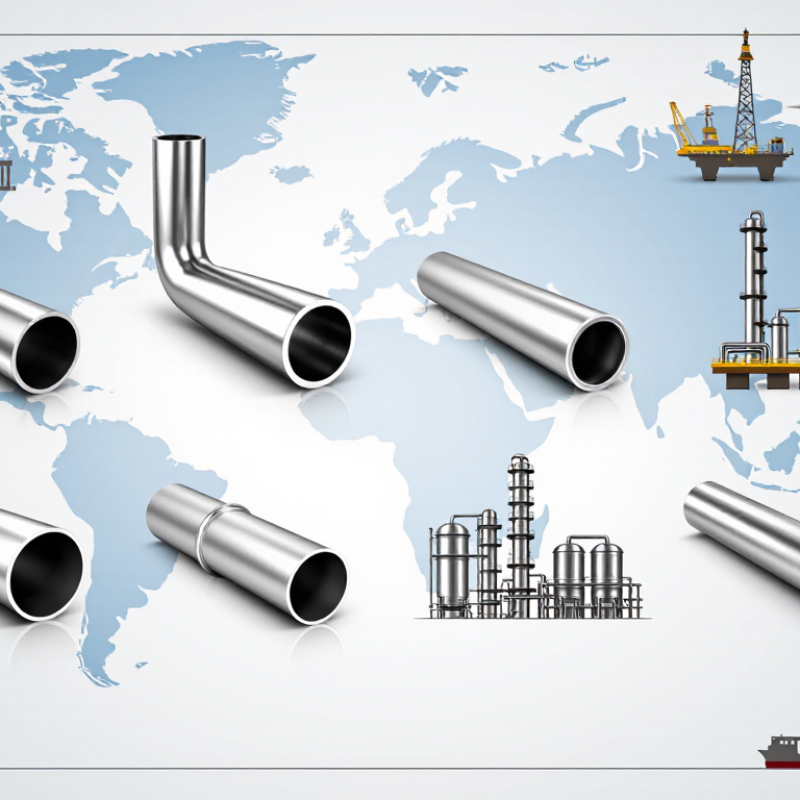
Stainless steel pipe manufacturers produce seamless and welded products for process lines, heat exchangers, food facilities, and instrumentation. Each use calls for different dimensions, surface finishes, and corrosion resistance. A bright, smooth tube may suit a hygienic line, while a thicker pipe may be selected for demanding service. The details matter.
Seamless pipe usually begins as a heated solid billet. A piercing mill forms a hollow shell, which is then rolled and sized to the required diameter and wall thickness. Welded pipe starts with stainless steel strip or plate. Rollers gradually form it into a tube, and the edges are joined using a controlled welding process, often TIG or laser welding. The weld zone may then be heat-treated or mechanically finished.
Production does not end at shaping. Pipes can undergo solution annealing, pickling, and passivation to restore corrosion resistance and remove surface scale. Manufacturers check dimensions and inspect welds; methods may include eddy-current testing or hydrostatic testing, depending on product requirements. Not every extra test guarantees better performance. Material grade, weld quality, and the actual operating environment must all match. In practice, that match can be easy to overlook. A pipe that looks flawless under workshop lights may still be unsuitable for a corrosive process line.
The chart compares nominal pipe sizes (NPS) with their standard outside diameters. NPS is a size designation; it does not generally equal the pipe’s measured outside diameter. Values shown are in inches.
Comparing global stainless steel pipe manufacturers requires more than checking product catalogs. Start with the intended service: fluid type, temperature, pressure, and exposure to chlorides can change which alloy and manufacturing route are suitable. A pipe that performs well in a dry utility room may struggle near coastal spray. Details matter.
Review material certificates, heat numbers, and inspection records. Traceability should connect each delivered pipe to its production batch. Ask how wall thickness, outside diameter, ovality, and straightness are measured, and request sample reports rather than relying on broad claims. For welded pipe, examine weld inspection methods and acceptance criteria. For demanding service, corrosion or mechanical test data can help, but tests should match the application. More paperwork is not automatically better.
Production capacity and delivery consistency also deserve attention. Compare quoted lead times with documented performance, packaging practices, and procedures for handling nonconforming products. Technical support matters when drawings, grades, or end connections need clarification. A neat spreadsheet can still mislead: specifications may look identical while inspection scope differs. I would treat unusually confident claims as prompts for questions, not proof. No single ranking fits every project; the best comparison weighs verified quality against the actual operating conditions.
Profiles of the world’s leading stainless-steel pipe manufacturers are most useful when they compare capabilities, not just output. World Stainless reported 58.4 million tonnes of global stainless-steel melt-shop production in 2023. That figure shows the industry’s scale, but it is not pipe production; treating it as such would overstate what the data proves. A practical profile checks each producer’s route: welded or seamless, standard austenitic grades or duplex alloys, and capacity for thin-wall precision tubing. Details matter. A smooth weld bead, traceable heat number, and consistent wall thickness can matter more to an engineer than a broad catalogue.
Across ten profiles, compare documented pressure testing, corrosion testing, non-destructive inspection, and compliance with specified standards. Regional stock and delivery times also affect a supplier’s real value. Some manufacturers focus on large-diameter welded pipe; others specialize in seamless products for high-pressure service or small-bore instrument tubing. The differences are not always tidy. Public data rarely separates pipe output from broader stainless-steel output, so rankings can appear more certain than the evidence allows. That limitation belongs in any careful profile.
Selecting among the world’s leading stainless steel pipe manufacturers starts with product fit, not a ranking alone. Catalogs commonly include seamless and welded pipe, round and square profiles, and grades such as 304/304L and 316/316L. Some facilities also produce duplex alloys or large-diameter pipe for demanding service. Check wall thickness, outside diameter, length, and surface finish against the project drawing. Small tolerances matter.
Standards indicate how a pipe is specified and tested. Common references include ASTM A312 for austenitic stainless steel pipe, ASTM A790 for duplex pipe, and EN 10217-7 for welded stainless steel tubes. Requirements vary by grade and application, so confirm the applicable edition, dimensions, heat treatment, and inspection scope. Request mill test certificates, heat numbers, and traceability records. For critical orders, clarify whether hydrostatic or nondestructive testing applies; not every product receives every test.
Manufacturing capability involves more than production volume. Ask about forming, welding procedures, heat treatment, pickling or passivation, and dimensional inspection. A capable supplier should explain how it controls weld quality and tracks each production lot. Still, polished paperwork does not guarantee consistent deliveries. Compare sample reports with shipped material, and review independent audit evidence where available. No single manufacturer fits every project.
| No. | Anonymous Producer Profile | Key Product Categories | Commonly Relevant Standards | Typical Manufacturing Capabilities | Common End-Use Sectors |
|---|---|---|---|---|---|
| 01 | East Asian integrated mill profile | Austenitic stainless seamless and welded pipe; selected duplex grades | ASTM A312/A312M; ASTM A790/A790M; JIS G3459 | Seamless forming, welding, heat treatment, pickling, and dimensional finishing | Chemical processing, energy, and industrial equipment |
| 02 | Central European precision mill profile | Seamless stainless tubes and pipes for pressure and process service | EN 10216-5; ISO 1127; ASTM A312/A312M | Hot forming, cold drawing or pilgering, heat treatment, and precision inspection | Pressure systems, process plants, and mechanical engineering |
| 03 | Northern European welded-pipe profile | Welded austenitic and duplex pipe; corrosion-resistant process piping | EN 10217-7; ASTM A312/A312M; ASTM A790/A790M | Strip forming, longitudinal welding, heat treatment where specified, and nondestructive testing | Offshore, desalination, chemical, and water-treatment projects |
| 04 | Southern European large-diameter profile | Large-diameter welded stainless pipe and heavy-wall process pipe | ASTM A358/A358M; ASTM A312/A312M; ASME B36.19M | Plate or coil forming, longitudinal or spiral welding, weld examination, and end preparation | Refineries, power generation, and large process installations |
| 05 | North American pressure-pipe profile | Seamless and welded austenitic stainless pipe; selected high-alloy grades | ASTM A312/A312M; ASTM A358/A358M; ASME B36.19M | Pipe forming, welding or seamless production, heat treatment, hydrostatic testing, and traceability control | Oil and gas, power, chemical processing, and general industry |
| 06 | South Asian alloy-pipe profile | Stainless seamless and welded pipe, including austenitic and duplex product families | ASTM A312/A312M; ASTM A790/A790M; EN 10217-7 | Hot and cold forming, welding, solution heat treatment, pickling, and inspection to purchase specifications | Engineering projects, process plants, and infrastructure |
| 07 | East Asian welded-tube profile | Welded stainless pipe and tube in standard industrial dimensions | JIS G3459; ASTM A312/A312M; ISO 1127 | Coil slitting, roll forming, high-frequency or fusion welding, sizing, and surface finishing | Construction, transportation, machinery, and industrial piping |
| 08 | Chinese high-volume production profile | Welded and seamless stainless pipe across common austenitic grades | GB/T 14976; ASTM A312/A312M; EN 10217-7 | High-volume forming and welding, heat treatment, pickling, cutting, and batch-based quality inspection | Building services, water systems, industrial equipment, and process piping |
| 09 | European sanitary and hygienic-tube profile | Welded stainless tube and pipe with controlled internal and external surface finishes | EN 10217-7; ISO 1127; ASTM A270/A270M | Precision tube forming, smooth-bore finishing, cleaning, dimensional checks, and surface inspection | Food, beverage, pharmaceutical, and biotechnology plants |
| 10 | Specialty alloy-pipe profile | Duplex, super duplex, and other corrosion-resistant stainless pipe grades | ASTM A790/A790M; ASTM A928/A928M; EN 10216-5 | Alloy-grade production, controlled heat treatment, weld qualification, corrosion-focused inspection, and material traceability | Offshore, chemical processing, desalination, and demanding seawater service |
Note: These anonymized profiles summarize real product types, manufacturing processes, and standards used in the global stainless steel pipe industry. They are illustrative profiles, not a verified company ranking or claims of certification by any particular manufacturer. Applicable standards and capabilities vary by product, grade, dimensions, and mill.
Leading stainless steel pipe manufacturers serve industries where flow reliability, cleanliness, and resistance to corrosion matter. In food and beverage plants, pipes carry milk, syrups, and cleaning solutions through systems that must be washed regularly. Smooth internal surfaces can help limit residue, but they do not replace sound cleaning procedures. Small details count.
Chemical processors use pipework for acids, solvents, and heated fluids, with material selection matched to the specific service conditions. In oil, gas, and power facilities, pipes may face pressure changes, vibration, and high temperatures. Water treatment plants rely on stainless steel for pumps, filtration lines, and exposed connections, especially where moisture and salts can accelerate corrosion. Pharmaceutical facilities have stricter cleanliness needs, so weld quality, surface finish, and traceable inspection records can influence purchasing decisions. Conditions vary.
Manufacturers also supply pipe for shipbuilding, construction, and pulp and paper production. These applications differ sharply: a decorative building connection does not face the same demands as a hot process line. Buyers should check grade, wall thickness, dimensions, and applicable testing requirements against actual operating conditions. A corrosion-resistant alloy can still fail if the design, installation, or maintenance is poor. That part is easy to overlook.