
Your Source for Trays!

Top 10 Types of 4x6 Thermal Labels for Shipping?

Shipping labels look simple until a printer jams or a barcode prints too faintly. A 4x6 Thermal Label is widely used for parcels because its dimensions leave room for addresses, tracking barcodes, and carrier details. Yet labels with the same size can differ in material, adhesive, roll format, and printing method. Those differences matter at a busy packing table.

This guide introduces 10 types of 4x6 thermal labels for shipping, from direct thermal and thermal transfer stock to fanfold and roll labels. It explains practical features such as permanent or removable adhesive, perforated backing, and paper construction. Each option suits different printers and workflows. Check your printer’s supported media, core size, and loading method before ordering; a label that looks right may still feed poorly. Small details count.

Real-world use can be less tidy than product descriptions suggest. A label may stick well to a clean box but lift from dusty or cold packaging. Direct thermal labels can also be affected by heat, light, and storage conditions, so consider how long a parcel may sit in transit. There is no single best choice for every shipper. Sometimes the sensible option is simply the one that prints clearly, feeds reliably, and stays attached. Test a sample first when you can. That step is easy to skip. It can save reprints and delays.
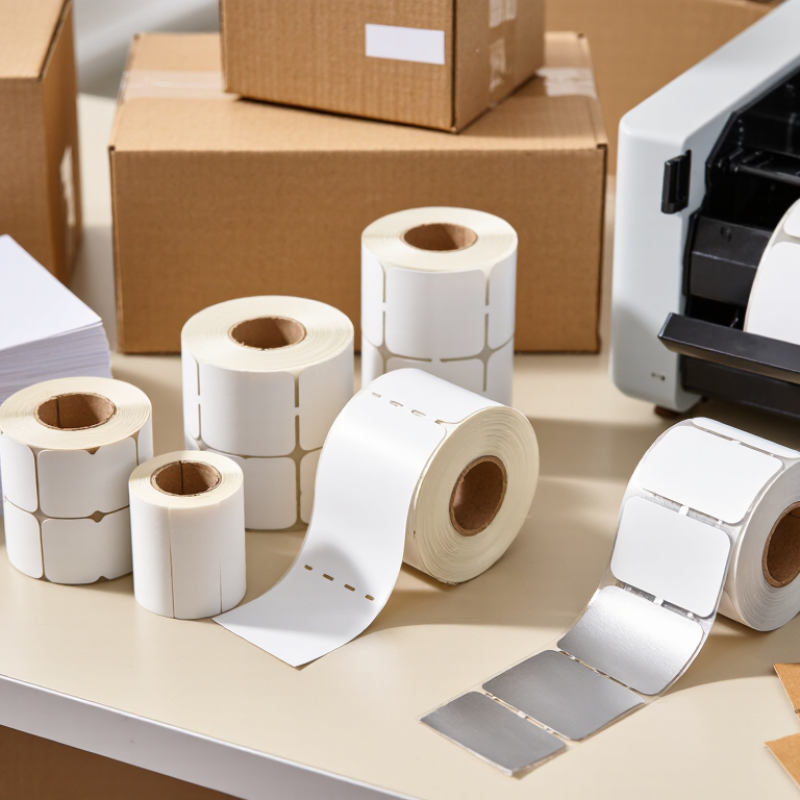
Top 10 Types of 4x6 Thermal Labels for Shipping?

What 4×6 Thermal Shipping Labels Are and How They Work

A 4 × 6-inch thermal shipping label measures about 101.6 × 152.4 millimeters. It gives a parcel room for a recipient address, routing details, and a scannable barcode. In a direct-thermal printer, a heated printhead darkens a heat-sensitive coating on the label. No ink. No toner. The adhesive backing holds the label to a clean, dry carton. The U.S. Census Bureau estimated 2024 U.S. e-commerce sales at $1.1926 trillion, or 16.1% of total retail sales, in its Quarterly Retail E-Commerce Sales report. That scale helps explain why clear, machine-readable shipping labels matter.

Tip: Store rolls away from sunlight and heat. Check that the barcode prints with sharp, dark lines, then scan a test label before a busy shipping run. A small smudge can cause a delay.

Direct-thermal labels are convenient for routine shipping, but heat and prolonged sunlight can make their print fade. Thermal-transfer labels use a ribbon to transfer ink onto the label, which can suit applications needing more durable print. The right choice depends on storage time, handling, and printer compatibility. A crisp label is not a guarantee of smooth delivery, either: placement matters. Keep it flat, visible, and clear of seams or tape, where glare or wrinkles may interfere with scanning. I’d still test the exact label stock with your printer; specifications alone do not catch every feed or adhesion issue.

The Ten Main Types of 4×6 Thermal Shipping Labels

A 4×6 shipping label can differ by printing method, format, face material, or adhesive. These types overlap, so a freezer-grade label, for example, may also use direct-thermal printing. Small details matter.

Common options include direct-thermal roll labels, which print without ribbon, and fanfold labels, stacked for easier loading.
Perforated stock separates cleanly by hand.
Linerless labels have no backing paper, but require a compatible printer.
Thermal-transfer labels use a ribbon and can suit jobs where print durability matters.
Permanent-adhesive labels grip corrugated cartons firmly; removable-adhesive versions are easier to peel away.
Freezer-grade labels are made for cold surfaces, while water-resistant synthetic labels handle moisture better than ordinary paper.
Recycled-paper labels offer another face-stock choice.

Match the label to the printer and the parcel’s journey. A roll may not feed in a printer designed for fanfold stock, and adhesive can struggle on dusty or cold cardboard. Check the printer specifications before ordering. Test one carton. I find label selection is sometimes treated as an afterthought, even though a lifted corner can hide a barcode. For uncertain conditions, trial a small batch and inspect both print clarity and adhesion after handling.

How Label Materials, Adhesives, and Finishes Differ

A 4×6 shipping label can be plain paper, coated paper, or synthetic film. Paper is economical and prints clearly, but moisture can wrinkle its surface. Polypropylene and polyester films better resist water, scuffs, and handling. The U.S. Census Bureau reported 2023 U.S. e-commerce sales of $1.1187 trillion, or 15.4% of retail sales, in its annual e-commerce estimate. More parcels mean labels face varied routes and storage conditions. Not always gentle ones. Direct-thermal stock darkens with heat and prolonged light, so it suits fast-moving shipments better than long-term records.

Adhesive choice matters just as much. Hot-melt adhesives often grab corrugated cartons quickly, while acrylic adhesives can offer more stable performance over time; actual results depend on carton dust, recycled fibers, and temperature. ASTM D3330 describes peel-adhesion testing, but a test result does not guarantee the same bond on every box. A topcoat can improve resistance to moisture, oils, or abrasion, yet it may add cost and change print contrast. I still find finish selection easy to underestimate: a label can look crisp at packing time, then fade or lift after a cold, damp night. Testing the actual label on the actual carton is less tidy, but more useful.

Top 10 Types of 4×6 Thermal Labels for Shipping

How face materials, adhesives, and finishes compare across common shipping needs

Scores are a qualitative comparison on a 1–5 scale, not laboratory ratings. Actual performance depends on the specific label construction, printer settings, and— for thermal-transfer labels—ribbon. Direct-thermal labels need no ribbon; thermal-transfer labels do.

How to Match a Label Type to Your Shipping Needs

Top 10 Types of 4x6 Thermal Labels for Shipping?

How to Match a Label Type to Your Shipping Needs

Start with the printer and the journey. Direct thermal labels need no ribbon and suit everyday parcels moving through ordinary conditions. However, heat and sunlight can darken or fade them over time. Thermal transfer labels use a ribbon, making them a better fit when labels need to remain readable through longer storage or rough handling. Check your printer’s media requirements before ordering; a 4x6 label is not automatically compatible with every machine.

Then consider the package surface. Permanent adhesive usually holds well on corrugated boxes, while flexible mailers may need an adhesive tested for film. Cold-storage shipments call for freezer-grade adhesive, since standard glue can lose its grip on chilled packaging. Removable labels can help with temporary identification, but they may peel during transit. That matters. Choose roll labels for compact printers or fanfold labels when you want a stack that feeds neatly from a shelf. Perforated gaps make individual labels easier to tear. Opaque or blockout stock can cover old marks on reused boxes, though it should not obscure required shipping information.

Before committing to a large pack, print a few labels and apply them to your actual cartons or mailers. Check barcode clarity, edge lift, and whether the label stays readable after handling. A small test can save a frustrating batch.

Some packaging behaves differently than expected.

How to Check Printer Compatibility and Apply Labels Properly

Top 10 Types of 4x6 Thermal Labels for Shipping?
How to Check Printer Compatibility and Apply Labels Properly

A 4x6 label can come on a roll or fanfold stack, with gaps or black marks between labels. Check which format your printer’s sensor reads before ordering. Also confirm the roll’s core size, outside diameter, and feed direction. A roll that fits the holder may still rub against the printer cover.

Direct thermal labels need no ribbon, while thermal-transfer labels do. Match the label type to your printer and check its supported width. Coated paper, synthetic stock, removable adhesive, and freezer-grade adhesive all behave differently. If a parcel faces rain or cold storage, test the label under those conditions. The package details matter.

Load the labels with the printable side facing the printhead, then select a 4x6-inch page size. Run the printer’s calibration routine if labels skip or print across gaps. Check twice. Before applying a label, wipe the carton’s surface and let it dry. Place the label on a flat area, away from seams, tape, and edges. Press from the center outward to smooth bubbles. Run one test. Scan the barcode after printing; pale lines, wrinkles, or low contrast can cause reading problems. I used to assume a clean-looking label was ready to ship. That was not always true. A quick scan catches flaws the eye can miss.

Top 10 Types of 4×6 Thermal Labels for Shipping: Compatibility and Application Guide

Label Type Typical Construction Best Suited For Printer Compatibility Checks Application Tips
1. Standard Direct-Thermal Roll Heat-sensitive paper that prints without an ink ribbon; commonly supplied as 4 × 6 in (about 102 × 152 mm) labels. Everyday parcel shipping and short-to-medium transit where labels are not expected to face prolonged heat or sunlight. Confirm the printer supports direct-thermal media, the maximum print width, roll-core size, and maximum roll diameter. Check whether the printer uses gap, notch, or black-mark sensing. Load the roll with the printable side facing the printhead. Apply to a clean, dry, flat package surface and press down the full label, especially the edges.
2. Direct-Thermal Fanfold Direct-thermal labels joined in a continuous accordion-folded stack rather than wound on a roll. High-volume shipping stations and printers configured for fanfold media. Verify that the printer has a fanfold feed path or rear-feed opening and supports the stack position and label sensing method. A roll-only printer may not feed fanfold stock reliably. Place the stack squarely behind or beneath the printer as directed by its feed path. Keep the media free of twists and avoid placing weight on the stack.
3. Permanent-Adhesive Direct-Thermal Direct-thermal paper with a permanent pressure-sensitive adhesive. General parcel labels that should remain attached during sorting and transit. Check the printer’s supported media thickness and sensing style; adhesive type does not by itself determine printer compatibility. Apply to corrugated cardboard or another clean, dry surface. Avoid seams, closures, heavy texture, and areas that flex during handling.
4. Removable-Adhesive Direct-Thermal Direct-thermal paper with an adhesive designed to be removed more easily than standard permanent adhesive. Temporary identification or parcels where easier label removal is useful, subject to the adhesive’s stated performance. Confirm direct-thermal support and test the label stock in the printer, since liner thickness and label construction can affect feeding and calibration. Test adhesion on the actual packaging material before use. Removable adhesives may not hold as securely on dusty, rough, cold, or low-energy surfaces.
5. Cold-Temperature or Freezer Direct-Thermal Direct-thermal facestock and adhesive formulated for application or service in colder conditions; specifications vary by product. Cold-chain parcels and packages that will be stored or handled in refrigerated or frozen environments. Check the media specification for printer type, thickness, core, roll diameter, and sensing method. Verify both the application-temperature and service-temperature ranges. Follow the label’s stated temperature limits. Keep the application surface dry and observe any required conditioning or application procedure.
6. Durable or Coated Direct-Thermal Direct-thermal stock with a protective coating intended to improve resistance to handling or environmental exposure; resistance varies by construction. Shipments needing better scuff or moisture tolerance than basic paper labels can provide. Confirm direct-thermal compatibility and verify that the printer’s heat and darkness settings can produce a readable image on the specific coating. Do not assume “coated” means waterproof or sunlight-proof. Check the product’s durability claims and keep the barcode flat and unobstructed.
7. Thermal-Transfer Paper Roll Paper label stock printed with a thermal-transfer ribbon. Shipping labels where the printed image needs to resist fading better than a basic direct-thermal image under the intended conditions. The printer must support thermal-transfer printing and accept a compatible ribbon. Match ribbon width and type to the media and printer; verify the roll core, diameter, and sensor format. Use a ribbon recommended for the label facestock and set print darkness and speed according to the printer and media instructions.
8. Thermal-Transfer Synthetic Film facestock, such as a synthetic polymer label material, printed using a compatible thermal-transfer ribbon. Shipments needing increased resistance to tearing or moisture compared with ordinary paper, where the selected material is rated for the conditions. Confirm thermal-transfer support, ribbon compatibility, media thickness, and printer clearance. Synthetic stocks may require different heat or speed settings from paper. Choose the facestock and adhesive for the package surface and expected environment. Test barcode readability and adhesion before routine use.
9. Perforated 4×6 Labels Roll or fanfold labels with perforations between labels to make separation easier. Workflows that benefit from tearing labels apart without a separate cutter. Check that perforation placement does not interfere with the printer’s sensor, platen, or tear bar. Confirm the printer can feed the chosen roll or fanfold format. Tear along the perforation without pulling across the printed barcode. Keep the label itself intact and fully adhered to the parcel.
10. Black-Mark or Specialty-Sensed Labels Labels with a printed registration mark on the liner, or another specified sensing feature, for media positioning. Printers and workflows that rely on reflective black-mark sensing rather than a gap or notch between labels. Match the label’s mark position and orientation to the printer’s sensor location and settings. A gap-sensing printer may not correctly detect black-mark media unless configured for it. Load the media in the specified orientation and calibrate using the printer’s media-calibration procedure. Keep marks and labels aligned during feeding.

Compatibility reminder: “4×6” describes the nominal label face, not the full liner width or roll dimensions. Before ordering, check the printer’s supported print width, media type, sensing method, core size, maximum roll diameter, and feed configuration. Exact specifications vary by printer and label stock.