
Your Source for Trays!

China Top HDPE Liner Manufacturers for Global Buyers?

Choosing among China’s top Hdpe Liner manufacturers takes more than comparing prices or glossy brochures. A liner may look identical on a sample table, yet differ in resin consistency, thickness control, weldability, and documented quality checks. Those differences matter when rolls reach a muddy job site, seams meet in changing weather, and installation crews need timely technical support. The right supplier should explain these details clearly.

Geosynthetics expert Dr. Robert M. Koerner has written extensively about geosynthetic materials and their engineering performance. A practical paraphrase of the principle reflected in his work is: “Evaluate a liner for its intended service conditions, not by price alone.” This is a paraphrase, not a verified verbatim quotation. Buyers should examine technical data, manufacturing controls, test records, and evidence of consistent production. Ask how the manufacturer checks thickness, tensile properties, and seam compatibility. Request samples and clarify who will answer questions after shipment.

Details count.

This guide explores manufacturers serving global buyers, the products they offer, and the evidence worth requesting before an order. It also considers export experience, communication, lead times, and support for installation teams. No supplier is best for every project. A company with impressive capacity may still be a poor fit if its documentation is vague or responses arrive too late. And a low quote can hide important gaps. The comparison ahead aims to make those trade-offs easier to see, while recognizing that a supplier’s claims still need independent review.
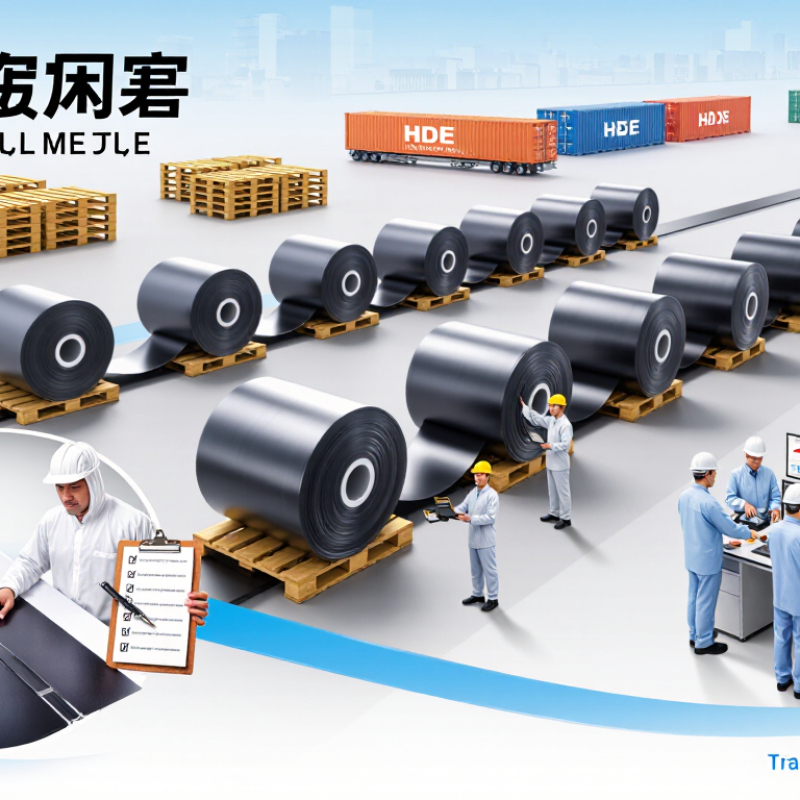
China Top HDPE Liner Manufacturers for Global Buyers?

Understanding HDPE Liners and Their Main Applications

HDPE liners are flexible, low-permeability geomembranes used to control liquid movement. In landfills, they commonly form part of a composite barrier beneath waste or within a final cover. They also line wastewater ponds, irrigation canals, reservoirs, and mining containment areas. The setting matters: exposed sunlight, chemical contact, and uneven ground place different demands on a liner.

The scale of waste management helps explain the need. UNEP’s Global Waste Management Outlook 2024 estimates that municipal solid waste will rise from 2.1 billion tonnes in 2023 to 3.8 billion tonnes by 2050. That growth increases pressure on containment systems. But a liner is not magic. Poor subgrade preparation or weak field seams can undermine an otherwise suitable sheet.

For buyers, thickness alone is not enough. Check chemical compatibility, puncture resistance, and the design’s allowance for settlement. Seams deserve close attention; ASTM D4437 describes nondestructive methods for checking field-seam integrity. On site, crews may inspect welds while the sheet lies across compacted soil, where stones or wrinkles can create practical problems. Small details matter. Soil conditions, installation quality, and exposure should guide material selection—not a catalogue specification alone.

How to Evaluate HDPE Liner Manufacturers in China

Evaluating HDPE liner manufacturers in China requires evidence beyond a low quotation. Grand View Research valued the global geomembrane market at USD 2.1 billion in 2022 and projected 5.1% annual growth through 2030. That growth makes supplier capacity worth checking, but market size cannot prove product quality. Ask for recent test reports that identify resin type, thickness, tensile properties, and carbon black content. Compare them with the project specification and GRI-GM13, a widely used HDPE geomembrane specification. Numbers help. Confirm that reports come from a qualified laboratory and match the exact product offered.

Factory visits, live or in person, can reveal practical details: resin storage, roll labeling, and how seams are prepared for testing. Request production records and sample rolls from the same production line as the order. Ask how the manufacturer handles nonconforming batches and documents corrective action. For installation, request field seam-test procedures and technician training records; a strong sheet can still fail at a poorly welded joint. Check export experience, packaging for long-distance shipping, and agreed inspection points before payment. A polished brochure is not proof. I would also speak with a past buyer, while remembering that one positive reference cannot represent every order. Manufacturers may present selected results, so compare documents, samples, and production practices together.

China Top HDPE Liner Manufacturers for Global Buyers? - How to Evaluate HDPE Liner Manufacturers in China

Evaluation Dimension What to Assess Evidence to Request Practical Buyer Check
Product specification Confirm resin type, nominal thickness, surface finish, roll width, roll length, and dimensional tolerances. Product data sheet, project-specific specification, and a sample label showing product and batch details. Check that the offer matches the design documents. HDPE geomembrane thickness and dimensions should be selected for the application rather than assumed to be universal.
Test standards Check whether test methods and acceptance criteria are clearly stated for each required property. Test reports that identify the method and edition used. Relevant methods may include ASTM D5199 for thickness, ASTM D6693 for tensile properties, and ASTM D5397 for notched constant tensile load testing. Compare reports against the project specification and the applicable standard edition. Do not compare results from different test methods as if they were equivalent.
Quality management Evaluate whether production and inspection procedures are documented and consistently applied. Current quality-management certificates, inspection procedures, and records showing how nonconforming material is handled. Verify certificate scope, issuing body, validity dates, and whether the certified site is the site producing the quoted material.
Batch traceability Determine whether rolls can be traced to production and quality-control records. Example roll labels, batch or lot records, and a sample certificate of analysis linked to a specific production lot. Confirm that roll identification remains legible and can be matched to packing lists, test results, and delivery documents.
Testing and inspection Review the frequency, scope, and independence of product testing and inspection. Recent test reports, in-house laboratory equipment list, calibration records, and details of any independent inspection service. Check that reports identify the tested product, sample date, test methods, results, and laboratory. Arrange third-party inspection when project risk or contract terms warrant it.
Seaming compatibility Assess whether the liner can be installed and seamed using the planned field methods and quality controls. Written guidance on seam preparation and welding, plus relevant seam-test documentation such as testing performed under ASTM D6392 where specified. Confirm that the installation contractor’s equipment, procedures, and acceptance criteria are compatible with the supplied material and project requirements.
Production capability Check whether the producer can meet the required specification, order quantity, and delivery schedule. Production schedule, stated manufacturing lead time, available roll formats, and written confirmation of the production site and order capacity. Request a schedule tied to the project milestones. Treat capacity claims as unverified until supported by production planning and order-specific commitments.
Packaging and export readiness Review protection against handling and transport damage, as well as export documentation readiness. Packing specification, loading photos or inspection records, packing list, commercial invoice, and agreed shipping terms. Specify roll protection, marking, container-loading requirements, destination documents, and responsibility for freight and insurance in the contract.
Technical support Evaluate responsiveness and the ability to answer application-specific technical questions. Written responses to technical questions, installation guidance, and a named contact for quality or engineering matters. Use a defined question list and record response times. Confirm who is responsible for addressing product or documentation issues after delivery.
Commercial terms and risk Review quotation clarity, payment terms, warranty wording, remedies, and dispute provisions. Itemized quotation, draft contract, warranty terms, inspection and rejection procedure, and agreed delivery terms. Ensure the contract defines the exact product specification, inspection process, nonconformance remedies, delivery obligations, and governing terms.

Evaluation note: This table is a buyer’s due-diligence framework, not a ranking of manufacturers or a guarantee of product performance. Verify all certificates, test reports, and project-specific claims independently, and use the standards and acceptance criteria required by the design documents and contract.

Key Manufacturing Processes and Quality Standards

Reliable HDPE liner production starts with consistent resin selection and controlled extrusion. Manufacturers melt and push polyethylene through a flat die or blown-film system, then cool the sheet under monitored conditions. Line speed, melt temperature, and die settings affect thickness and surface uniformity. Small variations matter.

Textured liners need extra process control. Embossing or coextrusion creates a rough surface for better interface friction, but uneven texture can complicate field welding. Operators should check samples across the roll, not just at its edges. That detail is easy to overlook during fast production runs.

Quality checks should match the project specification and use recognized test methods. Common evaluations include thickness, tensile strength, tear resistance, puncture resistance, and stress-crack resistance. Calibrated gauges, documented test results, and batch traceability help buyers compare shipments and investigate defects. Ask how often checks occur, and whether testing covers finished rolls. A certificate alone may not reveal sampling limits. Independent laboratory testing can add confidence, though it takes time and should not replace routine factory controls. Good manufacturing records connect resin batches, production settings, roll numbers, and test outcomes, giving buyers practical evidence of consistency.

Comparing Supplier Capabilities for Global Projects

For global projects, choosing an HDPE liner supplier means comparing more than quoted price. A tailings pond, irrigation canal, and landfill cell place different demands on the same material. Ask for documented resin grades, thickness tolerances, roll dimensions, and production capacity. Details matter. A roll that arrives late or varies in gauge can disrupt a tightly sequenced installation.

Reliable manufacturers can provide batch-level quality records and explain tests for tensile strength, tear resistance, and carbon black dispersion. Request recent test reports, not only a polished brochure. Compare factory output with your schedule: available stock, custom roll widths, packaging protection, and realistic shipping windows. These checks show whether a supplier can support a remote site, where replacement rolls may take weeks to arrive.

Technical support is another meaningful difference. Experienced teams can review subgrade conditions, anchoring details, seam testing plans, and installation training before shipment. Ask who handles field questions and how defects are documented. Supplier claims still need independent verification. One successful project photo proves little; site conditions may have been unusually favorable. Request references for comparable climates and applications, then confirm the project scope and timing where possible.

Planning Procurement, Shipping, and After-Sales Support

For global HDPE liner procurement, a clear specification is more useful than a broad price request. State the required thickness, roll width, surface texture, and project conditions. Ask for current test reports and confirm that the supplied material matches the approved specification. Small details matter. A mismatch between roll dimensions and site equipment can slow installation and increase handling costs.

Shipping needs attention before the liner leaves the factory. Confirm the number of rolls, package dimensions, gross weight, and loading plan against the destination’s unloading equipment. Request edge protection and secure wrapping, then review container-loading photos when available. Keep delivery dates realistic; port delays and inland transport can disrupt site schedules. Not every delay is avoidable, but early updates give project teams more options.

After-sales support should cover practical questions, not only warranty paperwork. Ask whether the supplier can provide installation guidance, welding recommendations, and help reviewing field test results. Keep batch records, delivery documents, and photographs of any damaged rolls. One point is easy to miss: support may be limited by time zones or language. Agree on a contact method and response expectations before shipment. Even a careful plan can need adjustment once the rolls reach site.

Article Source: