
Your Source for Trays!

China Top Straw Tableware Manufacturers for Global Buyers

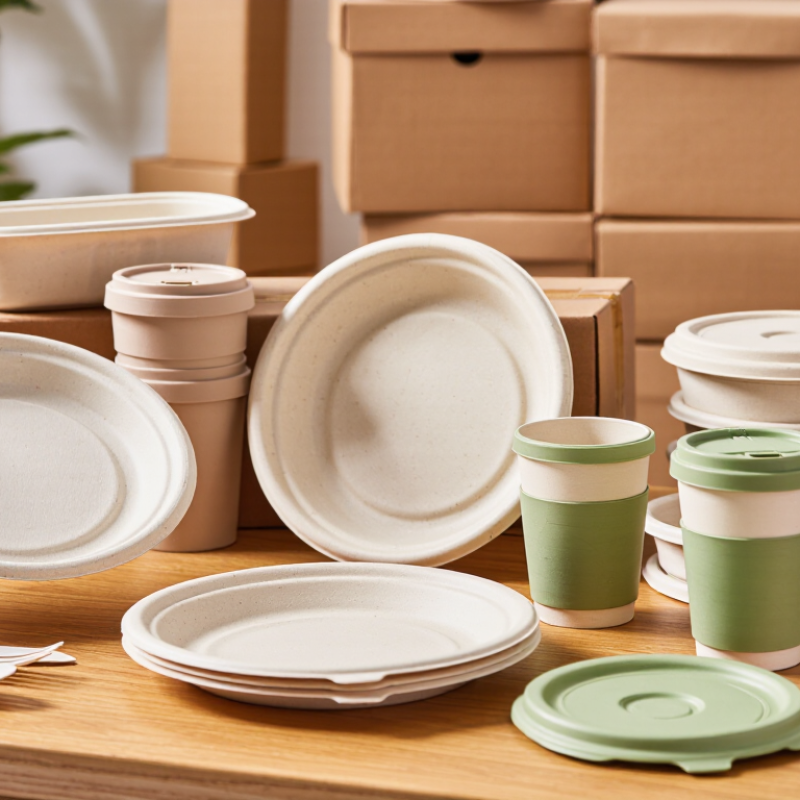
China has become a major sourcing base for Straw Tableware Tableware, especially products made from wheat straw, rice straw, bamboo fiber, and other plant-based materials. Global buyers now look beyond price. They inspect molding quality, food-contact documentation, factory consistency, and realistic end-of-life claims. A plate should feel firm in the hand, not bend beside hot noodles. A container should close cleanly after a long shipment.

Professor Richard Thompson OBE, a respected marine pollution researcher, has offered a useful reminder: “The issue is not plastics per se, but what we do with them.” His point also applies to alternative tableware. Bio-based materials are not automatically sustainable. Buyers must examine agricultural residue sources, additives, production energy, packaging, and disposal conditions. The label alone proves little.

This guide introduces leading Chinese Straw Tableware Tableware manufacturers for international buyers. It considers factory experience, product range, customization, certifications, export capability, and quality-control practices. Some suppliers specialize in molded fiber plates. Others focus on lunch boxes, cups, cutlery, or private-label programs. Their strengths are not identical.

The market is not perfectly simple.

A polished sample can hide uneven batch quality. A low quotation can exclude testing, tooling, or export packaging. Experienced buyers request samples from several production lots and test them with oily, hot, and refrigerated foods. They also confirm whether “compostable” means industrial composting or home composting. That distinction matters. This overview aims to support careful comparison, while recognizing that supplier claims still require independent verification.
China Top Straw Tableware Manufacturers for Global Buyers

China’s Straw Tableware Manufacturing Industry at a Glance

China’s straw tableware manufacturing industry has grown from small molded-fiber workshops into a structured export sector. Many producers use wheat straw, rice straw, or other agricultural residues. These materials are cleaned, pulped, blended, and formed under controlled heat and pressure.

Factory experience matters here. Fiber length affects strength. Moisture affects molding stability. Excess moisture can cause warping during storage or shipping. Skilled technicians adjust pressure, temperature, and drying time for each product shape. Common items include plates, bowls, trays, and takeaway containers.

Quality control usually covers dimensions, surface finish, odor, leakage, and stacking performance. Responsible manufacturers also maintain batch records and conduct food-contact testing through qualified laboratories. Buyers should request current test reports, material specifications, and production samples before placing large orders. Certifications alone are not enough.

Small details often reveal production discipline. Check whether rims feel even, whether bowls remain stable with hot food, and whether cartons include clear batch information. Packaging should protect products from humidity and compression. A clean sample can still hide inconsistent mass production. That risk deserves attention.

The industry is capable, but not flawless. Some factories have strong molding technology yet weak documentation. Others offer attractive pricing but limited process control. Clear specifications, regular inspections, and realistic performance tests help global buyers choose suppliers with greater confidence.

Main Materials and Product Types for Global Buyers

China Top Straw Tableware Manufacturers for Global Buyers

Main Materials and Product Types for Global Buyers

Straw tableware is rarely made from straw alone. Wheat-straw fiber is commonly blended with polypropylene or other food-contact polymers. This blend improves strength, moisture resistance, and shape retention. Buyers should request the exact formula, not only the word “eco-friendly.”

Bagasse, bamboo fiber, rice husk, and recycled paper offer different performance profiles. Bagasse feels naturally matte and suits plates or takeaway boxes. Bamboo fiber creates a firmer surface, but quality can vary between batches. Rice-husk products may show small color particles. That is normal, though some buyers may see it as a defect.

Choose products around actual use. Plates and bowls need stable rims and even bases. Forks and spoons should resist bending during normal meals. Cups require reliable sealing around the lip. Lunch boxes and trays need consistent wall thickness, especially near hinges and corners. Small details matter.

Factory samples deserve practical testing. Fill a bowl with hot soup, stack several plates, and check for warping. Inspect odors after washing. Test printed surfaces for rubbing and fading. Specifications can look perfect on paper. Real handling may disagree. Heat resistance, dishwasher performance, and compostability should be verified through suitable laboratory reports for the destination market. One weakness remains easy to miss: natural fibers can absorb moisture when storage conditions are poor. Expect some variation in color and texture, then define acceptable limits before production.

China Straw Tableware for Global Buyers: Materials and Product Types

Typical product specifications commonly requested in international foodservice and catering procurement.

The chart compares representative serving capacity or diameter ranges for common straw-tableware product types. Actual specifications vary by mold, material blend, and buyer requirements.

How China’s Leading Manufacturers Manage Production Quality

China Top Straw Tableware Manufacturers for Global Buyers

How China’s Leading Manufacturers Manage Production Quality

Reliable straw tableware production starts with controlled raw materials, not attractive packaging. Factories should record fiber origin, moisture content, pulp consistency, and storage conditions. Excess moisture can cause warping, odor, or weak edges after molding. Small details matter.

Production teams usually control forming temperature, pressing pressure, drying time, and trimming accuracy. Operators inspect rims, thickness, surface particles, and deformation during each batch. Food-contact testing should cover migration, heavy metals, microbial safety, and PFAS where destination rules require it. Buyers should request recent laboratory reports, not only factory declarations.

The ISO Survey 2023 reported more than 1.2 million ISO 9001 certificates worldwide. Certification supports a quality system, but it does not guarantee every shipment. Batch codes, retained samples, calibration records, and corrective-action logs provide stronger evidence. A practical audit should trace one carton back to its raw material records.

UNEP’s 2023 Turning off the Tap report estimates that plastic pollution could fall by 80% by 2040 through system-wide changes. That pressure increases demand for credible fiber-based alternatives. However, “plant-based” does not automatically mean safe or compostable. Claims need test evidence.

Factories still make mistakes. A rushed drying cycle may pass visual inspection but fail during transport. Independent pre-shipment testing remains valuable, especially for new suppliers.

Certifications, Safety Standards, and Export Compliance

China’s straw tableware sector serves buyers seeking lightweight, plant-based food-contact products. Certification should match the destination market, not merely the factory’s sales brochure. Ask for current food-contact test reports covering migration, heavy metals, microbial limits, and restricted chemicals. Testing should use the final product, including coatings, inks, and adhesives.

A reliable manufacturer can provide a quality-management certificate, batch records, raw-material declarations, and traceability codes. These documents support due diligence, but they do not replace independent laboratory testing. Export compliance also requires accurate product descriptions, tariff classification, packaging details, and destination-specific labeling. Requirements may differ for plates, bowls, trays, and disposable cutlery. Check the rules before placing a large order. Small details matter.

Tips: Request samples from three production batches. Compare color, odor, thickness, and edge strength. Verify the laboratory’s accreditation and report dates. Ask whether testing covers the exact export model. Do not assume a factory certificate covers every product. That mistake is common. Keep purchase specifications in writing, including moisture limits, carton markings, and acceptable defect levels. A pre-shipment inspection can reveal warped rims or weak seams, although it cannot replace regulatory approval. Review the documents carefully. Some paperwork looks complete but lacks a clear product scope.

How to Select the Right Chinese Straw Tableware Supplier

China Top Straw Tableware Manufacturers for Global Buyers

Selecting the right Chinese straw tableware supplier requires more than comparing unit prices. OECD’s Global Plastics Outlook reports that packaging represented about 40% of global plastic waste in 2019. This increases demand for responsibly sourced alternatives, but “straw-based” does not automatically mean safe or compostable. Ask for the exact material composition, additives, coatings, and intended disposal conditions. A supplier should provide food-contact migration reports from accredited laboratories. Check whether testing matches your destination market.

Request production samples from different batches. Inspect the rim, surface texture, odor, moisture resistance, and packaging protection. Small defects often appear after long ocean transport. Review factory records, quality-control procedures, traceability, and corrective-action reports. Certifications can support confidence, but certificates alone are not proof of consistent performance. An on-site audit or independent inspection is wiser for larger orders. Still, audits can miss problems between visits.

Discuss mold ownership, minimum order quantities, lead times, and replacement terms in writing. Ask how quickly the factory can reproduce the same color and dimensions. Sustainable materials may vary slightly. That is normal, but uncontrolled variation is not. Suppliers should also explain fiber sourcing and wastewater management. UNEP’s 2023 report emphasizes reducing unnecessary single-use packaging, so buyers should evaluate product durability before claiming environmental benefits. A cheaper quotation may become expensive after leakage, rejected shipments, or relabeling. Compare total landed cost, not just the factory price.

China Top Straw Tableware Manufacturers for Global Buyers - How to Select the Right Chinese Straw Tableware Supplier

Evaluation Dimension Relevant Product or Material Recognized Requirement or Standard Documents Buyers Should Request Recommended Acceptance Check Why It Matters
Material identification Molded fiber, paper, PLA, PP, or blended materials The declared material must match the actual product composition Material specification, formulation statement, and independent composition test Confirm that the material, additives, coatings, and product description are consistent “Straw” may refer to a plant-fiber feedstock rather than a single standardized material
Food-contact compliance Plates, bowls, trays, cups, lids, and cutlery Applicable destination-market food-contact laws, such as EU Regulation (EC) No. 1935/2004 or applicable U.S. FDA requirements Declaration of compliance, food-contact test reports, and migration-test conditions Reports must identify the same product, material, color, coating, and intended food-contact conditions A general certificate may not cover the exact item or destination market
Chemical safety Printed, coated, dyed, or grease-resistant tableware Migration and restricted-substance requirements applicable to the destination country Overall migration, specific migration, heavy-metal, PFAS, and restricted-substance test results where applicable Check test scope, detection limits, test date, laboratory accreditation, and sample identity Coatings, inks, adhesives, and additives can affect compliance even when the base fiber is acceptable
Heat and temperature performance Hot-food containers, takeaway bowls, cups, and microwave-use products Performance must be validated for the stated hot-food, microwave, freezer, or oven conditions Supplier specification, heat-resistance test, microwave test if claimed, and usage instructions Conduct a filled-product test using the buyer’s actual food type, temperature, and contact time Temperature resistance varies by material, wall thickness, moisture, coating, and product design
Leak, grease, and moisture resistance Soup bowls, sauce containers, oily-food trays, and beverage cups Performance should be verified under the intended liquid, oil, temperature, and storage conditions Water-resistance and oil-resistance test data, coating specification, and sample evaluation record Set a buyer-defined holding time and inspect for leakage, softening, delamination, or deformation Fiber products can respond differently to water and oil; one test does not represent all foods
Dimensional accuracy Custom sizes, compartment trays, lids, and stackable products Agreed drawing tolerances and approved golden sample Technical drawing, tolerance table, approved sample, and inspection report Measure length, width, height, rim fit, wall thickness, nesting, and usable volume Small dimensional changes can affect lid compatibility, packing efficiency, and filling-line performance
Mechanical strength Plates, trays, clamshells, and stackable bowls Buyer-defined load, flex, stacking, and drop requirements Compression or load test results, drop-test procedure, and quality-control limits Test empty and filled products after conditioning at expected storage and use conditions Strength depends on geometry, fiber density, moisture, wall thickness, and stacking design
Manufacturing quality system Suppliers producing repeated export orders ISO 9001, ISO 22000, HACCP, or an equivalent documented system may support risk control; certification scope must be checked Valid certificate, audit report, process-flow chart, inspection plan, and corrective-action records Verify certificate holder, factory address, scope, validity, and issuing certification body A certificate is useful only when its scope covers the actual production site and product category
Environmental claims Compostable, recyclable, biodegradable, or plastic-free products Claim must match the relevant market rules and test standard; industrial compostability is different from home compostability Third-party certification, test report, material declaration, and disposal instructions Confirm the exact claim, certification scope, test method, logo authorization, and required disposal conditions “Biodegradable” and “compostable” are not interchangeable claims
Traceability and batch control Private-label and recurring production orders Documented lot identification from raw material receipt to finished-goods shipment Batch coding method, raw-material records, production records, retention-sample policy, and recall procedure Confirm that a finished carton can be traced to production date, line, materials, and inspection results Traceability reduces the impact of complaints and supports targeted corrective action
Production capacity Standard products and large-volume custom programs Capacity should be demonstrated for the specific product, tooling, shift pattern, and packaging format Capacity statement, machine list, recent production plan, tooling availability, and backup-plan details Compare confirmed monthly output with forecast demand and required delivery window Nominal machine capacity may not equal available capacity after changeovers and quality losses
Sampling and pre-shipment inspection All export orders, especially custom designs Inspection plan based on agreed specifications and an appropriate sampling method Pre-production sample, production sample, inspection checklist, and final inspection report Approve a golden sample and define acceptable limits for defects, dimensions, odor, color, and packaging Clear inspection criteria prevent disputes after shipment
Packaging and logistics Nested tableware, retail packs, and export cartons Packaging must protect hygiene, product integrity, and required transport markings Carton dimensions, packing quantity, pallet plan, barcode artwork, carton-strength data, and loading photos Check carton count, gross weight, pallet utilization, moisture protection, and shipping marks Efficient nesting and packaging can materially affect freight cost and damage rates
Commercial and communication reliability Samples, quotations, tooling, repeat orders, and after-sales service Written specifications, Incoterms, payment terms, lead-time commitments, and change-control process Formal quotation, pro forma invoice, signed specification, tooling agreement, and complaint-response procedure Score response speed, quotation completeness, sample consistency, corrective-action quality, and delivery performance The lowest unit price does not necessarily provide the lowest total landed cost or supply risk
Buyer note: Compliance requirements vary by destination country, product material, food type, temperature, and intended use. Always validate the exact finished product and its accessories, including coatings, inks, adhesives, lids, and packaging.