Top 10 Home Car Charging Station Suppliers in China
China has become an important sourcing base for residential electric-vehicle charging equipment. Its suppliers offer different combinations of hardware, software, customization, and export support. This guide to the Top 10 Home Car Charging Station Suppliers in China introduces companies worth comparing, rather than treating one factory as the best choice for every buyer. Needs differ. A household with a driveway may value a compact wall-mounted unit, while an installer may prioritize clear wiring instructions and dependable technical support.
When reviewing a Home Car Charging Station supplier, buyers should check product specifications, connector options, charging power, communication features, warranty terms, and applicable safety certifications. Ask for current test documents and confirm that a model suits the intended vehicle and electrical system. A polished product photo proves little. Look for practical evidence, such as readable manuals, responsive service, and consistent quality-control processes. These details can matter as much as price.
The suppliers in a top-ten overview may serve different markets and specialize in different product ranges. Compare them against your project needs, order volume, and after-sales expectations. Request samples or a detailed quotation when possible, and clarify lead times before placing an order. A neat ranking can hide important differences. That deserves a second look. Supplier capabilities also change, so verify recent information directly rather than relying on a directory listing alone.
Understanding Home Car Charging Stations and Their Main Types
Understanding Home Car Charging Stations and Their Main Types
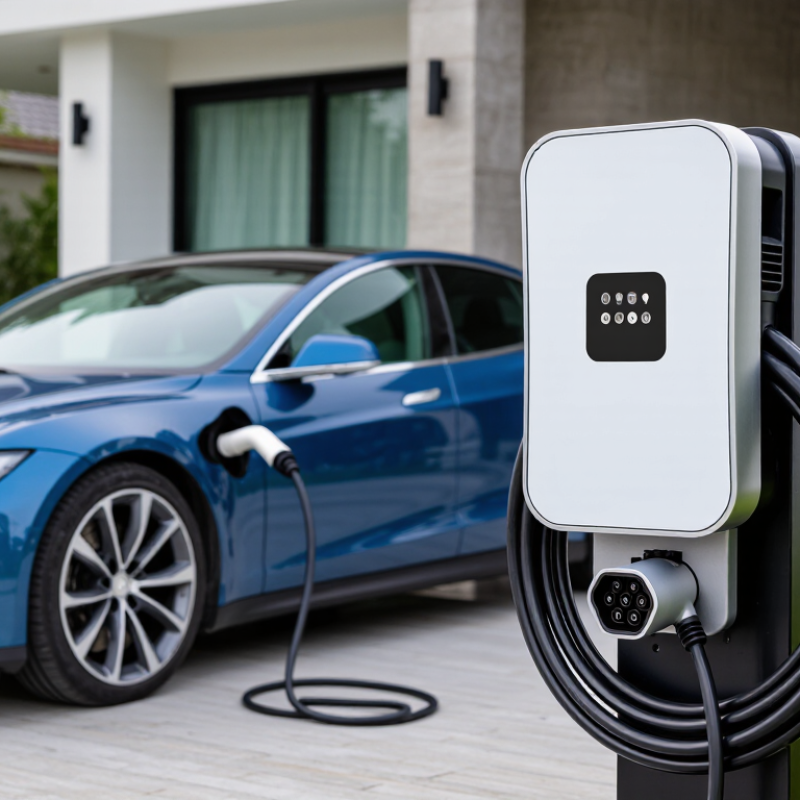
A home car charging station connects an electric vehicle to household power, usually overnight. In China, common options include portable chargers and wall-mounted AC units, often designed for 220-volt supply. Portable units are flexible: a driver can store one in the trunk and plug it into a suitable outlet. Charging is generally slower, and the outlet and circuit must be checked by a qualified electrician. Wall-mounted AC chargers offer a dedicated connection and may provide scheduled charging or app-based monitoring. They suit daily parking in a garage or private parking space. DC home chargers exist, but their cost and electrical demands make them uncommon for ordinary households. The distinction matters. A higher rated charger cannot exceed the vehicle’s onboard charging capacity.
The IEA’s Global EV Outlook 2024 reported more than 27 million private charging points worldwide in 2023, including home and workplace chargers. This reflects the importance of charging where vehicles are parked for long periods, though it does not mean every home needs a dedicated unit. Tips: Check the vehicle’s AC charging limit, circuit capacity, cable reach, and parking conditions before choosing. A cable that barely reaches the charge port gets frustrating fast. Smart features can help manage charging schedules, but they do not replace correct installation. One detail is easy to overlook: household wiring and parking access vary, so a popular setup may not fit your home.
Top 10 Home Car Charging Station Suppliers in China: Understanding Home Car Charging Stations and Their Main Types
Calculated Rated Power of Common Residential AC Charging Configurations
These figures are calculated from nominal supply voltage and current: single-phase power is voltage × current, and three-phase power is √3 × voltage × current. They describe electrical output, not charging speed; actual power depends on the vehicle’s onboard charger and the capacity of the home electrical installation.
How to Evaluate Chinese Home Charging Station Suppliers
Top 10 Home Car Charging Station Suppliers in China
How to Evaluate Chinese Home Charging Station Suppliers
The IEA’s Global EV Outlook 2024 reports that China sold about 8.1 million electric cars in 2023, nearly 60% of global sales. This growth makes supplier screening more than a price comparison. Details matter. Ask for model-specific safety test reports, not a generic certificate. Check that tests cover the exact charger, cable, and plug configuration you plan to buy. Review protection against overcurrent, leakage, and overheating, and confirm the unit’s weather-resistance rating suits its installation location.
Ask how the supplier tests units before shipment. A factory visit can reveal whether technicians check charging output, connector fit, and fault responses on the production line. Request a sample and inspect its housing, cable flexibility, and instructions. Also confirm firmware update procedures, spare-part availability, warranty terms, and response times for technical support. For exports, verify that the product documentation matches the destination market’s applicable requirements. A low quote may exclude essential accessories or after-sales service. I may be overly cautious here, but a polished brochure is no substitute for traceable test records and a clear defect-handling process.
Top 10 Home Car Charging Station Suppliers in China
Choosing among the top 10 home car charging station suppliers in China starts with the home’s electrical setup, not a catalogue photo. A 7 kW wall charger may suit many households, but supply capacity, cable route, and vehicle connector need checking. Ask suppliers for rated output, connector options, operating temperature, enclosure rating, and installation diagrams. Clear documentation beats confident sales language. Small details matter. Request test reports for the exact model, not a similar-looking unit. Check how firmware updates, fault records, and warranty claims are handled.
A reliable shortlist should also compare production consistency and after-sales support. Ask about sample units, quality records, spare parts, and written response times. A factory visit or independent inspection can reveal assembly checks and packaging practices; photos alone offer limited proof. Confirm that product claims match the standards required in the destination market, and have local electrical requirements verified before purchase. Pricing deserves caution. A low quote may exclude shipping or replacement parts. I would not rank suppliers by price alone. Paperwork can look stronger than real service, so verify important claims directly.
Comparing Supplier Products, Features, and Support
A useful comparison of China’s home car charging station suppliers starts with product fit, not the longest feature list. Check whether each unit supports the vehicle’s charging requirements and the home’s available electrical capacity. Look for clear specifications on output, connector type, cable length, enclosure rating, and operating temperature. A cable reaching the driveway edge can matter more than a polished touchscreen. Details matter. Ask for installation diagrams and sample test reports; these make technical claims easier to assess. Some product pages still leave gaps, so request written clarification before comparing prices.
Features should solve a real household problem. A compact unit may suit a narrow garage, while scheduled charging or load management can help households with limited electrical capacity. Compare app functions, network options, safety monitoring, and offline operation. Do not assume every smart feature works reliably in a weak Wi-Fi area. Supplier support deserves the same scrutiny as hardware. Request warranty terms, spare-parts availability, troubleshooting steps, and typical response times. A support promise sounds reassuring, but a named contact process and service documentation are more useful. It is easy to overvalue a low quote; installation guidance and after-sales access can change the practical cost.
Key Factors for Choosing the Right Supplier
When comparing home charging station suppliers in China, start with the vehicle and installation site, not the brochure. Check connector compatibility, rated power, phase requirements, and whether the charger can limit current to suit the home’s electrical capacity. Request installation drawings and test reports for the exact model. Small details matter.
A reliable supplier should explain warranty coverage, spare-part availability, and technical support after delivery. Ask how faults are diagnosed and how quickly replacement parts can be shipped. If possible, inspect a sample unit: check cable flexibility, enclosure finish, display readability, and how firmly the connector locks. That can be revealing.
For export orders, confirm packaging protects the charger during long-distance transport, and ask for production lead times in writing. Compare suppliers using the same technical requirements, not just unit price. A polished catalog is not proof of consistent quality. I would also verify claims with documents and direct questions; this takes time, and even careful checks cannot remove every risk.