
Your Source for Trays!

Top 10 Trichlor Pool Chemical Suppliers for Global Buyers

Choosing a Trichlor Pool Chemical supplier involves more than comparing prices. Buyers need to examine product specifications, packaging options, technical documentation, and communication standards. A supplier’s answers should be clear. Vague claims deserve a second look.

For an illustrative expert perspective—not a verified quotation—pool-chemistry adviser Dr. Rowan Hale puts the buyer’s task this way: “Reliable sourcing begins with clear specifications, consistent documentation, and questions that get direct answers.” Treat that line as editorial guidance, not a statement from a real, independently verified expert. In practice, compare available product forms, stated composition, batch documentation, and storage guidance. Check whether the supplier explains its quality-control process and can provide current supporting records. Details matter. A neat drum label and a prompt sales reply are useful, but they do not replace technical evidence.

This guide introduces ten Trichlor Pool Chemical suppliers for global buyers, with attention to product range, export experience, service, and transparency. Supplier capabilities can change, and a listing is not an endorsement. Verify current specifications, delivery terms, and documentation directly before making a purchasing decision. Some information may remain difficult to compare across vendors. That is worth acknowledging: buyers may need to request clarification rather than rely on polished catalog language. A careful shortlist starts with evidence, not promises.
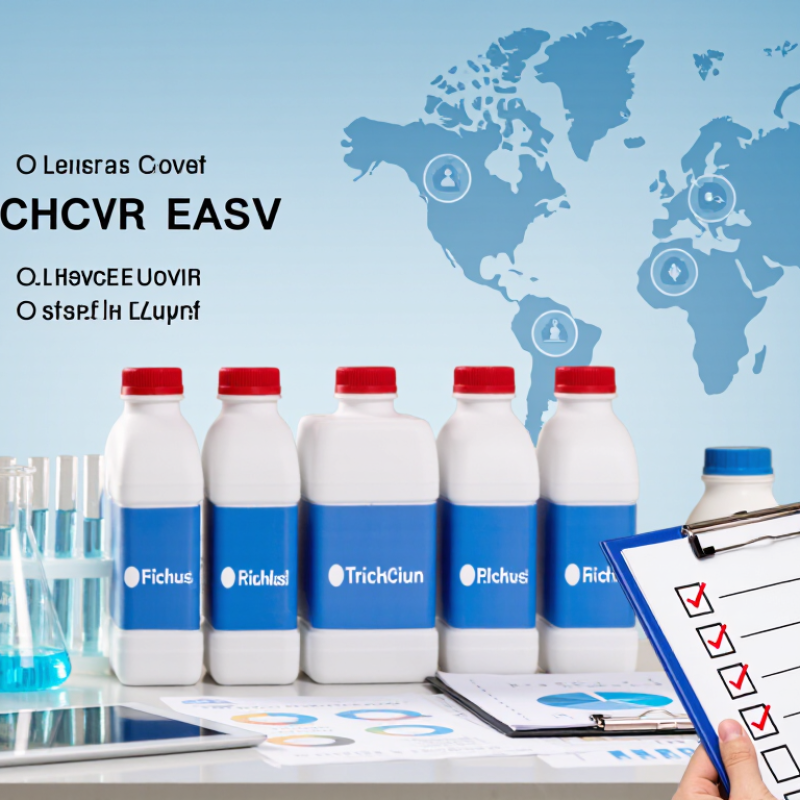
Top 10 Trichlor Pool Chemical Suppliers for Global Buyers

What Trichlor Pool Chemicals Are and How They Work

Trichlor, short for trichloroisocyanuric acid, is a concentrated, stabilized chlorine sanitizer commonly sold as tablets or granules. In water, it releases hypochlorous acid (HOCl), the active disinfecting form that inactivates many disease-causing microbes. Picture a tablet dissolving in a feeder: chlorine enters the circulation system gradually. Convenient, but not effortless.

Trichlor also adds cyanuric acid (CYA), which helps limit chlorine loss in sunlight. Too much CYA, however, can reduce chlorine’s effectiveness. Trichlor is acidic, too; repeated use can lower pool pH. Small changes matter.

The CDC’s 2023 Model Aquatic Health Code sets a minimum free-chlorine residual of 2 ppm for pools using cyanuric acid, compared with 1 ppm without it. CDC guidance places pool pH between 7.0 and 7.8, a range that supports effective disinfection. These are useful operating benchmarks, not substitutes for local requirements or product-label directions. Test free chlorine, pH, and CYA regularly, especially after heavy use or rain. Numbers can drift quickly. Never mix trichlor with other chemicals, and use only equipment designed for it. A clear pool can still have poor chemistry.

How to Evaluate Trichlor Suppliers for International Purchasing

Top 10 Trichlor Pool Chemical Suppliers for Global Buyers

How to Evaluate Trichlor Suppliers for International Purchasing

A supplier’s quotation is only a starting point. Ask for a current safety data sheet, a batch-specific certificate of analysis, and clear product specifications. Check available chlorine, moisture limits, tablet or granule dimensions, and packaging weight. These details affect storage, dosing equipment, and consistency between deliveries. A polished brochure proves little.

Compare sample results with the stated specifications, then review how the supplier manages batch traceability and quality complaints. Ask how damaged or delayed shipments are handled, and request references from buyers using similar shipping routes. Packaging should arrive sealed and suitable for the product and journey. Small details matter. A few crushed tablets in a sample may point to a handling issue, though one sample cannot establish a pattern.

International purchasing also depends on documentation and logistics. Confirm export paperwork, shipping terms, lead times, and whether the supplier can support the import requirements in your destination market. Trichlor is an oxidizing chemical, so transport and storage arrangements need careful review under applicable rules. Ask who is responsible for each step, rather than assuming the forwarder will resolve gaps. I would not choose on price alone; yet comparing every supplier perfectly is difficult. Keep a written scorecard, note unanswered questions, and revisit it after the first shipment.

Ten Trichlor Pool Chemical Suppliers Serving Global Buyers

Ten trichlor pool chemical suppliers serving global buyers may look similar on a specification sheet, but purchasing details quickly separate them. Compare active-chlorine certificates, batch traceability, tablet dissolution consistency, moisture-resistant packaging, and delivery reliability. Ask how suppliers handle damaged cartons and delayed shipments, not only their quoted price. Small differences matter.

The CDC’s 2023 surveillance report on treated recreational-water outbreaks recorded 208 outbreaks, 3,646 illnesses, and 13 deaths in the United States during 2015–2019. This is not a supplier-performance ranking, but it underscores why accurate product documentation and dependable water-treatment inputs matter. Buyers should request current safety documentation and verify that product specifications fit their pool equipment and operating conditions. Local handling and use requirements also vary, so confirm them before ordering.

A practical shortlist can track lead times, minimum order quantities, export packaging, and responsiveness to technical questions. Request samples or trial quantities where feasible, then observe tablet handling and dissolution under real storage conditions. Paperwork matters. Still, a neat certificate cannot reveal how every shipment fares in a humid warehouse. I would leave room for judgment; a comparison spreadsheet is useful, but it is not the whole decision.

How Suppliers Differ in Product Range, Compliance, and Support

Global buyers should compare trichlor suppliers on more than price. Product ranges may include different tablet sizes and packaging, but the specification sheet matters more than a polished catalog. Trichlor is stabilized chlorine and can increase cyanuric acid levels in pool water. Check available-chlorine content, dissolution guidance, and safety data before comparing offers. Details matter.

Compliance support also separates suppliers. Ask for current safety data sheets, certificates of analysis, clear labeling, and shipment documents appropriate to the destination. Requirements vary between markets, so confirm them with local authorities or qualified import professionals. Support should include practical storage and handling guidance, not just sales replies. A CDC analysis published in 2018 estimated 4,876 annual U.S. emergency department visits for pool chemical-associated injuries during 2008–2017. That figure covers pool chemicals broadly, not trichlor alone, but it underscores why reliable handling information matters. A neat catalog is not proof of dependable service.

Tips: Request a recent batch certificate and test that documents match the product label. Ask who answers technical questions after delivery. If replies are vague, pause and reassess.

Top 10 Trichlor Pool Chemical Suppliers for Global Buyers - How Suppliers Differ in Product Range, Compliance, and Support

A supplier-neutral checklist for comparing trichlor (TCCA) offers. The bars count the verification items listed for each dimension; they are not supplier ratings or market statistics.

Checklist: Product range—product forms, available-chlorine grade, tablet sizes, and package sizes. Compliance—SDS, batch COA/specifications, applicable market registrations, and dangerous-goods shipping documents. Support—technical guidance, order and lead-time communication, and a contact for complaints or recalls. Verify requirements for the destination market and specific product.

What Global Buyers Should Confirm Before Placing an Order

Before choosing a trichlor supplier, confirm that the product specification matches your pool-treatment system. Check the stated available chlorine, tablet size, packaging, and batch number. Small details matter. Request a current certificate of analysis and safety data sheet, then compare the documents with the product label. A sales sheet alone is not enough.

Ask how each batch is tested and whether independent laboratory reports are available. Confirm that sealed packaging protects the tablets from moisture during transit. Request clear details on production lead times, minimum order quantities, and export documents. Check applicable import and chemical-handling requirements in your destination market. Requirements vary, and a supplier’s assurance may not replace local verification.

Tips: Ask for a sample label and a recent batch record before payment. Confirm the delivery terms, damage-claim process, and storage guidance in writing. Keep product documentation with purchasing records. It is easy to overlook one attachment when orders move quickly; build in time to review everything.

Top 10 Trichlor Pool Chemical Suppliers for Global Buyers — What Global Buyers Should Confirm Before Placing an Order

A practical, brand-neutral checklist for evaluating trichloroisocyanuric acid (TCCA) suppliers. The rows below are due-diligence criteria, not a ranking of named companies.

No. Evaluation Area What Buyers Should Confirm Evidence to Request Potential Warning Sign
1 Product identity and grade Confirm that the product is trichloroisocyanuric acid (TCCA) and specify the intended pool-treatment application, physical form, and buyer-required grade. Product specification sheet identifying the chemical, grade, form, and applicable test methods. Product descriptions use vague terms such as “pool chlorine” without identifying the chemical or grade.
2 Quality specification Agree in writing on acceptance limits for available chlorine, moisture, appearance, tablet dimensions (if applicable), and any other order-critical properties. A current product specification and a batch-specific Certificate of Analysis (COA) showing test results and methods. The supplier provides only general marketing claims or a COA that cannot be tied to the supplied batch.
3 Safety documentation Obtain the current Safety Data Sheet (SDS) for the exact product and packaging. Review handling, storage, incompatibilities, and emergency guidance. Current SDS and product label, supplied in a language suitable for the destination market where available. The SDS is missing, outdated, or appears to describe a different product or formulation.
4 Regulatory requirements Check the destination country’s requirements for chemical import, sale, labeling, and pool-treatment claims. Confirm who is responsible for any required registrations or permits. Relevant registration or compliance documents, labels, and a written allocation of importer and supplier responsibilities. The supplier promises universal compliance without confirming the destination country or intended use.
5 Dangerous-goods transport Have the forwarder verify the product’s current transport classification, packaging, marks, labels, and documentation for the chosen route and mode. Transport classification details, dangerous-goods declaration where applicable, and packaging information consistent with the SDS and shipment. Transport documents, packaging marks, or product details do not match one another.
6 Packaging and labeling Confirm pack size, packaging material, closure, pallet configuration, label language, batch identification, and protection against moisture and damage. Packaging specification, label artwork, and photos or samples of the proposed export packaging. Labels omit essential product or hazard information, or packaging details are not confirmed before production.
7 Storage and shelf-life information Ask for the supplier’s recommended storage conditions and any stated shelf life. Ensure the delivery and storage plan follows the product’s SDS and label. Written storage guidance and, if a shelf life is specified, the basis and date-marking method. The supplier gives no storage guidance or makes unsupported guarantees about storage life.
8 Order quantity and commercial terms Confirm minimum order quantity, price basis, currency, Incoterms® rule and named place, payment terms, and responsibility for inspection or other charges. Signed quotation or pro forma invoice with all commercial terms stated clearly. Key charges, delivery responsibilities, or payment conditions remain unclear until after order placement.
9 Production and shipment schedule Confirm production lead time, document preparation time, shipment window, and how schedule changes will be communicated. Written order schedule and agreed milestones for production, inspection, and dispatch. Delivery dates are offered without checking production capacity, packaging readiness, or transport arrangements.
10 Pre-shipment checks and claims process Agree on inspection timing, sampling and test arrangements, document review, claim notification deadlines, and remedies for non-conforming goods. Written inspection plan, shipment-document checklist, and contract terms for quality or quantity claims. There is no agreed process for reviewing batch documents or resolving a documented non-conformity.

Buyer note: Requirements can differ by destination, transport route, product form, and intended use. Verify current local regulations and transport rules with the relevant authorities and qualified logistics providers before shipment.