What Are the 2026 Best Plastic Stackable Bins?
What Are the 2026 Best Plastic Stackable Bins?
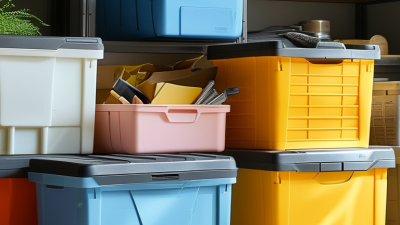
Choosing the best plastic stackable bins in 2026 requires more than checking size and price. A reliable bin should remain stable under weight, fit its intended shelf, and support quick access. In a busy workshop, that means a reinforced rim, smooth interior, and label area can matter more than bright colors. In a pantry, transparent walls may save several minutes during weekly restocking.
Storage consultant Lisa Zaslow emphasizes, “The best organizing system is the one that makes the right choice easy.” Her observation applies directly to stackable bins. A strong design should make contents visible, lifting simple, and daily routines less frustrating. It should not create a tower that collapses when one container is removed.
Real performance also depends on details. Check the plastic thickness, base strength, handle shape, and stacking alignment. Look for bins that resist bending when filled with tools, craft supplies, packaged goods, or small parts. Some models appear sturdy online but flex noticeably in the hand. That difference matters.
Not every excellent bin needs a premium price. Still, the cheapest option may crack in a cold garage or develop warped lids after repeated use. That is an easy detail to overlook. This guide compares leading 2026 options through practical criteria, including durability, capacity, accessibility, cleanability, and space efficiency. The results may not suit every household or warehouse. Storage needs are rarely identical. The best choice is the bin that performs reliably in your actual space, not merely the one with the most impressive specifications.
What Defines a High-Quality Plastic Stackable Bin in 2026
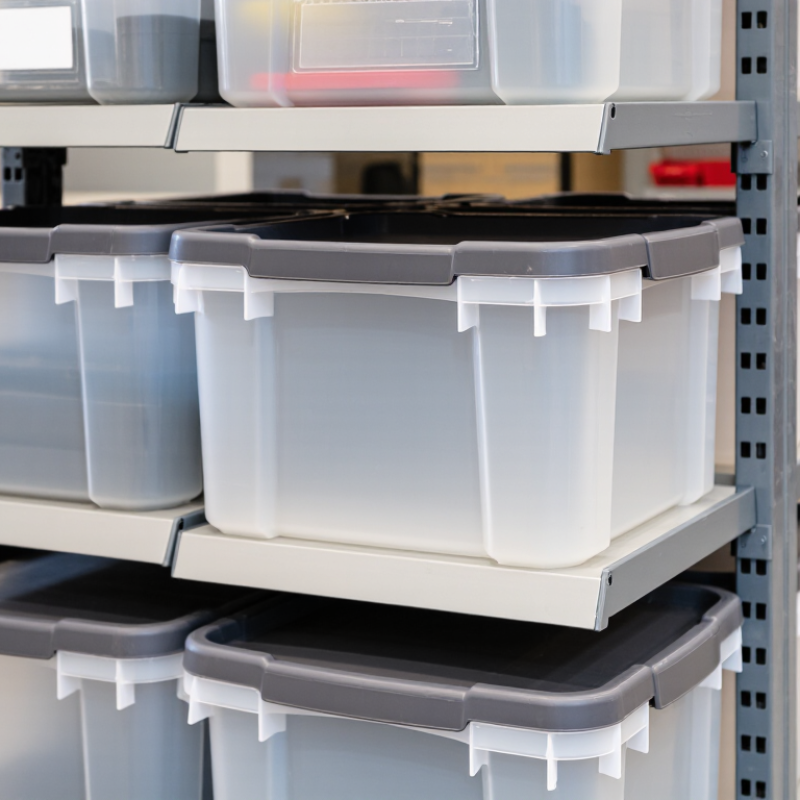
What makes a plastic stackable bin high quality in 2026? In practice, it starts with material strength, safe design, and consistent manufacturing. A reliable bin should resist cracking when loaded with books, tools, or folded clothing. Its walls should flex slightly, not snap under pressure. Look for reinforced rims, smooth seams, and a flat base that stays stable on shelving. These details matter during daily handling, especially in garages, warehouses, and small apartments. Clear or semi-transparent plastic also helps users identify contents without opening every container. That saves time.
Good stackable bins need more than impressive weight claims. Test one before buying many. Place a realistic load inside, stack two or three units, and check whether the lower lid bows. I also inspect the handles with full weight because thin grips can feel secure but fail suddenly. A well-designed lid should close evenly and remain attached during movement. Ventilation may help with ordinary textiles, while a tight fit protects against dust. However, no plastic bin is automatically moisture-proof. This is often overlooked. Temperature changes can also make some plastics brittle, so outdoor storage deserves extra caution. Even high-quality products have limits, and my own first choice is not always the best after repeated use.
Tips: Measure shelf depth before ordering. Leave clearance for handles and lids. Avoid overloading or mixing heavy items with fragile plastic. Label each bin on two sides. Store heavier containers at the bottom, and inspect cracks every few months.
What Are the 2026 Best Plastic Stackable Bins?
A high-quality plastic stackable bin should combine strong material performance, dimensional stability, safe stacking, and resistance to everyday impact. The chart compares typical tensile-strength midpoints for plastics commonly used in storage-bin manufacturing.
Reference values are representative midpoint values from commonly published technical ranges for injection-molded plastics. Tensile strength is measured using standardized plastics testing methods such as ISO 527 and ASTM D638; actual performance varies by grade, wall thickness, temperature, and design.
How to Compare Materials, Sizes, Lids, and Weight Capacities
Choosing the best plastic stackable bin in 2026 starts with material, not color. Polypropylene suits repeated handling and tolerates many household chemicals. High-density polyethylene handles impact and colder storage better. PlasticsEurope’s Plastics—The Fast Facts 2023 reported global plastics production of 400.3 million tonnes in 2022. That scale matters, but recycled content can vary in stiffness and finish. Ask for the exact resin and test results.
Size should match the item and the available shelf depth. Measure the opening, not only the outside walls. A 600-millimeter bin may waste space when stacked beside narrower containers. Clear walls help with visibility, while darker plastic can protect light-sensitive contents. I have learned this the hard way: a perfect footprint still fails when hands cannot reach the bottom.
Lids need careful comparison. Hinged lids save time, but removable lids may stack more efficiently. Check whether the lid locks during movement and stays flat under a loaded bin. Weight capacity requires more than a large printed number. Request ratings for static, stacked, and dynamic loads, including safety factors. ASTM D638 can describe tensile properties, but it does not prove a bin’s real-world capacity. Temperature, uneven floors, and repeated lifting change performance. A 20-kilogram rating may become unsuitable after years of use. Review testing conditions, inspect corners for whitening or cracks, and leave honest space for uncertainty.
Which Plastic Stackable Bins Suit Different Storage Needs
What Are the 2026 Best Plastic Stackable Bins?
The best plastic stackable bin depends on the storage task, not the label. Household users often need clear walls, smooth handles, and medium capacity. These features make seasonal clothing, toys, and pantry supplies easier to identify. Commercial spaces need reinforced rims and stable footprints. Industrial storage demands higher load ratings, temperature tolerance, and resistance to oils or moisture.
Mordor Intelligence’s 2024 plastic storage container analysis separates household, commercial, and industrial demand. That distinction matters because one bin rarely suits every environment. The U.S. Environmental Protection Agency reported 14.5 million tons of plastic containers and packaging in 2018, with only 2.1 million tons recycled. Choosing durable bins can reduce frequent replacement, although durability alone does not solve recycling problems. That point deserves more thought.
Tips:
Match the bin to its load before buying. Check the base size, wall thickness, and stated weight limit. Use lidded bins for dusty garages, but choose ventilated designs for damp fabrics. Leave a small gap between stacks. Overfilled bins can bow, jam, or tip. Very clear plastic looks convenient, yet scratches can quickly reduce visibility. For narrow shelving, measure depth carefully; a few wasted centimeters can make access frustrating. Label two sides, not just the lid. In real storage rooms, labels face the wrong direction surprisingly often.
How Safety, Durability, and Sustainability Affect Bin Selection
What Are the 2026 Best Plastic Stackable Bins?
The best stackable bin depends on its working environment, not its appearance.
Safety starts with a stable footprint, rounded handles, visible load limits, and lids that cannot fall unexpectedly. In a warehouse, bins should remain aligned when stacked on uneven floors. Their edges should resist sudden cracking during manual handling. Follow the manufacturer’s rated capacity, and never treat a thicker wall as automatic proof of safety. A practical inspection should include brittle corners, warped bases, and slippery surfaces.
Durability also affects operating costs. High-impact polypropylene commonly handles repeated use, while temperature exposure can change its performance. Check impact resistance, hinge cycles, and cleaning compatibility before purchasing large quantities. ISO 4892 testing principles can help evaluate plastic aging under light and weather exposure. However, laboratory results may not match dusty aisles or overloaded shelves. That gap deserves attention.
Sustainability requires more than recycled content.
The OECD’s Global Plastics Outlook estimates that only 9% of global plastic waste was recycled in 2019. A reusable bin can reduce replacement waste, but poor repairability may shorten its useful life. Select bins with replaceable labels, recyclable construction, and documented material content. ISO 14021 supports clearer environmental claims. I would not rank a bin highly based on recycled content alone. A lighter bin may use fewer materials, yet fail sooner. That is an uncomfortable trade-off.
The strongest 2026 choice balances safe handling, verified durability, and long service life.
How to Choose the Best Plastic Stackable Bin for Your Space
What Are the 2026 Best Plastic Stackable Bins?
Choosing the best plastic stackable bin starts with your space, not its color. Measure shelf depth, doorway width, and the clearance above each bin. A 30-liter bin may fit neatly on a shelf but become awkward when lifted. Transparent walls help identify contents quickly. Ventilated sides suit dry household items, while solid walls protect fabrics from dust.
Demand for organized storage keeps growing. The U.S. Census Bureau reported that e-commerce represented 15.6% of total retail sales in the fourth quarter of 2023. That shift increases the need for compact, accessible storage at home and in small workspaces.
The U.S. Environmental Protection Agency reported 14.5 million tons of plastic containers and packaging generated in 2018. Reusable bins can reduce repeated disposable packaging, but only when their hinges, lids, and bases survive regular use.
Check the stated load rating, nesting design, and temperature range. I once selected a tall bin for maximum capacity. It wasted vertical space because the lid could not open fully. The mistake was obvious later.
Tips: Measure the shelf first. Leave two centimeters for handling. Choose reinforced rims for stacking. Keep heavy tools in lower bins. Test one bin before buying several. ISO 4892 guidance also reminds users that sunlight can weaken some plastics over time, so outdoor storage requires UV-resistant material. Ratings can be optimistic. Inspect the base after a few weeks.