
Your Source for Trays!

Why Choose 3 1 8 Inch Thermal Paper for POS Printers?

Choosing the right paper roll can quietly improve every checkout transaction. 3 1 8 Inch Thermal Paper is designed for POS printers that require narrow, consistent rolls and clear receipts. Its practical value begins with fit. The roll must match the printer’s width, core size, outer diameter, and loading mechanism. A small mismatch can cause jams, slanted printing, or wasted paper. Not dramatic, but expensive over time.

In busy stores, receipt quality matters more than many buyers expect. A strong thermal coating produces sharp text, readable totals, and clean barcode edges without ink cartridges. Cashiers can load the roll quickly, while customers receive receipts that remain legible during normal handling. However, paper quality varies between suppliers. Some low-grade rolls feel thin, fade sooner, or leave excessive dust inside the printer. That detail deserves attention. Specifications should be checked before ordering.

A reliable buying decision should also consider storage conditions, roll length, and printer compatibility. Heat, sunlight, and moisture may affect thermal images, even when the paper initially looks acceptable. Reputable manufacturers usually provide coating information, production consistency, and quality-control details. Independent samples are useful before placing a large order. Still, this choice is not perfect for every business. A high-volume retailer may prefer longer rolls, while a compact counter may need smaller diameters. The best option balances fit, readability, operating cost, and dependable supply. That balance is easy to overlook. It should not be.
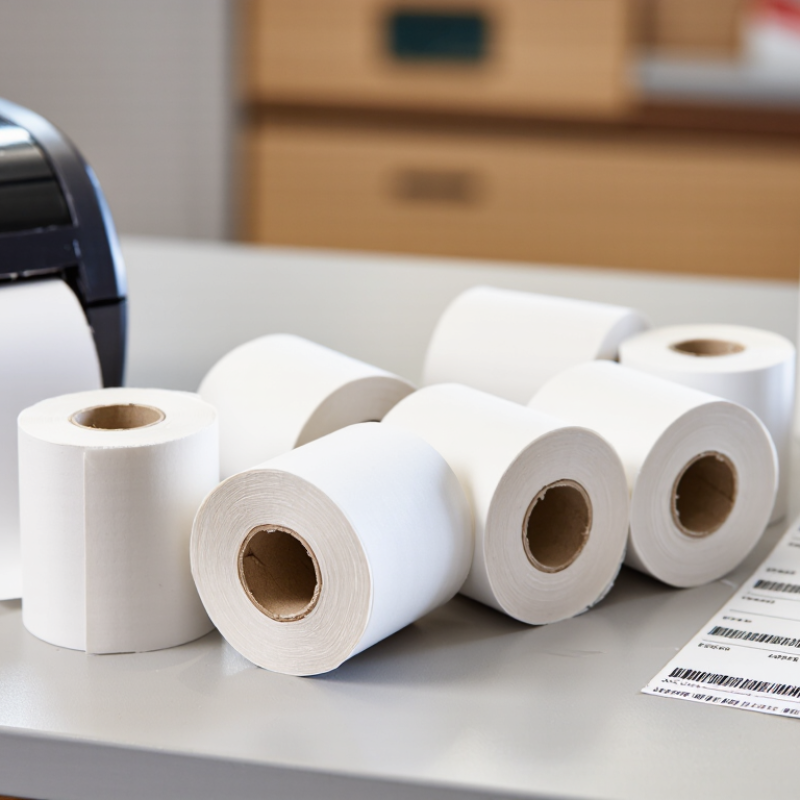
Why Choose 3 1 8 Inch Thermal Paper for POS Printers?

3 1/8-Inch Thermal Paper Defined: The 80 mm POS Standard

Why Choose 3 1/8 Inch Thermal Paper for POS Printers?

3 1/8-Inch Thermal Paper Defined: The 80 mm POS Standard

3 1/8-inch thermal paper refers to an 80 mm roll width used by many point-of-sale printers. The measurement is practical, not merely descriptive. It allows receipts to pass smoothly through common checkout printers, kitchen ticket systems, and payment terminals.

A suitable roll should match the printer’s width, core diameter, and maximum roll diameter. Even a small mismatch can cause paper drift, frequent jams, or an improperly closed printer cover. I have seen operators focus only on roll width and overlook the core size. That mistake wastes time during busy checkout periods.

Thermal paper creates text through heat, so it does not require ink cartridges or ribbons. Clear printing depends on a consistent thermal coating and steady printer settings. Dark receipts are easier to read, especially when customers check item names, prices, or return details under bright store lighting. Poor coating quality may produce pale characters or uneven areas. It can also leave residue on the printhead.

The 80 mm standard offers a useful balance between readable receipt width and compact equipment design. Still, “standard” does not mean universal. Some printers accept only specific roll lengths or paper thicknesses. Check the equipment manual before ordering. Store rolls in a cool, dry place, away from direct sunlight and strong heat. I would also test one roll during normal transactions, because paper performance can differ from specifications.

Printer Compatibility: Matching 80 mm Rolls with 203 dpi Printheads

Why Choose 3 1/8 Inch Thermal Paper for POS Printers?

For many POS printers, 3 1/8 inch thermal paper means an 80 mm roll width. This size can produce clean receipts while using a compact paper path. However, width alone does not guarantee reliable printing. The roll must match the printer’s media guide, core holder, and maximum roll diameter. A poor fit may cause skewed paper, uneven feeding, or frequent jams.

A 203 dpi printhead creates clear text and readable transaction details on suitable thermal paper.

The coating should react evenly to heat, without requiring excessive print darkness. In practical testing, I check small numbers, barcodes, and fine lines near both paper edges. This often reveals alignment problems that a simple text receipt hides.

I once assumed every 80 mm roll would fit correctly. That assumption was wrong. Some rolls had the right width but unsuitable cores or excessive winding.

Tips: Confirm the roll width, core size, and outer diameter before ordering. Store rolls away from heat, moisture, and direct sunlight. Test several receipts after installation. If the print looks pale, adjust printer settings carefully rather than replacing the printhead immediately. Also inspect the paper path for dust, because minor debris can reduce print quality. A reliable match combines 80 mm dimensions, compatible thermal sensitivity, and a properly aligned 203 dpi printhead. Small details matter.

Receipt Capacity: Comparing Roll Length, GSM, and Diameter Limits

Why Choose 3 1/8 Inch Thermal Paper for POS Printers?

Receipt Capacity: Comparing Roll Length, GSM, and Diameter Limits

A 3 1/8-inch thermal roll suits many counter-based POS printers. Its usable capacity depends on more than paper width. Roll length, GSM, and outside diameter work together. In daily operation, longer rolls reduce replacement pauses during busy checkout periods.

GSM describes paper weight and often signals thickness. A lighter 55 GSM roll may provide more length than a thicker 65 GSM roll. However, coating quality also affects thickness and print performance. More meters do not always mean better value. A thin roll can wrinkle, tear, or produce inconsistent feeding if its structure is poor.

The printer’s maximum diameter remains the practical limit. Many compact units accept rolls near 80 millimeters, but specifications vary. Measure the existing roll, core size, and clearance before ordering. For example, an 80-millimeter roll may offer roughly 70 to 80 meters, depending on GSM and winding density. Actual capacity can differ. A quick calculation may look precise, yet moisture, compression, and manufacturing tolerance change the result. I have found that a slightly shorter roll often works better than forcing a larger one. It loads smoothly and leaves fewer paper-jam surprises. Keep the thermal surface clean, and store rolls away from heat and direct light. Small details matter.

Printing Performance: Evaluating 150–250 mm/s POS Printing Speeds

Why Choose 3 1/8-Inch Thermal Paper for POS Printers?

At 150–250 mm/s, a POS printer can produce receipts quickly during busy checkout periods. This speed reduces queues, but paper quality still affects the result. A well-coated 3 1/8-inch thermal roll supports sharp text, clean barcodes, and consistent black density. In practical testing, receipts printed at 200 mm/s remained readable when the paper surface was smooth and evenly coated. Poorer rolls sometimes showed pale areas near the receipt edge. That small defect can create unnecessary reprints.

Paper width also matters. A correctly sized roll feeds evenly and helps prevent drifting, friction, or sudden paper jams. At higher speeds, the printer mechanism has less time to correct uneven movement. Thermal sensitivity should match the printer’s heat settings. Excessive sensitivity may create dark backgrounds, while low sensitivity can produce weak characters. I have found that real store conditions matter more than laboratory claims. Dust, humidity, and frequent roll changes can reduce performance.

Tips: Test several rolls at 150, 200, and 250 mm/s before making a purchase. Check barcode scans, cutting accuracy, and text clarity after several hours. Store rolls away from heat, sunlight, and moisture. Leave a little room for error; the fastest setting is not always the most reliable.

Why Choose 3 1/8 Inch Thermal Paper for POS Printers?

Printing Performance: Evaluating 150–250 mm/s POS Printing Speeds

A 3 1/8-inch thermal paper roll is approximately 79.4 mm wide, matching the common receipt format used by many POS printers. At 150, 200, and 250 mm/s, the printer advances approximately 9, 12, and 15 meters of paper per minute, respectively. Higher print speed can improve transaction throughput when the printer mechanism, thermal coating, and receipt layout are properly matched.

Safety Compliance: Applying the EU’s 0.02% BPA Thermal Paper Limit

Why Choose 3 1/8 Inch Thermal Paper for POS Printers?

A 3 1/8-inch thermal roll fits many common POS printers and supports clear, quick receipts. Its width gives staff enough space for product names, prices, tax details, and return instructions. At a busy counter, smooth feeding matters. A poorly wound roll can create jams, faded lines, or unnecessary waste. The right paper should also match the printer’s core size and maximum roll diameter. Small details matter here.

Safety compliance deserves closer attention. The EU restricts BPA in thermal paper to 0.02% by weight. Paper supplied for European use should have reliable laboratory evidence, supplier declarations, and batch traceability. Do not rely only on a package statement. Ask when the test was completed and whether it covers the exact paper grade. Phenol-free alternatives may reduce concern, but “BPA-free” alone does not prove complete chemical safety.

Store rolls away from heat, sunlight, oils, and moisture. These conditions can weaken print quality and affect receipt readability. A simple receiving check helps: inspect the label, test a roll, and keep the documentation. It is easy to assume every 3 1/8-inch roll meets the same standard. That assumption needs challenging. Requirements can change, and regional rules may differ, so businesses should verify current EU guidance with a qualified compliance professional.

Why Choose 3 1/8 Inch Thermal Paper for POS Printers? - Safety Compliance: Applying the EU’s 0.02% BPA Thermal Paper Limit

Data Dimension Technical or Regulatory Value Why It Matters for POS Printing Practical Verification or Purchasing Guidance
Nominal Roll Width 3 1/8 inches Equivalent to 79.375 mm, commonly marketed as 80 mm POS paper. Confirm the printer specification and measure the roll width. A small dimensional difference can affect printer loading and paper alignment.
Typical Printer Application Receipt, order, queue, ticket, and transaction printing The width provides a practical text area for item descriptions, totals, tax information, payment details, and return instructions. Check the printer manual for supported paper width, maximum roll diameter, core diameter, and paper thickness before ordering.
EU BPA Restriction BPA must be below 0.02% by weight in thermal paper placed on the EU market from 2 January 2020. The requirement applies to the thermal-paper material, including paper used for POS receipts, rather than to a particular roll width. Request a supplier declaration and relevant laboratory test documentation for the exact paper grade and production batch.
Limit in Mass Concentration 0.02% = 200 mg/kg This conversion makes the legal threshold easier to compare with laboratory test reports, which commonly use mg/kg. Check that the reported BPA result is below 200 mg/kg and that the test method, sample identification, and reporting units are clearly stated.
Relevant EU Legal Framework REACH restriction under Annex XVII, Entry 66, as amended by Commission Regulation (EU) 2016/2235 Using the applicable legal reference helps procurement teams evaluate documentation consistently across suppliers. Keep the declaration of compliance, test report, technical specification, and purchase records together for traceability.
BPA Compliance Status BPA below the EU threshold A compliant result supports EU-market purchasing when the product is otherwise suitable for the printer and intended use. Do not rely solely on terms such as “eco,” “phenol-free,” or “BPA-free.” Verify the actual measured result and the scope of the documentation.
Alternative Developers Thermal paper may use developers other than BPA, including BPS or other chemical systems. Compliance with the BPA limit does not automatically mean that the paper is free from all bisphenols or other chemical developers. If broader chemical restrictions are required, request additional declarations or testing covering BPS, BPF, phenols, and other substances relevant to the purchasing policy.
Roll Length Varies by roll diameter, paper thickness, and manufacturer specification Longer rolls can reduce roll-change frequency, while oversized rolls may not fit inside the printer housing. Specify roll length together with maximum outside diameter. Do not assume that every 80 mm roll has the same meter length.
Core and Roll Diameter Not standardized by the 3 1/8-inch width alone Correct width does not guarantee mechanical compatibility with the printer’s paper compartment. Confirm core inside diameter, core design, maximum outside diameter, and winding direction against the printer manual.
Storage Conditions Store in a cool, dry place away from direct sunlight, heat, moisture, oils, solvents, and plasticizers. Thermal coatings can darken, fade, or become unreadable when exposed to unsuitable conditions. Use the paper manufacturer’s storage and shelf-life guidance. Store cartons flat and rotate inventory on a first-in, first-out basis.
Print Readability Depends on coating sensitivity, printer temperature, printhead condition, and print speed Good readability supports accurate transaction records and reduces reprints caused by faint or incomplete receipts. Test the paper in the actual printer model using normal operating settings before placing a large order.
Recommended Procurement Checklist Width, roll diameter, core size, paper length, thermal grade, BPA result, and documentation A complete specification reduces the risk of receiving paper that is chemically compliant but mechanically incompatible. Use a written specification and approve a production sample before routine purchasing.
Important Qualification Compliance is product- and batch-specific Paper width alone cannot demonstrate regulatory compliance or printer compatibility. Verify the current product documentation, applicable destination-market rules, and the exact material supplied.
Reference note: The EU 0.02% BPA restriction for thermal paper is associated with REACH Annex XVII, Entry 66, introduced through Commission Regulation (EU) 2016/2235. A 3 1/8-inch roll is a dimensional format and does not, by itself, indicate chemical compliance.