How to Choose a Thermoforming Machine in 2026?
Choosing a thermoforming machine in 2026 starts with the part, not the brochure. A clear cover, a deep food tray, and a thick equipment panel place very different demands on a line. Sheet width, material, forming depth, and target output all matter. So does the space around the machine. Measure it before comparing models.
James L. Throne, a respected author on thermoforming, has written extensively about the relationship between materials, heating, and forming. A useful paraphrase of his technical work is: “Choose a process that suits the sheet, mold, and finished part.” This is a guiding principle, not a verified verbatim quotation. It points buyers toward practical checks: Is the oven temperature even across the sheet? Can the clamping frame handle the required thickness? Will vacuum forming, pressure forming, or a combined process deliver the detail you need? Ask for a sample run using your own material. Watch the sheet heat, sag, and release. Small differences show up fast.
The right machine should also fit your daily production rhythm. Compare cycle time with changeover time, trimming needs, operator workload, energy use, and access to service parts. A fast cycle looks impressive. It may mean little if setup takes half a shift. And forecasts can be wrong. Leave room for learning, maintenance, and the occasional imperfect run. This guide outlines the questions that help buyers compare machine types, specifications, automation, costs, and supplier support before making a confident choice.
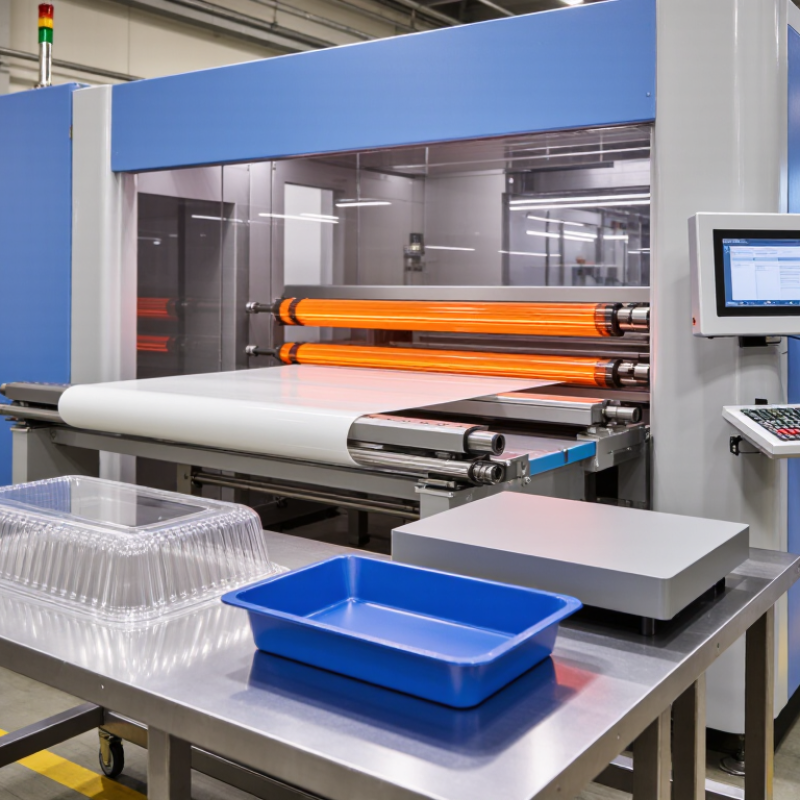
Define Part Geometry, Draw Ratio, and Sheet Gauge Before Selecting a Machine
Before comparing thermoforming machines, define the part in three dimensions: opening size, depth, corner radii, draft, and any undercuts. Calculate draw ratio as formed depth divided by the opening’s shorter span, then note where the sheet stretches most. Small radii matter. A deep, narrow tray can thin at its corners even when its average draw ratio looks manageable. Not just depth.
Record the starting sheet gauge and the minimum acceptable wall thickness at critical points. A thicker sheet does not automatically solve thinning; it can increase heating time and forming force. Specify the resin, sheet width, and expected trim loss too. These details help determine clamp capacity, heating-zone control, plug-assist needs, and whether vacuum alone can reproduce the geometry consistently.
The 2023 Thermoforming Packaging Market report from MarketsandMarkets forecasts 4.2% annual growth through 2028, reflecting continued demand for formed packaging. That figure is market context, not a machine-sizing rule. For selection, ask suppliers to form a representative part using your actual gauge and material, then measure corner and sidewall thickness. A clean CAD model can hide uneven stretching. I would still question any proposal based only on cycle speed.
Match Thermoplastic Resin and Sheet Format to the Machine’s Processing Range
How to Choose a Thermoforming Machine in 2026?
Match the resin before comparing machine size. PP, PET, HIPS, and ABS differ in forming temperature, shrinkage, and heating behavior. Plastics Europe’s Plastics—The Fast Facts 2024 reports global plastics production of 413.8 million tonnes in 2023. That figure is market context, not a machine specification: the resin and grade you actually run should guide your choice. Check the supplier’s processing data, including any limits for recycled content.
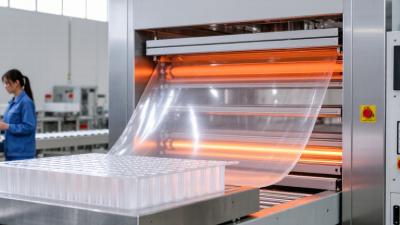
Match the machine’s temperature range and heater zoning to the sheet’s processing window. Thin PET can sag under uneven heating; thicker PP may need a longer, controlled heat cycle. Then verify sheet width, thickness, and feed format against the usable range, not only the advertised maximum. Roll-fed equipment can suit continuous runs, while cut-sheet systems may offer more flexibility for shorter jobs. Fit matters more.
Confirm clamp dimensions, plug-assist clearance, vacuum capacity, and cooling time using your actual mold. Ask for a trial with your resin and sheet gauge, and record cycle time, part quality, and scrap. A specification sheet can look perfect; real sheets may arrive with curl or gauge variation. Test the actual sheet. I would still allow operating margin rather than selecting a machine that only works at its stated limit.
Compare Forming Methods: Vacuum Pressure Tops Out Near 101 kPa at Sea Level
At sea level, standard atmospheric pressure is about 101.325 kPa, according to the U.S. Standard Atmosphere, 1976, published by NOAA, NASA, and the U.S. Air Force. That sets the theoretical ceiling for a vacuum-only pressure difference across a heated plastic sheet. The real ceiling is lower. Pump capacity, leaks, seal condition, and sheet temperature all matter. Small details count.
Pressure forming adds compressed air above the sheet while vacuum pulls below it, creating a greater pressure difference than vacuum alone can provide. The actual result depends on the machine’s rated pressure and tooling, so compare specifications under the same units and test conditions. NIST’s reference value for standard atmospheric pressure is useful for checking claims near 101 kPa, but it does not predict a machine’s forming performance. A gauge reading can also be confusing: some gauges show pressure relative to the atmosphere, while others report absolute pressure.
A frequent buying mistake is treating the highest vacuum figure as the whole story.
I would question any comparison that omits cycle time, part depth, and material thickness. Test a representative part, then inspect corners and fine details for thinning.
Size the Forming Area and Cycle Rate for Required Parts per Hour
Choosing a thermoforming machine starts with the parts you need to make, not the largest machine available.
Measure the finished part and the mold layout, including spacing, trim allowance, and the area held by the clamps. A 300 mm part may need much more than 300 mm of forming width. Check usable forming area in both directions, plus maximum draw depth. Tight margins can restrict sheet movement or leave no room for clean trimming.
Then calculate output from cavities, actual cycle rate, and production yield. For example, a four-cavity mold running eight cycles per minute at 85% effective production makes about 1,632 good parts per hour. A machine’s advertised peak rate may exclude heating, cooling, indexing, or routine stops. Ask for a cycle estimate using your material, thickness, and part geometry. Small details matter.
Allow some headroom. A line sized exactly to the hourly target may fall short when a tool change or material variation slows production. Yet oversizing can add cost without improving usable output. I would compare the required parts per hour with a realistic sustained rate, then verify the mold fits within the machine’s usable area. Estimates can still be wrong; a production trial is worth planning.
Check Machine Safety and Risk Controls Against ISO 12100 and ISO 13849-1
How to Choose a Thermoforming Machine in 2026?
Check Machine Safety and Risk Controls Against ISO 12100 and ISO 13849-1
A safe machine starts with a task-specific risk assessment, not a general safety claim. ISO 12100 provides a framework for identifying hazards, estimating risks, and selecting risk-reduction measures. Walk through normal production, tool changes, cleaning, and fault recovery. Watch the heated platen, clamping area, moving chains, and sharp sheet edges. Small gaps matter. Ask how operators can reach these areas and what prevents access during hazardous motion.
Tips: Request the risk assessment, safety-circuit diagrams, and validation records. Check whether guards and interlocks suit your actual tooling and production speed. A demo with the machine idle proves little; observe a controlled operating cycle.
ISO 13849-1 addresses safety-related control systems. Ask which safety functions were assessed, such as emergency stops or guard interlocks, and what required performance level applies to each. The answer should be supported by design and validation evidence, not just a label. Compare the documents with the machine you will receive, including its options and interfaces. If a safety function depends on a sensor, ask how faults are detected and what happens after a reset. I would also check whether maintenance access is realistic; a safeguard that operators routinely bypass deserves a closer review. Safety needs revisiting when tooling or workflows change.